


Snake in tent vestibule what to do is a careful first-light search because the animal may be coiled under a boot, beside a stove bag, along the rain fly seam, or behind a stuff sack exactly where bare feet swing out for the morning step. Pause the unzip, keep kids and pets back from the door panel, and do not reach for boots from inside until the vestibule floor is visibly clear from end to end.
Do not slap the rain fly, kick a boot to chase the snake out, drag a stove bag toward the door, or stand on the inner tent floor while reaching blindly into the vestibule. A loaded vestibule hides body direction under fabric folds, and a sudden pull can send the snake into the inner tent, against an ankle, or toward a second camper still in a sleeping bag.
Tent vestibules attract snakes indirectly through shade under the rain fly, retained warmth on dark fabric, insects drawn to crumbs and gear smells, rodents along the campsite perimeter, and protected gaps along the stake-out points and ground tarp edge. Tents pitched near brush, log piles, water sources, or established fire rings can sit on a quiet wildlife travel route between cover and water.
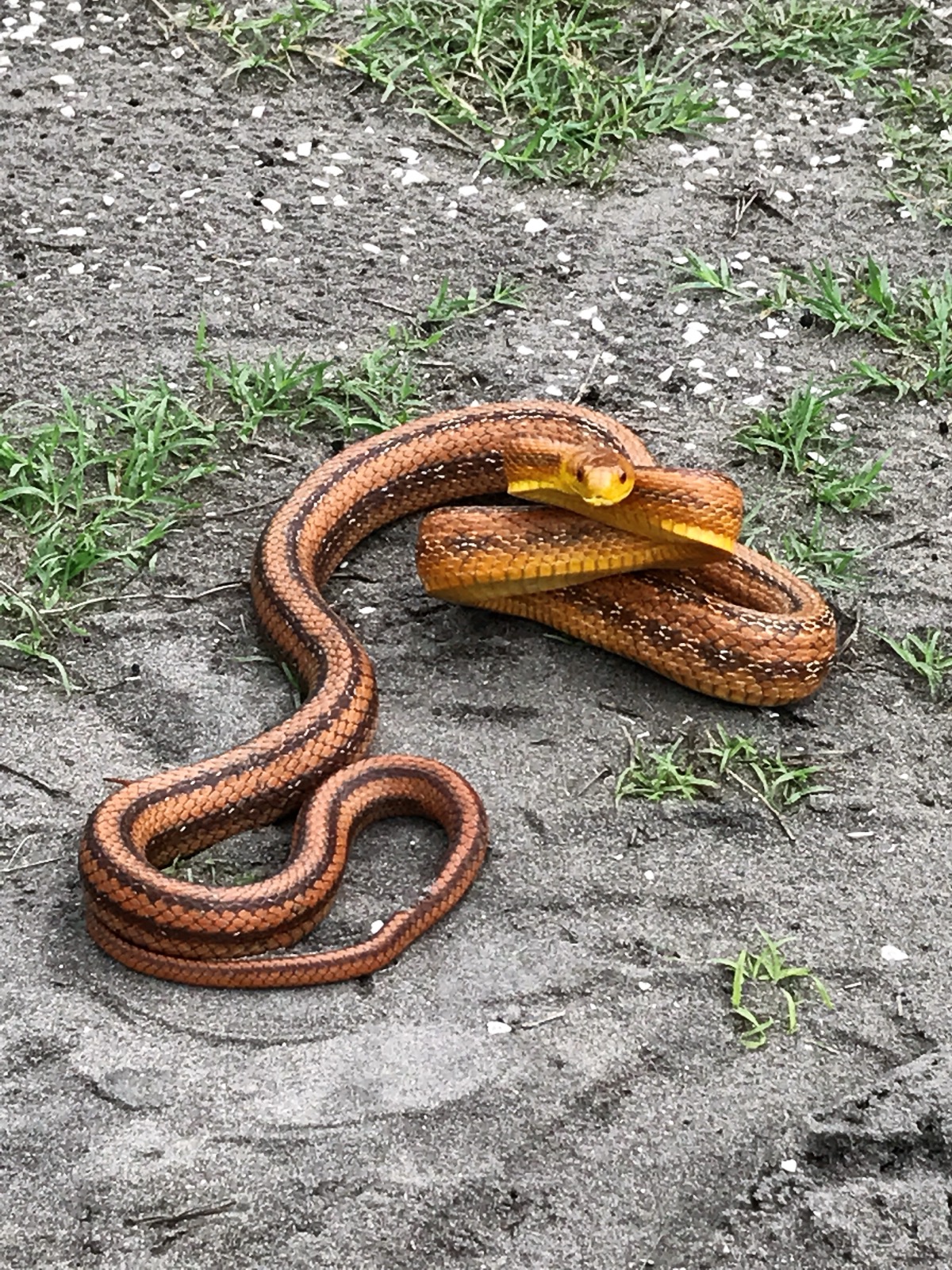
If the snake remains visible, take one photo from inside striking distance through the mesh inner door and include the vestibule floor, boots, gear bags, and visible body pattern. Do not unzip a side panel or push a trekking pole into the vestibule for a clearer angle. A wider scene gives SerpentID enough markings to compare while keeping hands and feet on the inner tent floor.
SerpentID can help compare visible markings, but vestibule encounters should stay conservative because the next normal action is stepping outside barefoot or in unlaced boots. If the app suggests a venomous possibility, the snake slides under the rain fly, or the camp must be broken to hit the trail, contact local wildlife help and stay zipped in. Afterward, store boots inside the inner tent or sealed in a stuff sack, keep food and trash in a hung bag or canister, brush leaf litter away from the vestibule footprint, and inspect the rain fly with a headlamp before unzipping at dawn.