


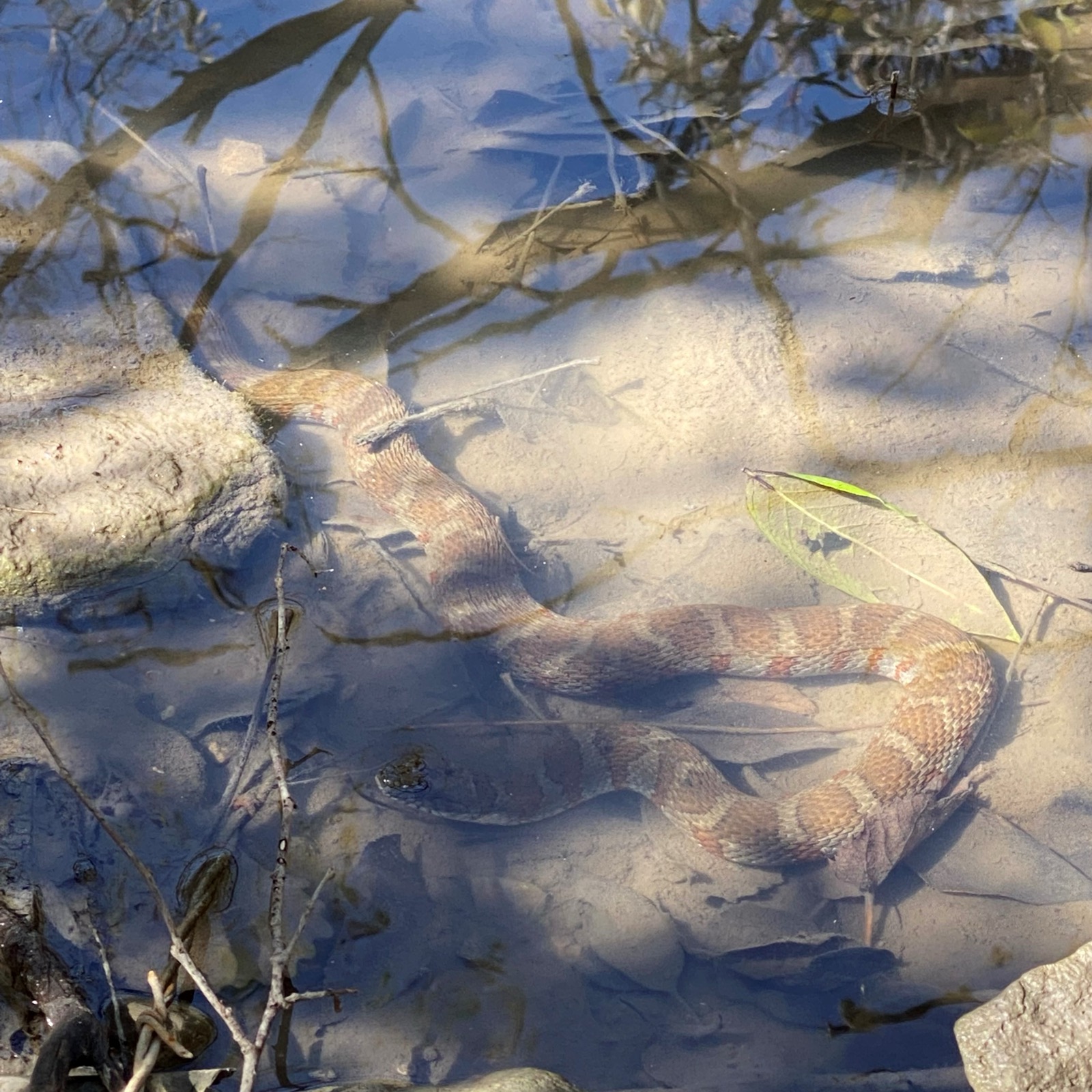
Snake in sump pump pit what to do is a careful basement search because the animal may be coiled around the float switch, wrapped along the discharge pipe, wedged into the gravel under the pump, or stretched along the inside of the plastic liner exactly where hands plunge in to free a stuck float or unplug a tripped pump after a rainy night. Pause the reach, keep children and pets out of the utility room, and do not lift the pit lid, lean over the rim with a flashlight tucked under your chin, or pull on the cord until the entire pit interior is visibly clear from a careful step-back inspection.
Do not splash the water with a broom handle to flush the snake out, jam a screwdriver into the pit to feel along the float, kick the pump housing to make noise, or yank the discharge pipe to shake the snake loose. A sump pit hides body direction inside a dark cylindrical cavity where a slim water snake's color blends with damp PVC, gravel, and shadow, and a quick grab can put bare fingers directly on a coiled body draped across the live float wire.
Sump pump pits attract snakes indirectly through retained moisture and cool air below the basement floor, gravel and groundwater seepage that draws frogs and earthworms, insects that fall in through the lid gap or perimeter drain tile, mice that nest along the foundation footer near the pit, and protected gaps along the discharge pipe penetration and any unsealed lid corner. Homes on low lots, finished basements with vented sump covers, crawl spaces with open crocks, and any pit fed by an exterior French drain sit on a quiet route between outside cover and a dark interior shelter.
If the snake remains visible, take one photo from outside striking distance and include the open pit rim, the visible body pattern, the float, and the discharge pipe. Do not crouch over the pit for a top-down shot or kneel on the basement floor to lower the phone in for a closer angle. A wider scene gives SerpentID enough markings to compare while keeping your face above the lid line and your hands clear of the standing water and the live electrical cord.
SerpentID can help compare visible markings, but sump-pit encounters should stay conservative because the next normal action is reaching down into a dark wet cavity to free a switch while a pump may cycle on without warning. If the app suggests a venomous possibility, the snake slips behind the discharge pipe, or you cannot see the head and tail at the same time, contact local wildlife help and shut the pump breaker off before closing the lid. Afterward, install a sealed sump cover with a gasketed cord pass-through, fill obvious gaps around the discharge pipe penetration, address basement moisture and exterior drainage that draw prey indoors, and inspect the pit with a flashlight from a step back before any servicing call.