


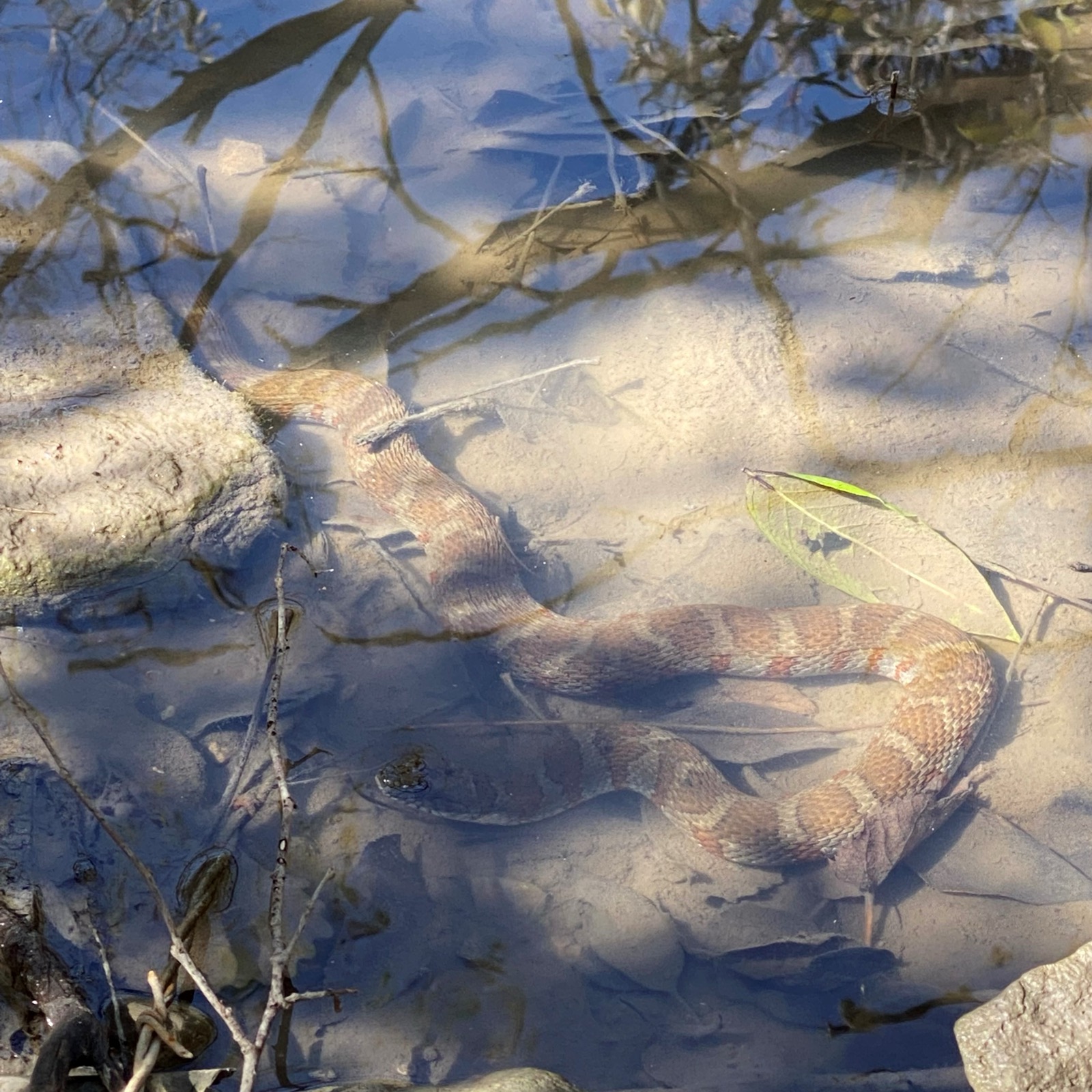
Snake in storm drain what to do is a common neighborhood and trail-edge search because grates combine shade, moisture, debris, and tunnels. Keep people and pets away from the drain opening first. A dog sniffing through a grate or a child reaching toward the bars can turn a distant sighting into a close-contact encounter.
Do not reach through the grate, lift a drain cover, pour chemicals, flush the drain, or try to trap the snake with a stick. Storm drains often connect to deeper spaces, and forcing movement can send the snake toward an unseen opening or leave you handling public infrastructure without the right tools.
Storm drains attract snakes through cool cover, frogs, insects, small rodents, standing water, and debris after rain. The snake may be resting, hunting, or simply using the drainage corridor as a travel route. A sighting at the grate does not mean the animal is stuck.
If the snake is visible, take a photo from a safe distance through or beside the grate without placing fingers near the bars. Include the surrounding curb, ditch, or trail context and any visible body pattern. Do not crouch directly over the opening if you cannot see the whole animal.
SerpentID can help compare visible markings from a safe image, but drain encounters should stay conservative when the snake is partly hidden or the photo is distorted by bars and shadow. If the app suggests a venomous possibility, the drain is in a high-traffic sidewalk or school area, or the snake appears trapped, contact local animal control, wildlife help, or municipal staff. Afterward, keep pets leashed around drains and avoid clearing debris by hand when visibility is poor.