


Snake in RV what to do is a high-stress search because a camper combines household spaces, storage compartments, utility penetrations, and travel clutter in one compact structure. Once a snake is seen near a dinette, storage bay, or step well, people often start opening every hatch at once. That usually increases the number of blind contact points instead of making the animal easier to manage.
Start by moving everyone out of the immediate area and deciding whether the snake is inside the living space, in a storage compartment, or under the vehicle. That distinction matters because the response changes with the amount of confinement and the number of hidden routes available. Do not begin pulling bedding, hoses, leveling blocks, or tools from compartments by hand until you know where the snake was last seen.
RVs attract snakes for the same reasons sheds and garages do: temporary shelter, warmth after a drive, prey around campsites, and multiple small openings around utilities, steps, seals, and underbody access points. A stored camper near tall grass, water, or rodent activity becomes especially attractive because it stays undisturbed for long periods.
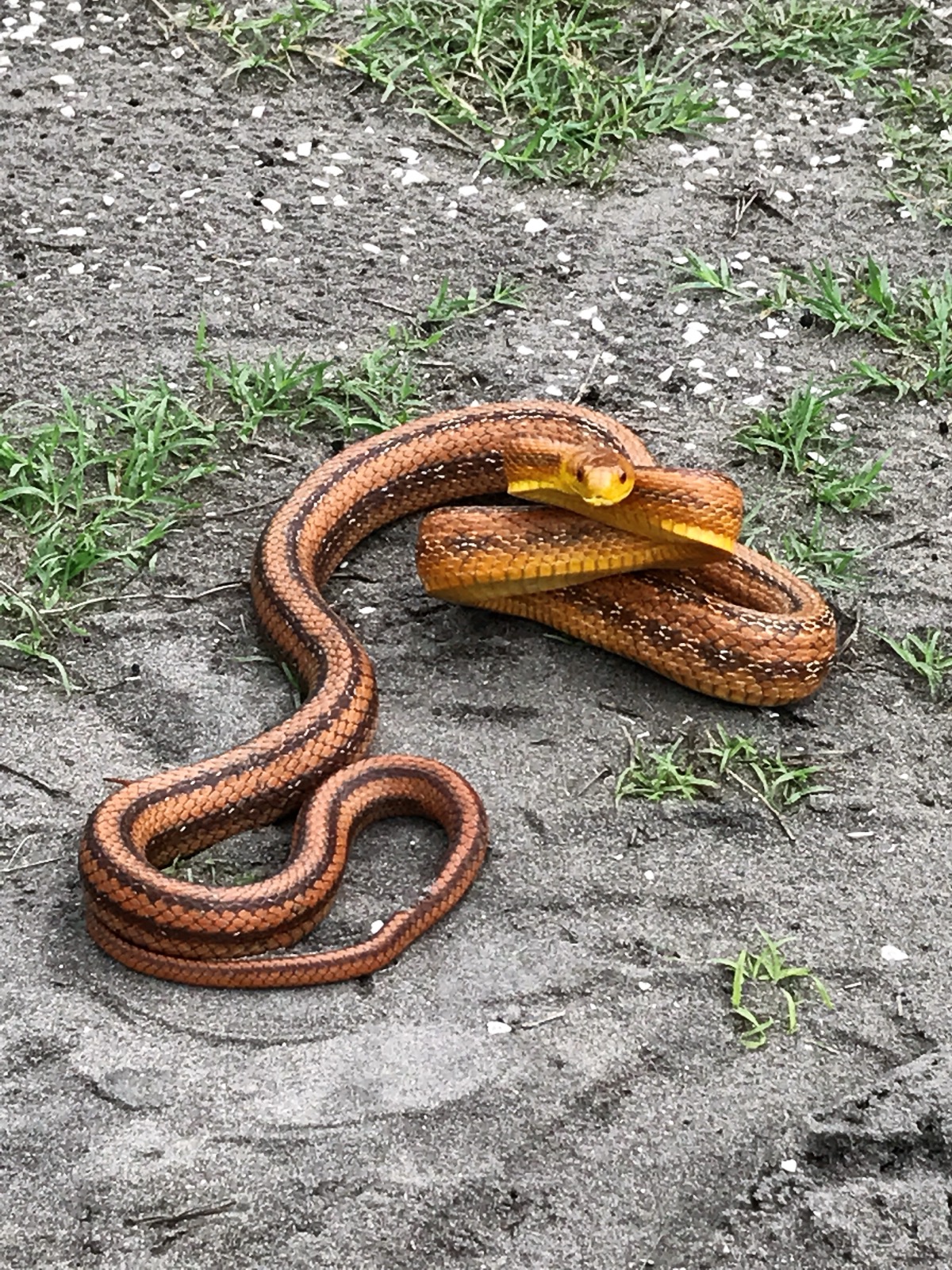
If you can photograph the snake from a doorway or compartment opening without leaning in, do that once and then back away. Full-body pattern and compartment context help more than a shaky close-up. The goal is to improve the identification signal without turning the RV into a close-quarters handling problem.
Snakenap can help separate a common nonvenomous traveler from a higher-risk match, but uncertainty should push the decision toward caution. If the app suggests a venomous species, or the snake disappears into wiring, plumbing, or inaccessible storage, contact local wildlife help before moving more gear. After the encounter, inspect seals, utility gaps, and campsite storage habits so the RV is less attractive the next time it sits still.