


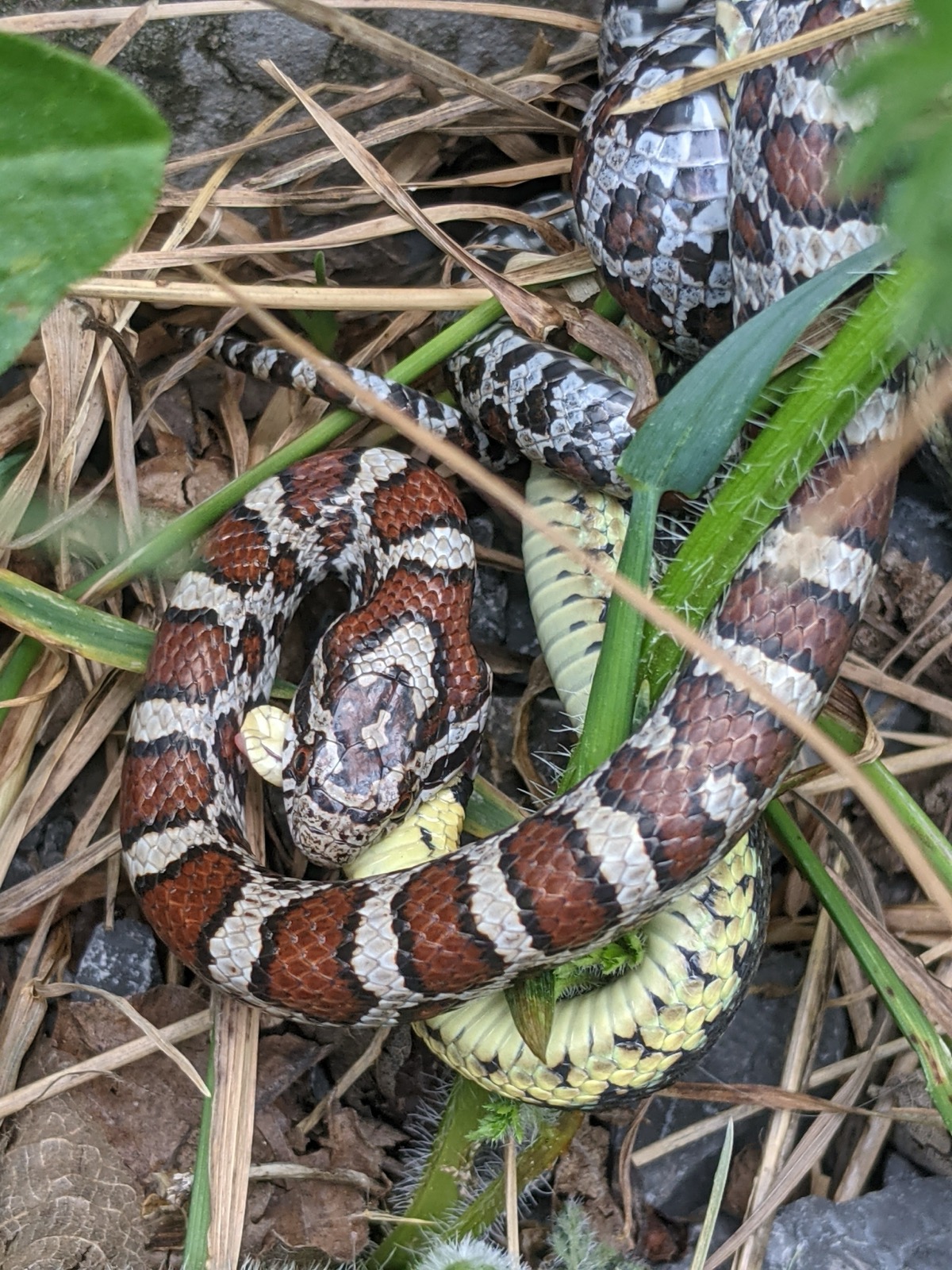
Rock walls are some of the most reliable snake shelters in a yard, and few homeowners realize it until they watch a tail disappear between two stones. Dry-stacked garden walls, timber-and-boulder retaining walls, loose stone borders, and old brick or rubble edging all share the same features snakes look for: deep, narrow crevices that predators cannot reach, stone that soaks up sun during the day and releases heat slowly at night, and cool, humid pockets deeper inside during hot weather. Snakes can move in and out of these spaces with ease and choose exactly the temperature they need, which is why a single wall may host a snake for weeks, or be used year after year as an overwintering site.
Food is the other half of the attraction. Mice, rats, skinks, lizards, frogs, slugs, crickets, and beetles all use rock walls for the same reasons snakes do, and a predator that can follow its prey into the gaps has an easy life. That is why a snake in the wall is usually a sign of an active small-animal community around it rather than a sign of a nest of snakes. Most snakes do not build nests or live in family groups, and seeing one snake does not mean dozens are hidden behind the stones. Seeing several over a season usually reflects good habitat, especially near water, compost, bird feeders, or long grass, rather than a colony.
Which snake you are dealing with depends heavily on where you live. In the United States, garter snakes, rat snakes, milk snakes, ring-necked snakes, and brown snakes are frequent rock-wall residents, but copperheads in the East and rattlesnakes in rocky western and southwestern landscapes also favor stone, so a wall is not a place to assume a snake is harmless. In Australia, eastern brown snakes may hunt mice in rocky edging and outbuilding foundations, and red-bellied black snakes turn up in walls near creeks and dams. In India, rat snakes are common in brick and stone piles, while spectacled cobras, Russell's vipers, and kraits also shelter in rubble, loose brickwork, and boundary walls, particularly around villages and farms where rodents are plentiful. Because harmless and dangerous species can share the same wall, the safest default is to treat any unidentified snake with caution.
The first thing to do when a snake goes into a wall is simply to stop, step back to a distance well beyond the snake's body length, and watch where it went if you can do so without approaching. Do not reach into crevices, pull stones loose to look for it, poke sticks into the gaps, or try to grab a tail that is still visible. Pulling a snake from a tight space is one of the most common ways people get bitten, and dislodging stones can collapse part of the wall onto your hands or feet. Avoid spraying insecticide, pouring gasoline, using smoke, or flooding the wall with a hose. These tactics rarely drive a snake out where you want it to go, can injure or kill protected wildlife, and may push a defensive snake toward you. Keep children and pets away from the area and give the snake time; many will move on by themselves once things are quiet, often at dusk or the next warm morning.
If you need to work on or near the wall, plan the job instead of rushing it. Check the surface and the ground at the base visually before you start, wear sturdy boots and heavy gloves, and use tools such as a long-handled rake or pry bar rather than your hands for the first contact with loose stones or debris. When lifting a rock, tip it so the underside opens away from your body, letting the stone act as a shield between you and anything beneath it. Be especially careful during the cooler months in temperate areas, when snakes may be brumating deep inside walls and foundations; dismantling a wall in winter can expose a sluggish snake that cannot easily escape. For major rebuilding where a snake is known to be present, a licensed snake catcher or wildlife service can inspect the wall first and advise on timing.
Long term, decide how much snake habitat you want and where. A dry-stone wall at the back of a property can be a valuable home for wildlife, including snakes that help keep rodents in check, and many gardeners are happy to leave it alone. Walls beside doorways, play areas, pool fences, or paths are a different matter. Mortaring or filling gaps, keeping grass and weeds trimmed along the base, removing nearby wood and debris piles, storing pet food and birdseed in sealed containers, and addressing rodent problems all make a wall less attractive over time. Do not seal gaps while a snake may still be inside, since that can trap it and create a bigger problem later. Commercial snake repellents and mothballs are not a reliable fix and can be harmful to pets and people. Remember too that in many places, including much of Australia and India and many US states, native snakes are legally protected, so killing or harming them can carry penalties as well as risk.
When a snake disappears into your wall, the most useful thing you can do is find out what it is. If you can safely see it, take a photo from a comfortable distance, zooming in rather than stepping closer, and capture the head, body pattern, and tail if possible. SerpentID can compare those markings against the species likely in your area and help you tell a harmless rat snake or garter snake from a copperhead, brown snake, or cobra. If the snake turns out to be venomous, or you simply cannot identify it, contact your local wildlife service or a licensed snake catcher rather than dealing with it yourself, and if anyone is ever bitten, seek professional medical help immediately.