


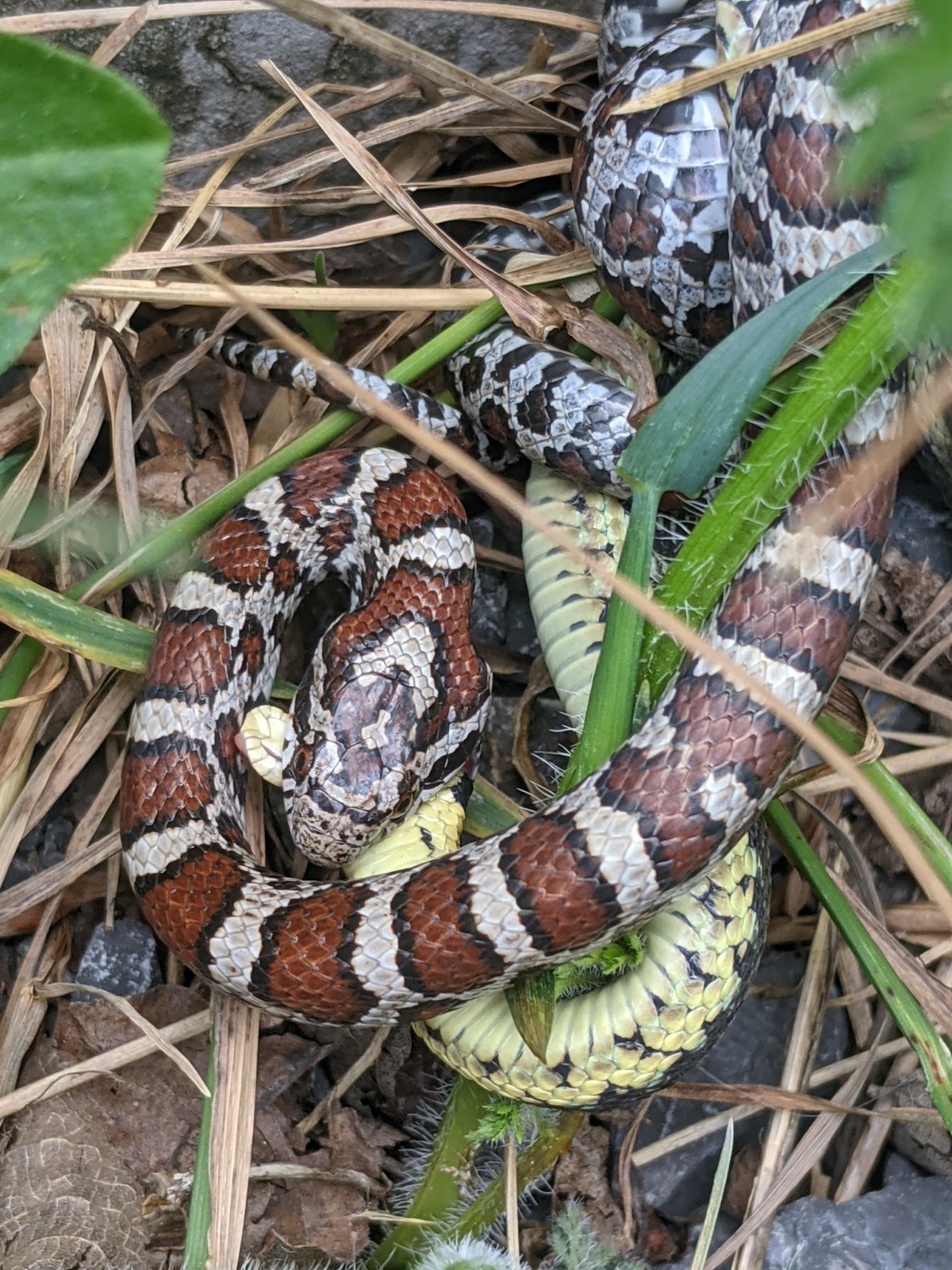
Snake in retaining wall what to do is a common yard and landscaping search because block walls, stacked stone, drainage gaps, and weedy bases create a long hidden corridor. A snake can appear in one opening and disappear into another before you know whether it is leaving, resting, or using the wall as cover.
Do not pull blocks, reach into cracks, yank weeds by hand, or probe drainage gaps while the snake's position is uncertain. Step back, keep pets away from the wall base, and watch the direction of travel from a distance. The safest goal is to understand the route, not to expose the whole animal.
Retaining walls attract snakes through heat, structure, and prey. Stones warm in the sun, cavities stay protected, and drainage zones often support insects, lizards, frogs, and rodents. If the wall sits beside mulch, steps, a patio, or dense plantings, the snake may have several exits you cannot see from one angle.
If the snake is visible, take one photo without blocking the crack or standing over the exit path. A context image showing body pattern, wall type, and nearby cover is usually more useful than trying to uncover the head. Moving stones or digging into the wall can also destabilize the structure and turn a calm sighting into a repair problem.
SerpentID can help compare markings from a safe image, but rock shadows and partial views can reduce confidence. If the app suggests a venomous possibility or the snake remains inside a wall you need to repair, contact local wildlife help before doing hand work. For prevention, keep wall bases open, trim vegetation, reduce rodent attractors, and inspect gaps visually before maintenance.