


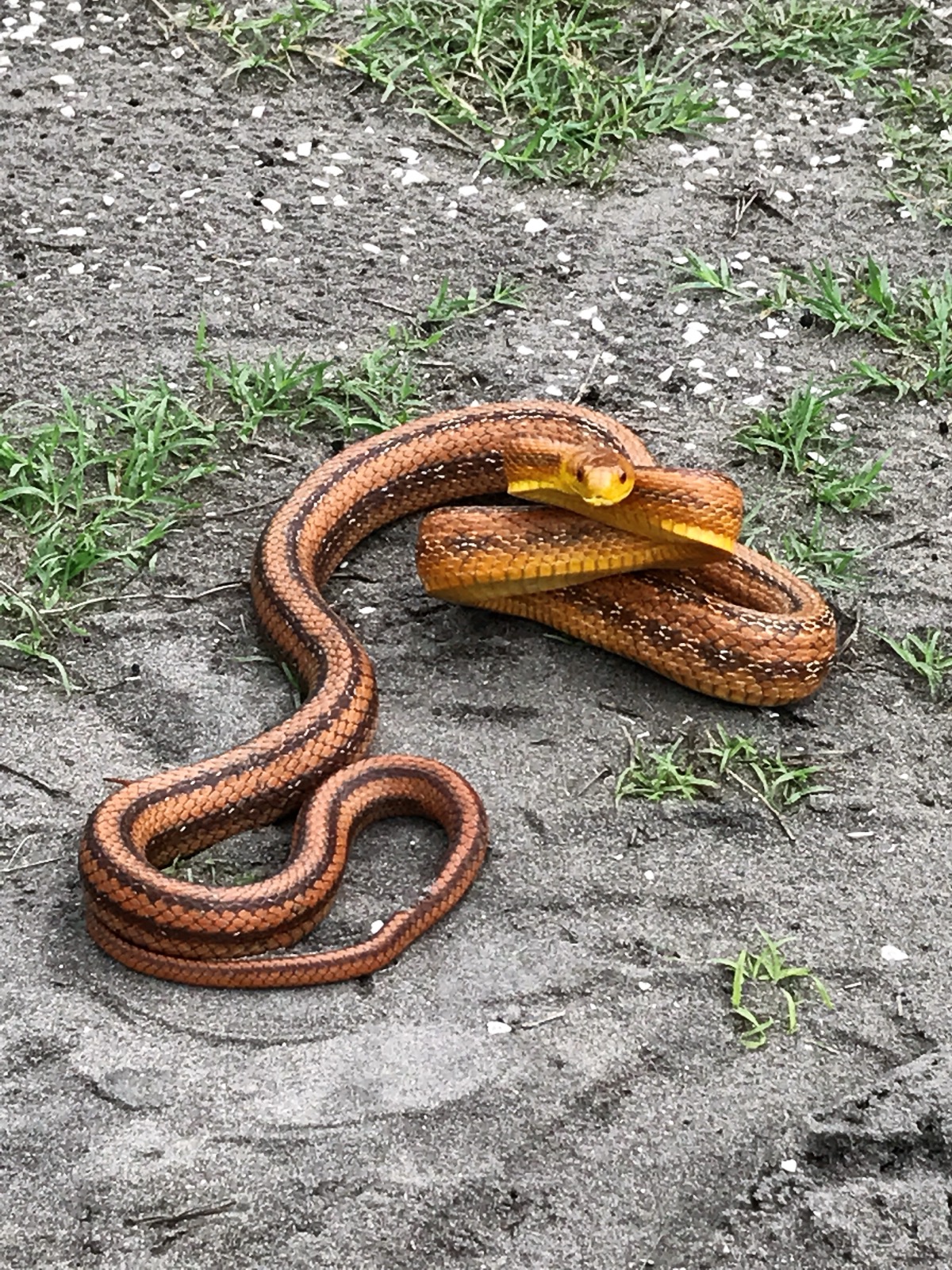
Snake in recycling bin what to do is a common home safety search because the animal may be hidden beneath cardboard, bottles, cans, plastic tubs, or a partly open lid. Stop handling the bin, keep pets away, and warn anyone who might reach in without looking.
Do not lift items out by hand, kick the bin, dump it toward yourself, or roll it to the curb while the snake's location is uncertain. The movement can bury the animal deeper in loose material or place it near the handle, hinge, or wheel area where hands naturally go next.
Recycling bins attract snakes indirectly through shade, trapped moisture, insects, lizards, rodents, and food residue in containers. Bins stored against a fence, garage, hedge, shed, or trash area can also become part of a sheltered travel corridor instead of a random stop.
If a safe photo is possible, take it from above and slightly back while keeping fingers out of the lid gap. Include the visible body pattern and the bin contents around it. Do not move cardboard or bottles to reveal the head, and do not lean over a deep bin if you cannot see the whole animal.
SerpentID can help compare visible markings from a safe image, but recycling-bin encounters should stay conservative when the snake is hidden under clutter. If the app suggests a venomous possibility, the snake disappears into the bin, or pickup is imminent, contact local wildlife help or municipal guidance. Afterward, rinse containers, close lids fully, move bins away from dense cover, and inspect handles before rolling them.