


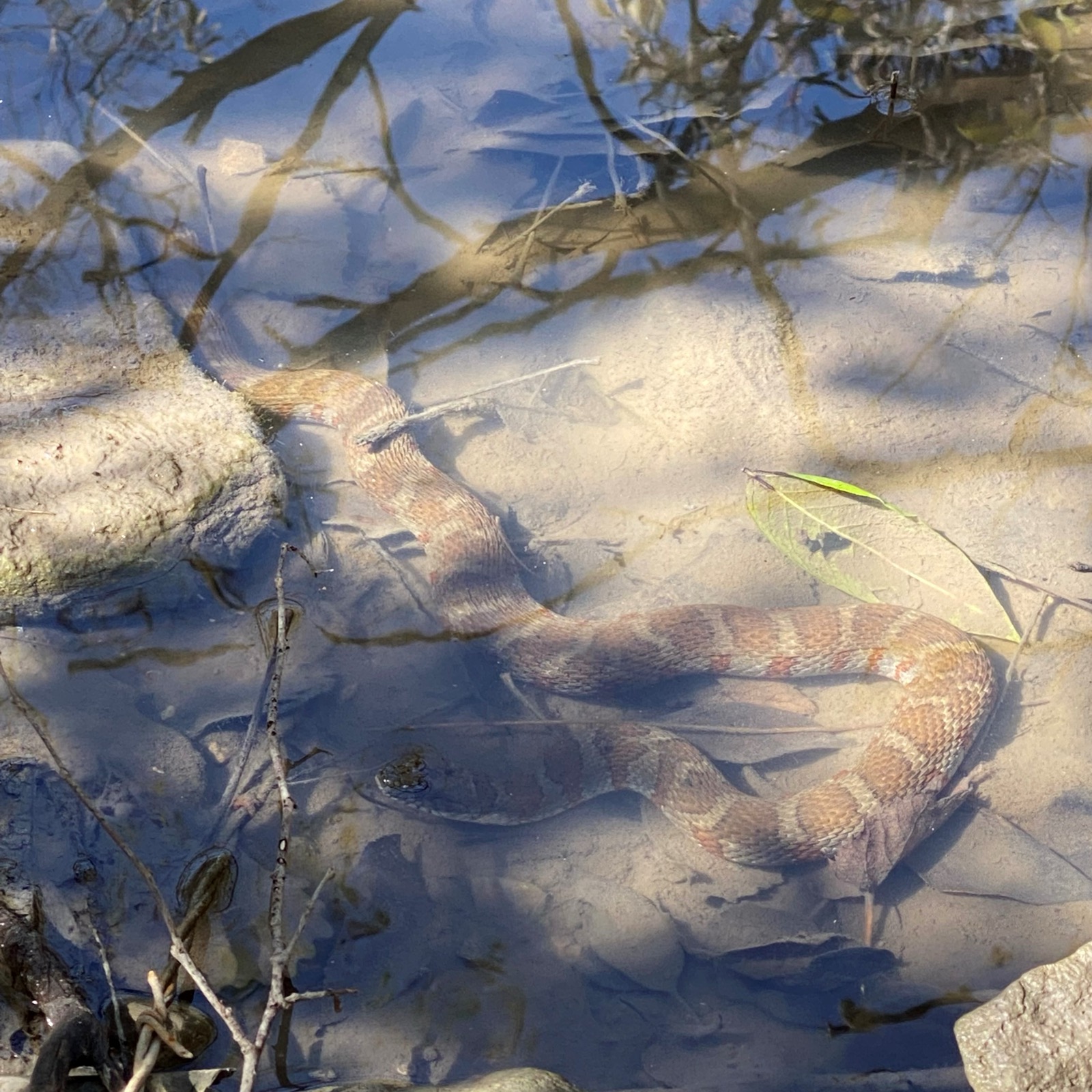
Snake in rain barrel what to do is a high-intent backyard search because the scene looks simple until someone tries to fix it quickly with bare hands. Barrels collect cool shade, moisture, insect activity, and sometimes frogs, which means a snake may enter on purpose or fall in and struggle to get back out.
Do not put your hand under the lid, lean over the opening, or tip the barrel to force the snake out. Step back, keep pets and children away, and check whether the snake is floating, coiled on debris, wrapped near the intake screen, or pressed against the inner wall below the rim.
Rain barrels become snake hazards when the interior has smooth sides and only one narrow opening. Even a nonvenomous snake can panic in confined water and move unpredictably if the barrel is shaken. The same stored water also sits close to downspouts, garden beds, and fence lines that already function as wildlife corridors.
If the snake is visible, take one stable photo from outside striking distance and leave the hardware alone. Do not try to fish it out with a stick or remove hoses while leaning over the barrel. A context photo is safer and more useful than a rushed close-up because it shows both pattern and entrapment risk.
SnakeSnap can help compare likely species from a safe image, but low confidence should still keep the response conservative. If the app suggests a venomous possibility, the snake appears trapped, or the barrel needs to stay in service immediately, contact local wildlife help. Afterward, keep the lid secure, screen overflow points, and add a wildlife-safe escape route if open water collection is part of your setup.