


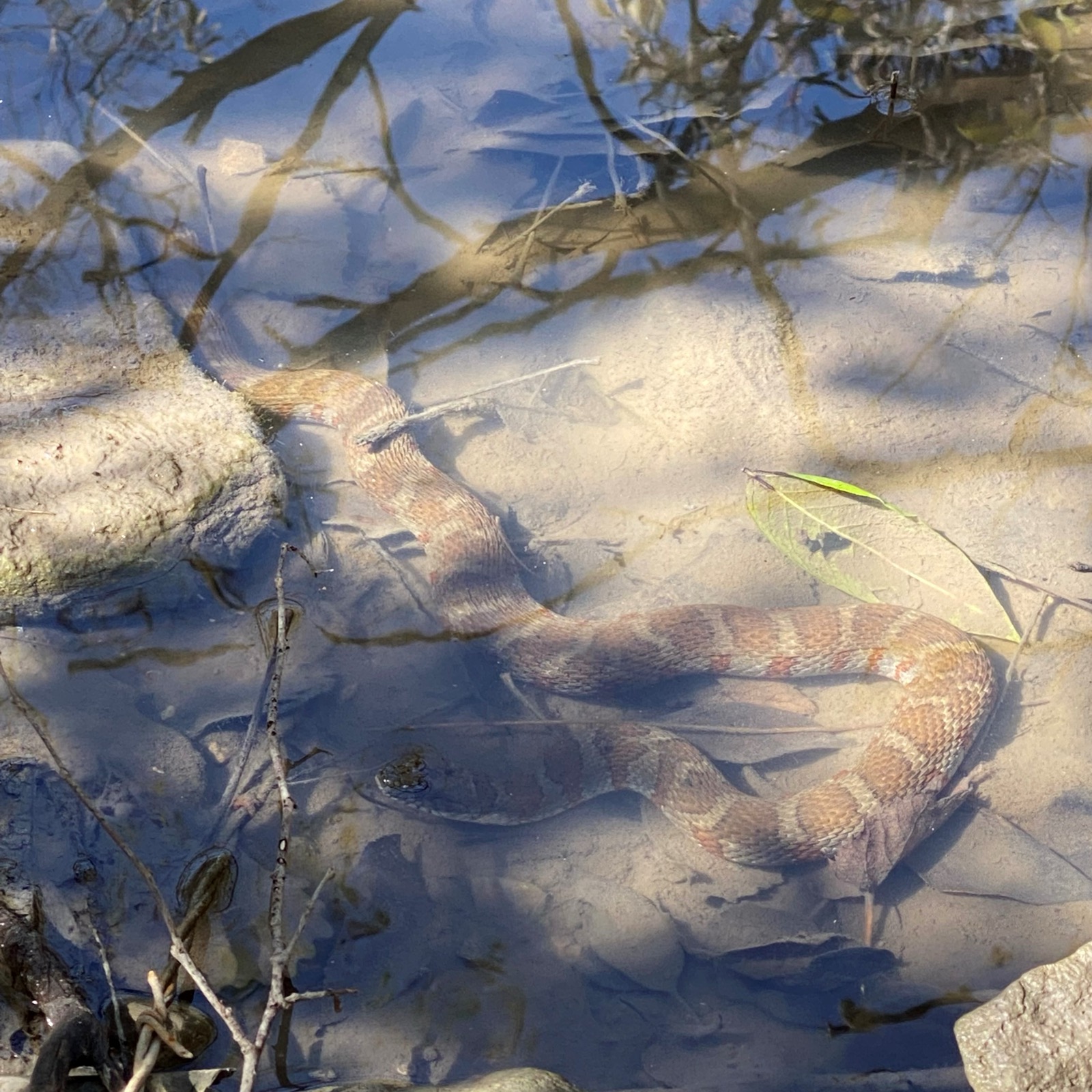
Snake in the pool is one of those searches that happens in real time, usually while people are still standing on the deck deciding whether to scoop, splash, or flee. The key point is that the snake is usually trying to cross the water, find an exit, or hold onto the edge, not start a confrontation with swimmers.
The first step is clearing people and pets from the immediate area so the animal is not pressured. If the snake can see an easy route out, many situations resolve on their own. Pool skimmers, steps, tanning ledges, and escape ramps matter more in the first minute than species-level certainty.
Do not trap the snake against the wall with a net or reach down to prove whether it is harmless. A stressed snake in water is harder to read, easier to agitate, and more likely to defend itself if cornered. Calm distance is safer than heroic removal.
If you can document the sighting, take one clear photo that shows the full body and the water context. That will help SerpentID separate common swimmers like water snakes from more serious possibilities without requiring a closer angle from the deck edge.
Once the snake is gone, check why the pool area keeps attracting wildlife: nearby cover, frogs, rodents, landscaping gaps, or missing escape aids. SerpentID can guide the identification, but the long-term fix is making the pool easier to exit and less attractive as a hunting or shelter corridor.