


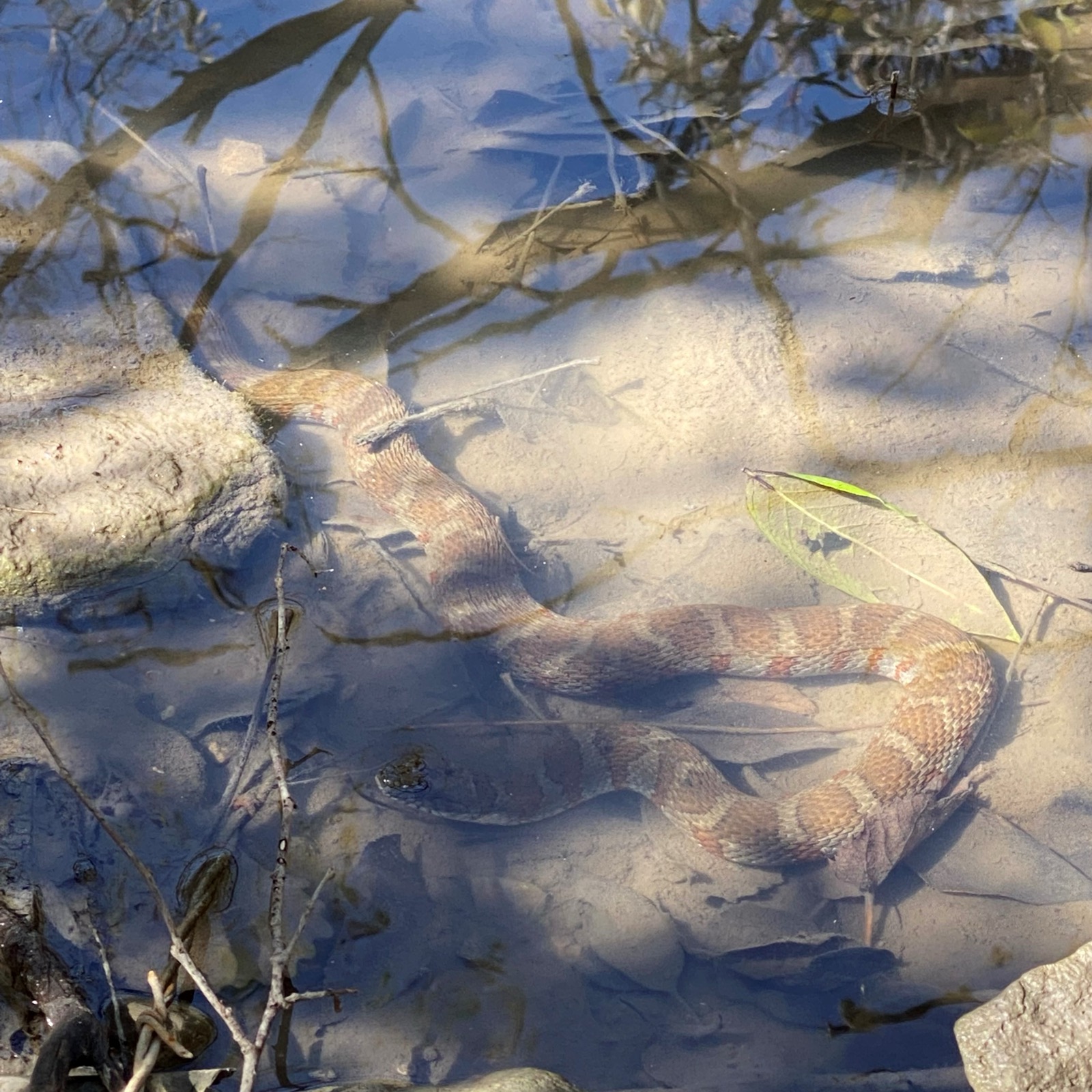
Snake in pool noodle what to do is an urgent family search because hollow floats, foam tubes, pool toys, and storage baskets are often grabbed quickly by children. Pause swimming, move people away from the toy pile, and keep pets from sniffing or pawing at the float.
Do not shake the noodle, squeeze it, cut it open, blow water through it, or hand it to someone else to inspect. A hollow toy can conceal part of the snake while leaving the exit pointed toward a hand, foot, or pool step. Treat the toy pile as occupied until the animal's location is clear.
Pool toys attract snakes indirectly through shade, dampness, frogs, insects, lizards, and quiet storage spots near fences, decks, pumps, or landscaping. A noodle left on the ground overnight can become temporary cover even if the snake is not interested in the pool itself.
If the snake is visible at an opening or beside the float, take one photo from outside striking distance and include the toy, pool edge, storage area, and visible body pattern. Do not push a phone into the hollow end. A safe context photo is more useful than a close image that requires handling the toy.
SerpentID can help compare visible markings, but pool-toy encounters should remain cautious because kids and wet surfaces add risk. If the app suggests a venomous possibility, the snake stays inside the toy, or the pool area needs to reopen soon, contact local wildlife help. Afterward, store floats upright, keep toys off the ground, inspect hollow items before use, and avoid leaving damp gear against cover.