


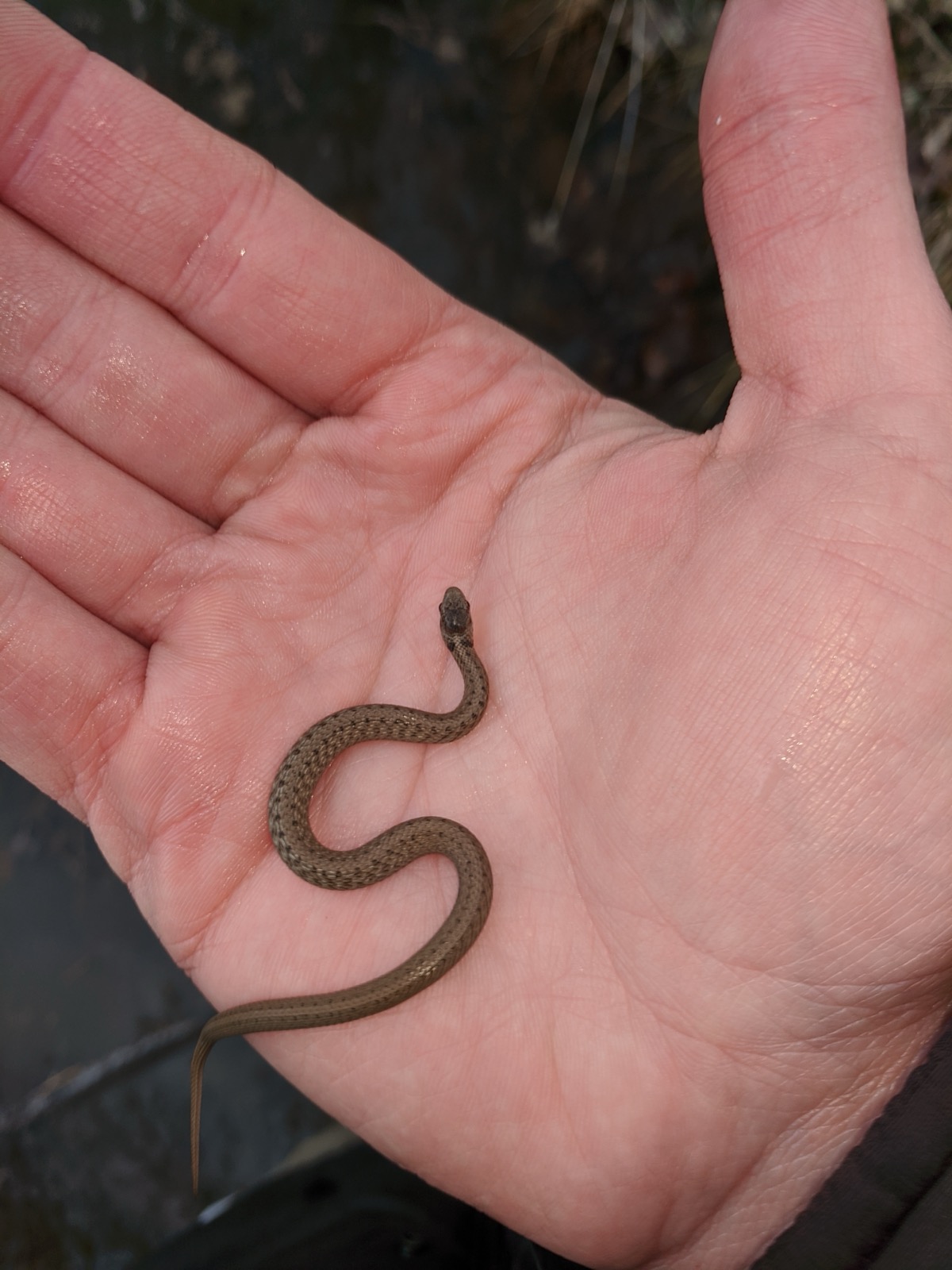
Snake in laundry room what to do is the kind of search people make while standing in a doorway, trying to decide whether the snake went behind the washer, under a sink cabinet, or back toward a door gap. The main mistake is treating the room like ordinary cleanup and reaching down for shoes, detergent, or clothes piles before the animal's last visible position is controlled.
Do not step into the tight side gaps beside the machines, reach behind the washer and dryer, or start dragging baskets across the floor to keep visual contact. Keep children and pets out of the room first, then watch from the threshold to see whether the snake is along the baseboard, near the water hookups, under a shelf, or tucked behind clutter at ankle height.
Laundry rooms attract snakes indirectly through structure, not because the room is special on its own. Exterior door sweeps, plumbing penetrations, warm appliance voids, stored boxes, and low-traffic corners can turn a utility room into temporary cover after the snake enters from a garage, crawl space, porch, or foundation edge.
If the snake is visible, take one stable photo from outside the room and stop there. Do not pull the machines away from the wall or probe the gaps with a broom handle. Once a snake disappears behind appliances, you lose both distance and predictability, and the risk shifts from identification to a close-range surprise while moving heavy equipment.
SerpentID can help compare likely species from that first safe photo, especially when body pattern and scale contrast are visible, but low confidence should still keep the response conservative. If the app suggests a venomous possibility or the snake disappears into utility gaps you cannot avoid, contact local wildlife help. Afterward, inspect door sweeps, seal obvious wall penetrations, and keep the floor perimeter clearer so the room is less attractive as shelter.