


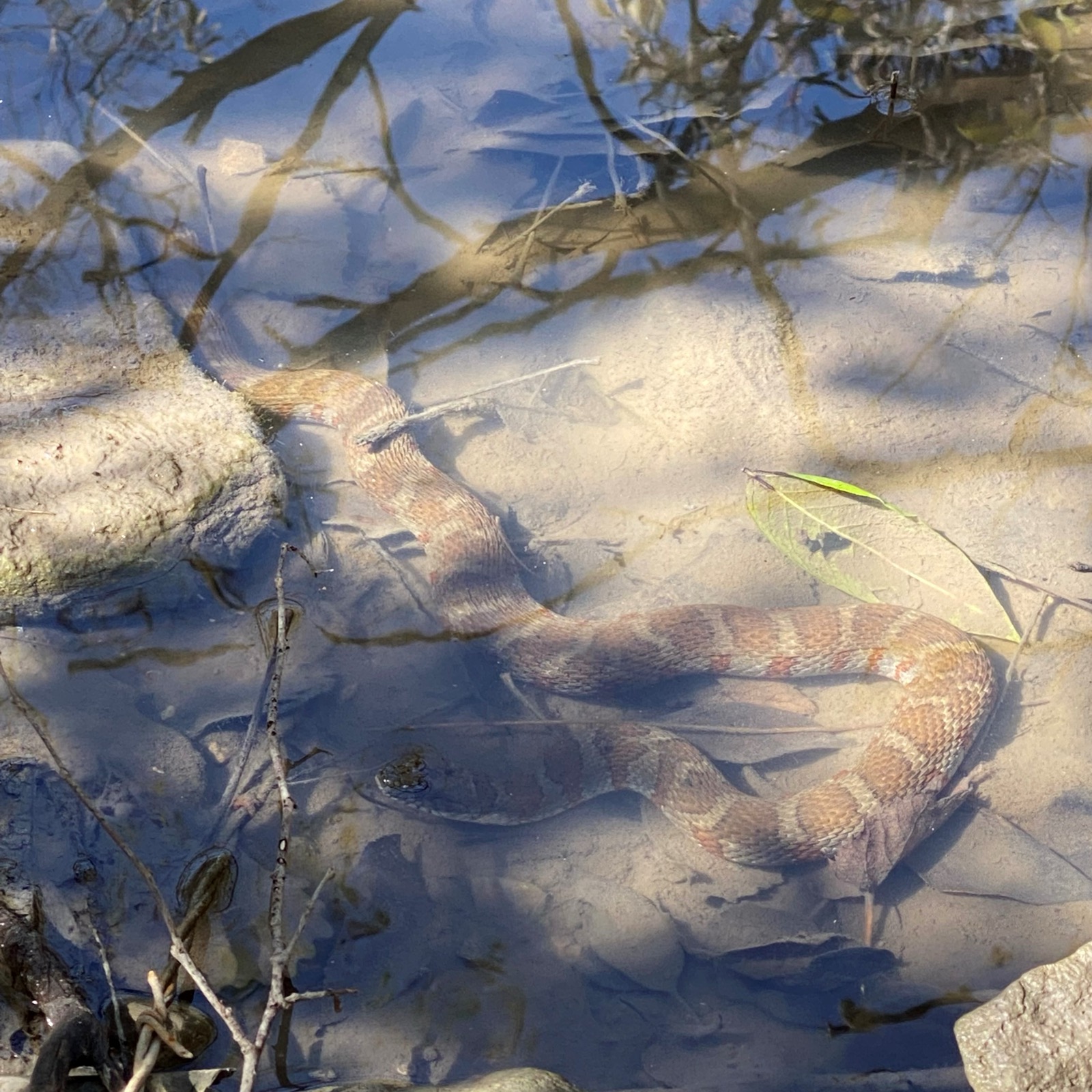
Snake in koi pond what to do is a careful backyard search because the animal may be swimming across the surface, hooked under a lily pad, wrapped around the pump intake, or coiled along the folded liner edge exactly where hands plunge in to net a sick fish or check a clogged filter. Pause the net swing, keep children and pets back from the pond rim, and do not step onto the liner, reach into the water, or lift the pump until the full surface and shallow edge are visibly clear from a step back on the patio.
Do not slap the water with the net to scare the snake out, kick rocks into the pond, drop the skimmer lid hard on the edge, or jam an arm into the filter housing to feel for a clog. A planted koi pond hides body direction under lily pads, behind submerged plants, and along the dark folds of the liner where a slim snake's color blends with shadow, and a quick grab can put fingers directly on a coiled body next to a hungry fish.
Koi ponds attract snakes indirectly through abundant prey like small fish, tadpoles, and frogs around the edge, retained warmth in shallow water on cool mornings, insects above the surface at dusk, climbable rockwork and waterfall stones along the rim, and protected gaps under the liner lip where mulch meets stone. Ponds set into low yards, ponds without a clear stone-free zone around the perimeter, and ponds surrounded by tall grass or unkempt iris beds sit on a quiet route between water and cover.
If the snake remains visible, take one photo from outside striking distance and include the water surface, lily pads, waterfall, and visible body pattern. Do not lean over the rim for a top-down shot or wade into the shallow end for a clearer angle. A wider scene gives SerpentID enough markings to compare while keeping your boots on dry stone and your hands well away from the water line.
SerpentID can help compare visible markings, but koi-pond encounters should stay conservative because most non-venomous water snakes are harmless predators of frogs and small fish, while a misidentified cottonmouth near the south can sit motionless in the shallows. If the app suggests a venomous possibility, the snake slips under the liner, or the fish are clearly being hunted, contact local wildlife help and step back from the pond. Afterward, keep a clear stone band around the rim, prune marginal plants so the surface stays visible, install netting over the pond during peak snake season, and check the surface with a flashlight before any morning feed.