


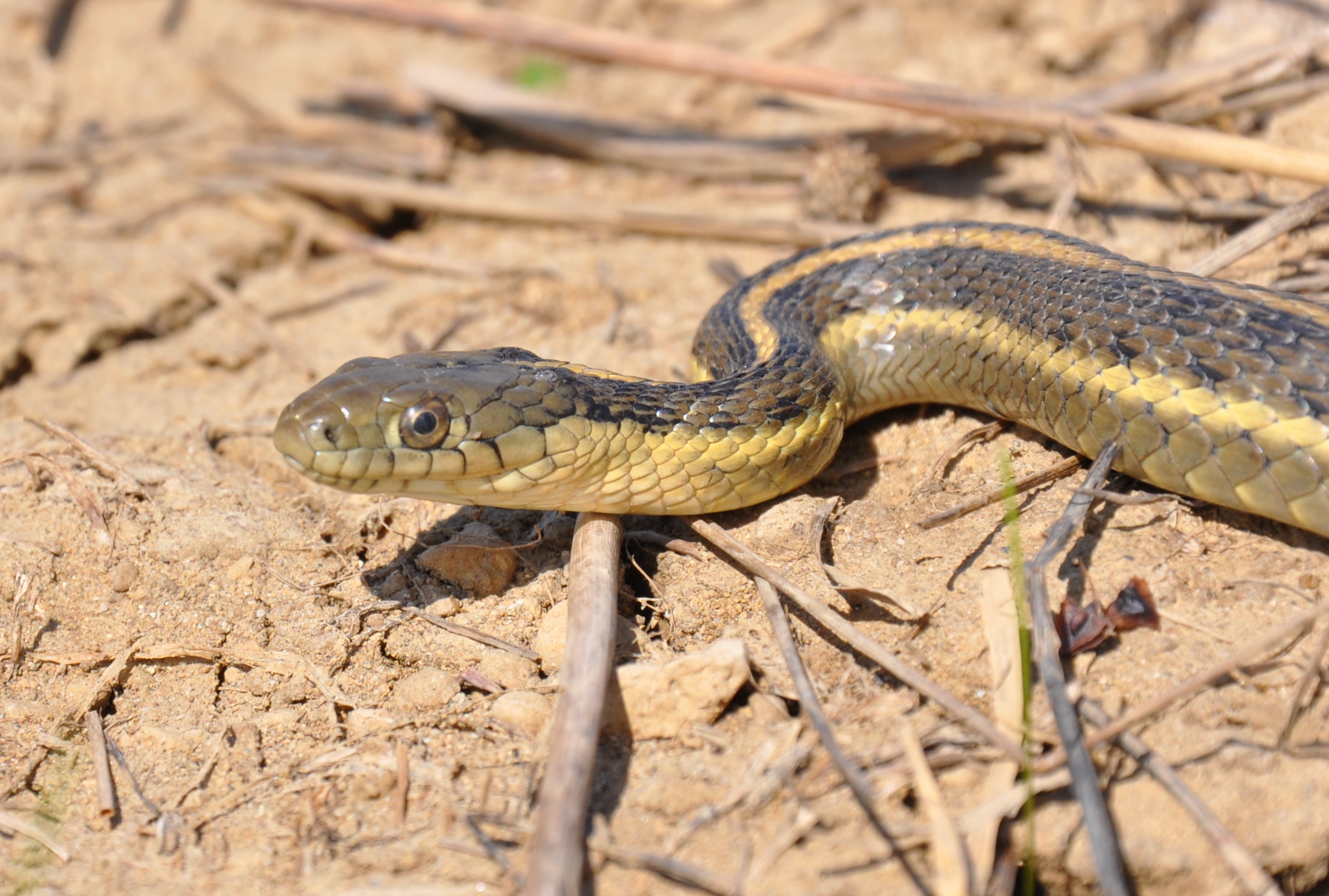
Snake in kiddie pool what to do is a family safety search where the first decision matters more than the exact species. Children may run toward toys, lean over the rim, or try to dump the water while the snake is still visible or partly hidden against the pool wall.
Move children and pets away from the pool immediately. Do not let anyone splash, grab floating toys, tip the pool, or use a net while standing close to the rim. A small pool gives the snake limited escape options, which can make quick human movement more stressful and less predictable.
Kiddie pools attract snakes indirectly through water, shade, insects, frogs, and cool plastic edges. A snake may have fallen in, entered while crossing the yard, or followed prey activity around the damp area. The pool's toys, folds, and shadows can also hide body sections that would normally help identification.
If the snake is visible, take one photo from outside striking distance and include the whole pool context. Do not lean over the water for a close-up or dump the pool toward grass where children or pets are waiting. If the animal appears trapped, the scene needs calm distance and local help rather than a rushed rescue attempt.
SerpentID can help compare visible stripes, blotches, and body build from the safe image, but uncertain results should keep the pool closed. If the app suggests a venomous possibility or the snake cannot exit safely, contact local wildlife help. Afterward, empty small pools after use, store toys off the ground, reduce nearby frog and rodent attractors, and inspect water features before children return.