


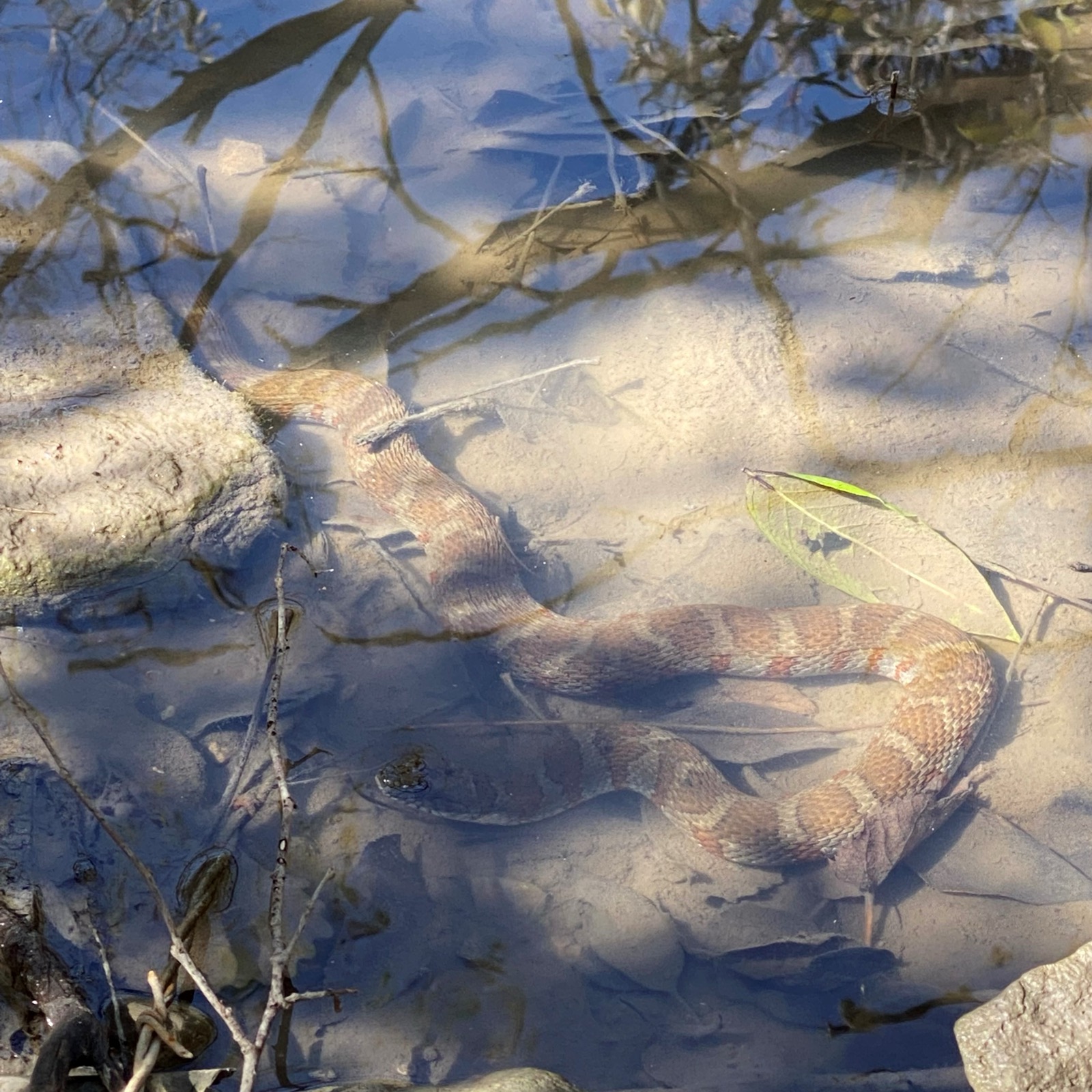
Snake in kayak what to do is an urgent put-in search because the animal may be coiled behind the seat, tucked along the foot pegs, inside the hull opening, or beneath a dry bag exactly where hands and feet land when you climb in. Stop launch prep, keep children and pets back from the cockpit, and do not sit down or push off until the boat is visibly clear.
Do not flip the kayak fast, slap the deck, drag it across rocks to scare the snake out, or reach under the seat for a forgotten strap. A loaded cockpit hides body direction, and a sudden movement on a sloped bank can send the snake toward bare ankles, water shoes, or a second paddler already in the water.
Kayaks attract snakes indirectly through shade under the hull, retained warmth on dark plastic, insects around damp gear, frogs near the put-in, and protected gaps inside scupper holes or storage hatches. Boats left overnight near shorelines, brush, fishing piers, or roof racks beside vegetation can become quiet shelter before morning launch.
If the snake remains visible, take one photo from outside striking distance and include the cockpit, deck rigging, nearby ground, and visible body pattern. Do not lift the bow or tilt the hull for a clearer angle. A wider scene gives SerpentID enough markings to compare while keeping you out of the seat and away from hidden footwell space.
SerpentID can help compare visible markings, but kayak encounters should stay conservative because shoreline footing, paddles, and tight cockpit space change the risk. If the app suggests a venomous possibility, the snake disappears into a hatch, or the launch window is short, contact local wildlife help and delay the trip. Afterward, store boats upright off the ground, plug scupper holes between uses, drain water from the cockpit, and inspect dry bags before loading.