


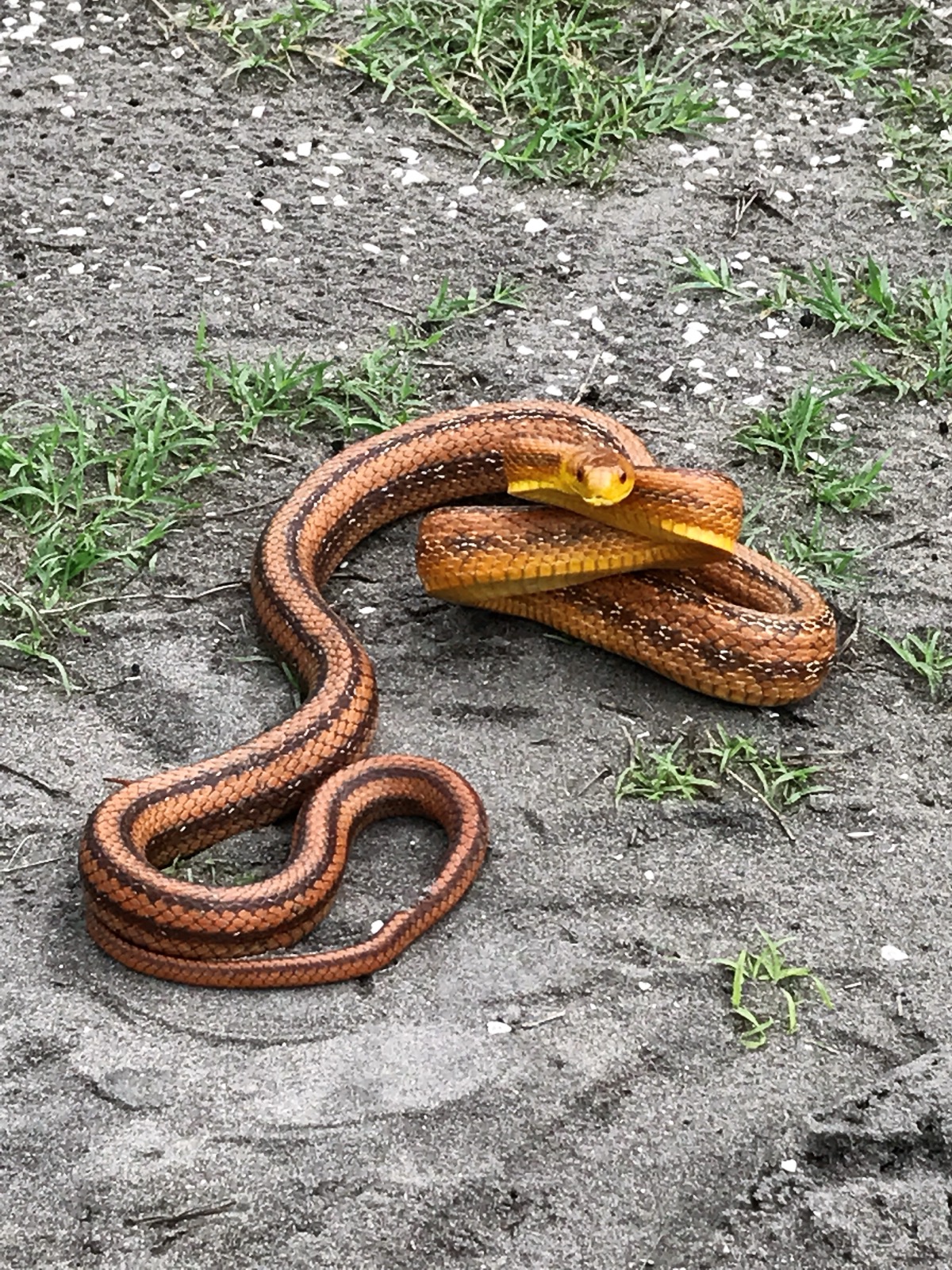
Snake in hammock what to do is a careful backyard or campsite search because the animal may be tucked inside the fabric fold, along the ridge line, beside a carabiner, or under a rain fly exactly where shoulders, hips, and bare legs land on the next swing. Pause before sitting, keep children and pets back from the underside, and do not unclip a strap until the fabric is visibly clear from both sides.
Do not shake the hammock hard, flip it over fast, slap the fabric to scare the snake out, or sit on the edge to check for movement. A loaded hammock hides body direction inside the fold, and a sudden pull can send the snake toward bare ankles, sandals, or a second person stepping in from behind a tree.
Hammocks attract snakes indirectly through shade under the fabric, retained warmth on dark colors, insects drawn to dropped snacks, lizards along the tree bark, and protected gaps along the suspension straps. Hammocks left up overnight near brush, fence lines, garden beds, or campsite firewood can become a quiet shelter before the morning hangout.
If the snake remains visible, take one photo from outside striking distance and include the fabric fold, suspension straps, nearby tree base, and visible body pattern. Do not lift a corner or peel back the rain fly for a clearer angle. A wider scene gives SerpentID enough markings to compare while keeping hands well off the fabric.
SerpentID can help compare visible markings, but hammock encounters should stay conservative because the next normal action is sitting down with body weight. If the app suggests a venomous possibility, the snake slides into the fold, or the hammock must be packed to break camp, contact local wildlife help and step back. Afterward, store hammocks indoors when possible, shake them out before each use, hang straps away from brush, and inspect the fabric with a flashlight before lying down at dusk.