


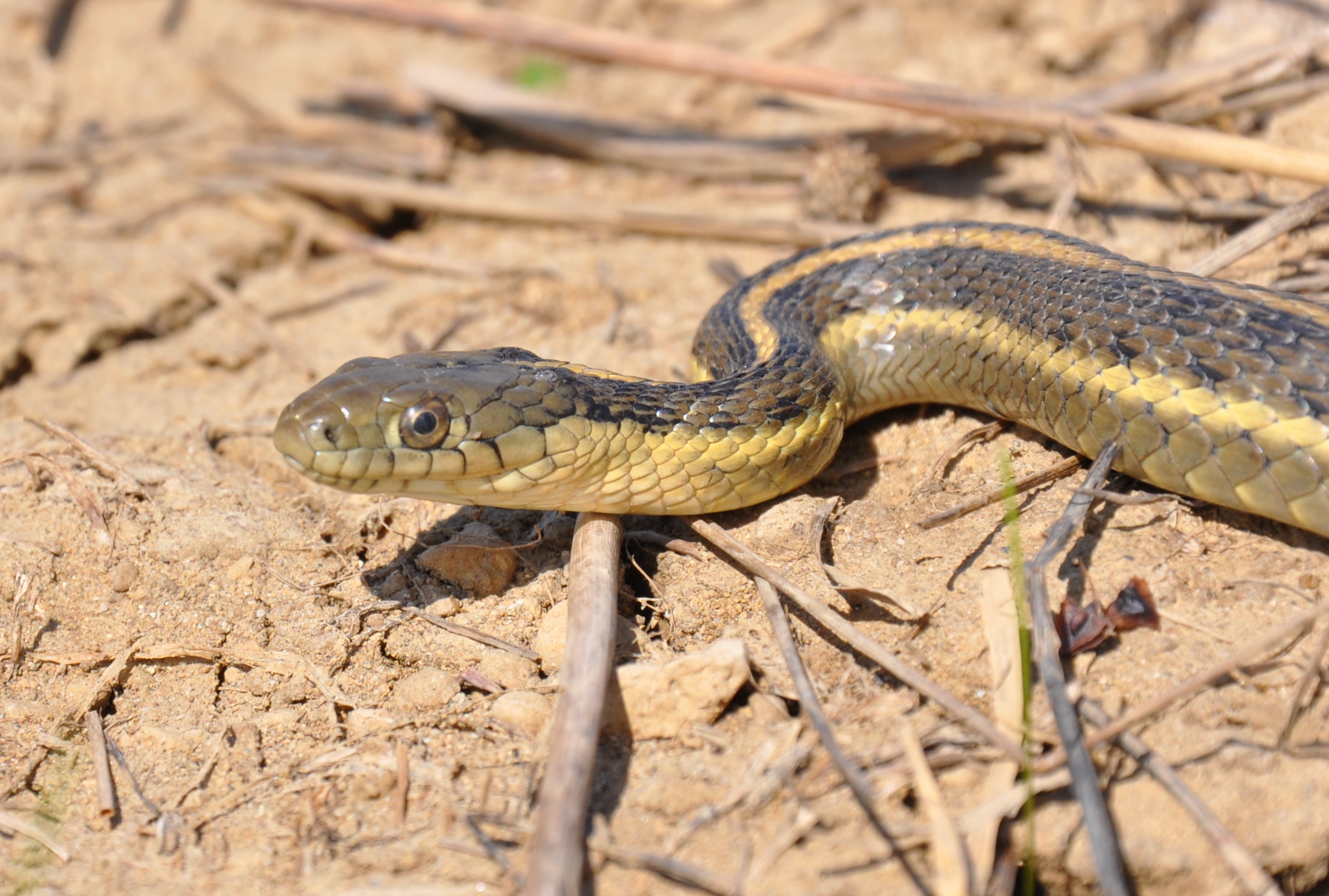
Snake in greenhouse what to do is a high-intent search because the first sighting often happens while someone is already reaching for seed trays, irrigation lines, pots, or tools. A greenhouse can turn a calm garden encounter into a close-range surprise because benches, plastic sheeting, and dense plant growth hide the animal's next move.
Do not keep working while trying to track the snake out of the corner of your eye. Stop moving pots, keep children and pets away from the doorway, and watch from outside the greenhouse or from the widest clear aisle. Look for the last visible position near bench legs, stacked trays, watering cans, grow bags, or the warm edge where plastic meets the floor.
Greenhouses attract snakes indirectly. Warm floors, moisture, insects, frogs, small rodents, and protected clutter can make the structure useful cover even when the snake is just passing through. That means the safety check should include the whole growing zone, not only the exact pot or tray where the snake first appeared.
If the snake is visible, take one stable photo without leaning under a bench or lifting containers for a better angle. A wider image that shows body pattern and setting is usually more useful than a risky close-up through leaves. Once you start moving trays, the snake can exit toward your hands, boots, or the doorway.
SerpentID can help compare likely species from that safe photo, especially when stripes, blotches, or body thickness are visible against the floor or soil. If the app suggests a venomous possibility, confidence is low, or the snake disappears into a section you need to work in, use local wildlife help. Afterward, reduce floor clutter, keep rodent attractors out, and inspect under benches before each greenhouse session.