


Snake in drain pipe what to do becomes urgent fast because drains, culverts, and corrugated yard pipes create deep blind spots with only one visible opening. People often assume they can solve it by shining a light inside, poking around with a tool, or running water through the pipe. In reality, a confined snake can reverse direction or hold tight where you cannot track it safely.
Do not put your hand into the pipe opening, kneel in front of the exit, or try to force the snake out with a hose. First, give the area space and note whether the pipe is a downspout extension, French drain outlet, culvert, or open landscape drain. That context matters because water, mud, and available exits change how the animal may move.
Drain structures attract snakes because they stay cool, damp, and full of prey movement. Frogs, small rodents, insects, and sheltered edges around rock, mulch, and retaining walls can all make the pipe zone appealing. In many cases the pipe is part of a larger habitat corridor rather than a random hiding place.
If the snake is visible at the mouth of the pipe, take one clear photo from outside the opening and stop there. Do not widen the hole, remove pipe sections, or send objects deeper inside to keep visual contact. Once the snake retreats around a bend, you no longer control distance or direction, and the encounter becomes harder instead of easier.
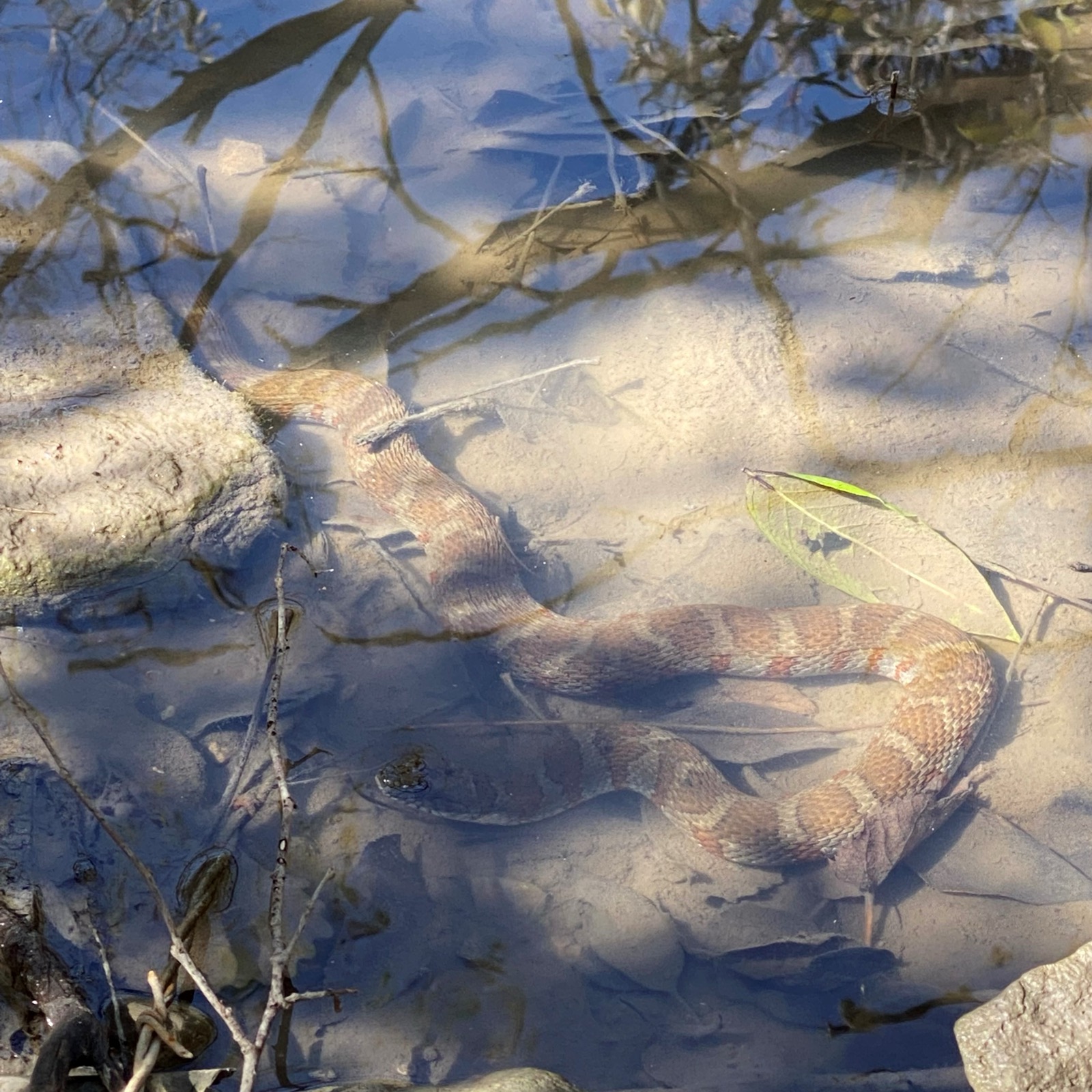
SerpentID can help compare likely species from the visible section of body pattern, especially near water-associated habitat, but uncertainty should keep the response conservative. If the app suggests a venomous match or the drain is in a high-traffic path you cannot avoid, contact local wildlife help. Afterward, inspect nearby cover, standing water, and prey attractors so the drain area is less useful as shelter.