


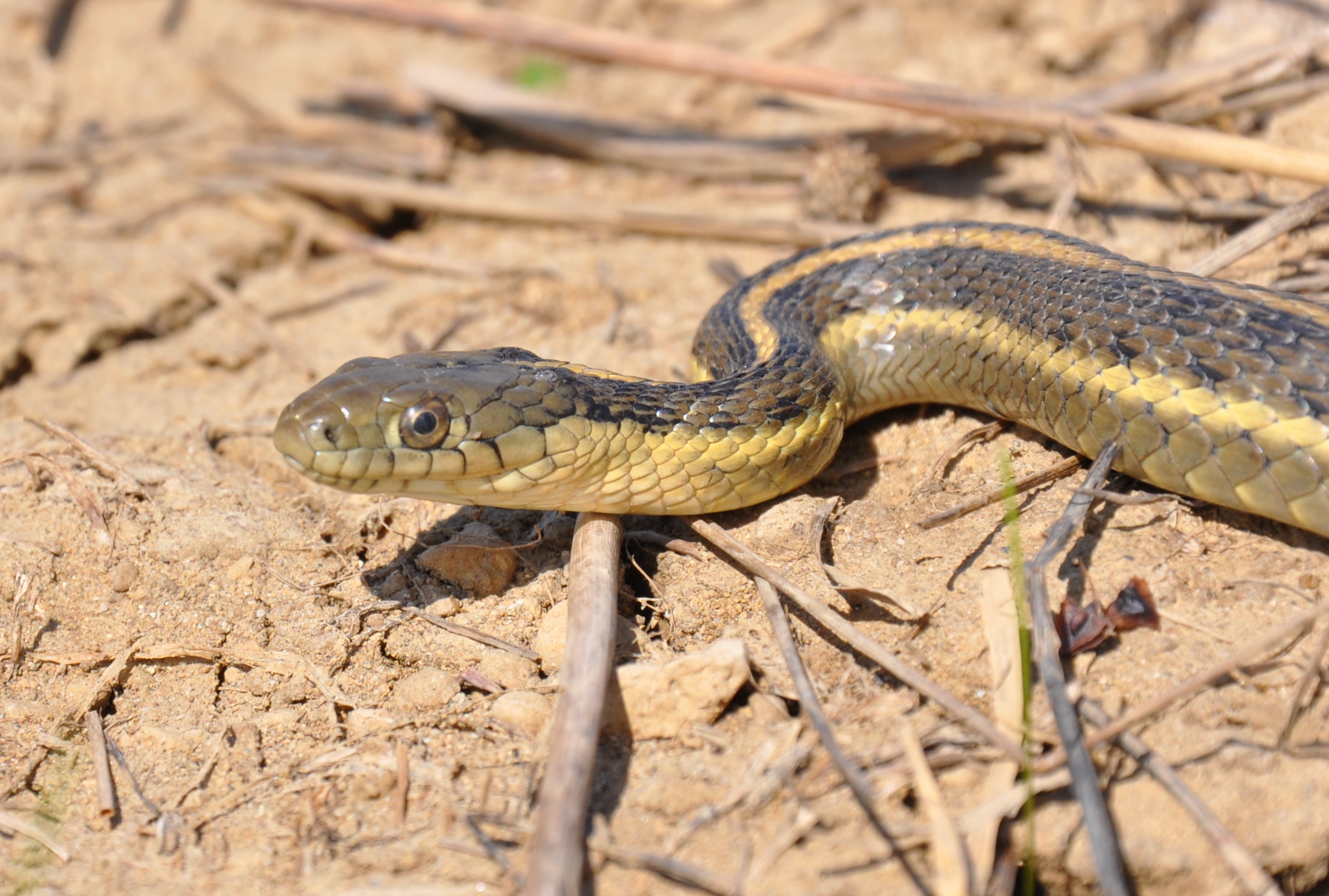
Snake in dog yard what to do is a pet-safety search where the first priority is separating the dog from the scene. Dogs may bark, sniff, paw, or pick up a snake before a person has time to identify it. Bring pets inside or secure them on leash before checking bowls, toys, kennels, or fence edges.
Do not let a dog investigate the snake, and do not reach into tall grass, under a kennel, or around outdoor bowls while the animal is unaccounted for. Keep the yard quiet, watch from a safe distance, and note whether the snake is near water, food, shade, a fence gap, a shed edge, or a pile of toys.
Dog yards attract snakes indirectly through water bowls, spilled food, rodents, insects, shade, and fence-line cover. A snake may be crossing the run, following prey, cooling off near damp ground, or using a kennel base as temporary shelter. The dog does not need to provoke the snake for the situation to become risky.
If the snake remains visible, take one photo from outside striking distance and include the yard context. Do not move bowls, lift dog beds, or push toys aside to improve the angle. A wider image that shows pattern, size, and nearby cover is more useful than a close-up that puts hands near the ground.
SerpentID can help compare visible markings from a safe image, but low confidence should keep the dog yard closed. If the app suggests a venomous possibility, the snake disappears under kennel equipment, or a pet may have contacted it, call local wildlife help and a veterinarian as appropriate. Afterward, remove spilled food, lift bowls when not in use, trim fence-line cover, and inspect the run before letting pets out.