


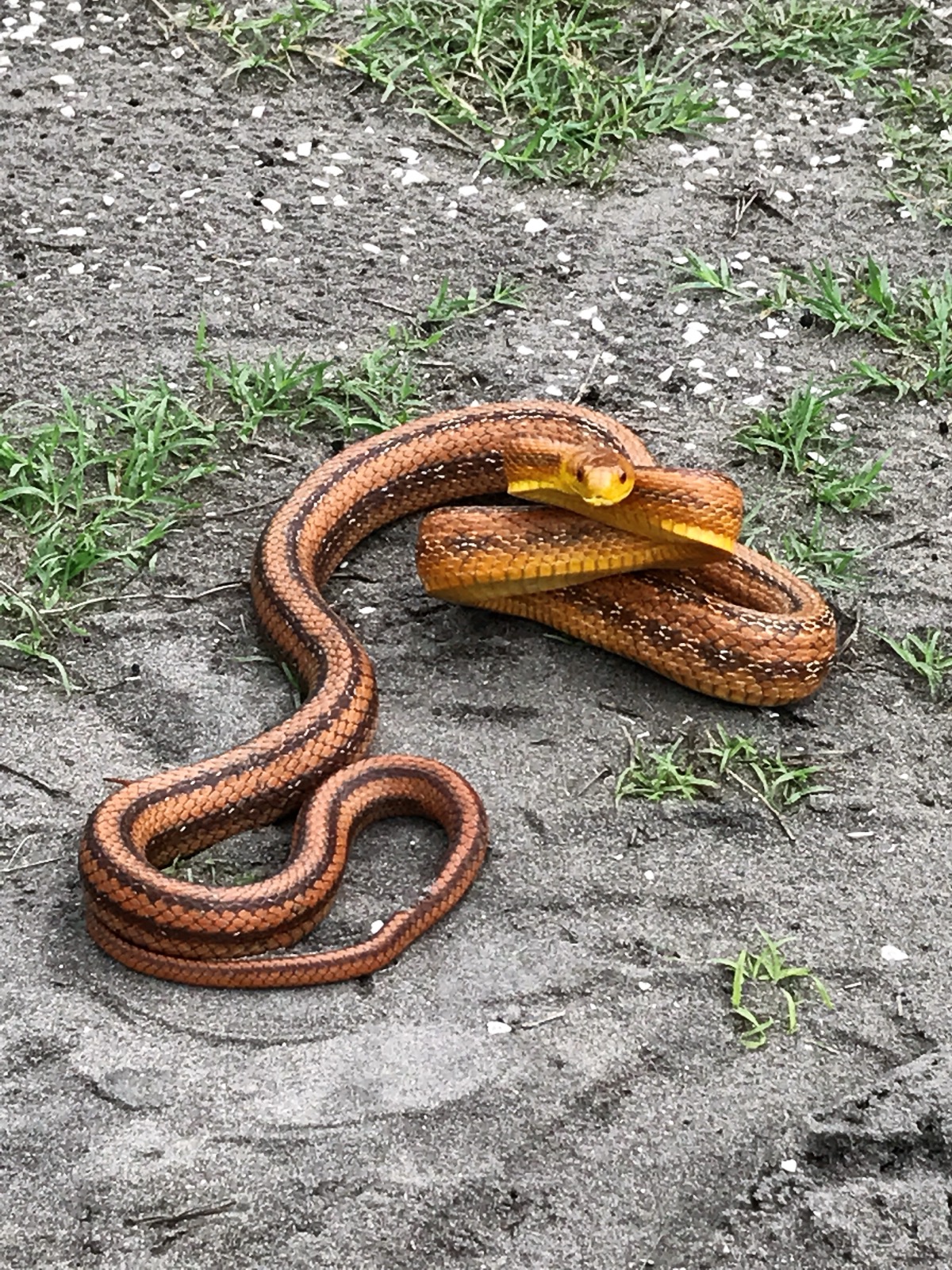
Snake in compost bin what to do is a strong homeowner search because compost creates exactly the conditions snakes and their prey use: warmth, moisture, insects, rodents, and cover that is rarely disturbed in a careful way. The risky mistake is treating the bin like routine yard work and sliding a hand under the lid or into loose material before checking the area first.
Do not reach into the compost, turn the pile with short tools while standing close, or lean over the opening for a better look. Start by stepping back, keeping children and pets away, and watching whether the snake is visible at the lid edge, under the bin lip, or along the base where spilled material has built up.
Compost attracts snakes indirectly because it attracts food and stable shelter. Wet cardboard, food scraps, mulch, pallet gaps, and rodent traffic around the bin can make the whole corner of the yard more useful than people expect. In many cases the sighting is less about the bin itself and more about the habitat cluster around it.
If the snake is visible from outside the bin, take one stable photo without changing the pile structure. A full-body view near the compost wall is usually more helpful than trying to expose the head by lifting layers. Once you start turning the pile, you lose control over where the snake exits and how close it ends up to your legs or hands.
SerpentID can help compare visible pattern and body build from a safe photo, but uncertainty should still lead to conservative decisions. If the app suggests a venomous possibility or the snake disappears inside material you need to move, contact local wildlife help. After the encounter, keep the compost area tidier, reduce rodent cover, and avoid letting loose debris build up around the base.