


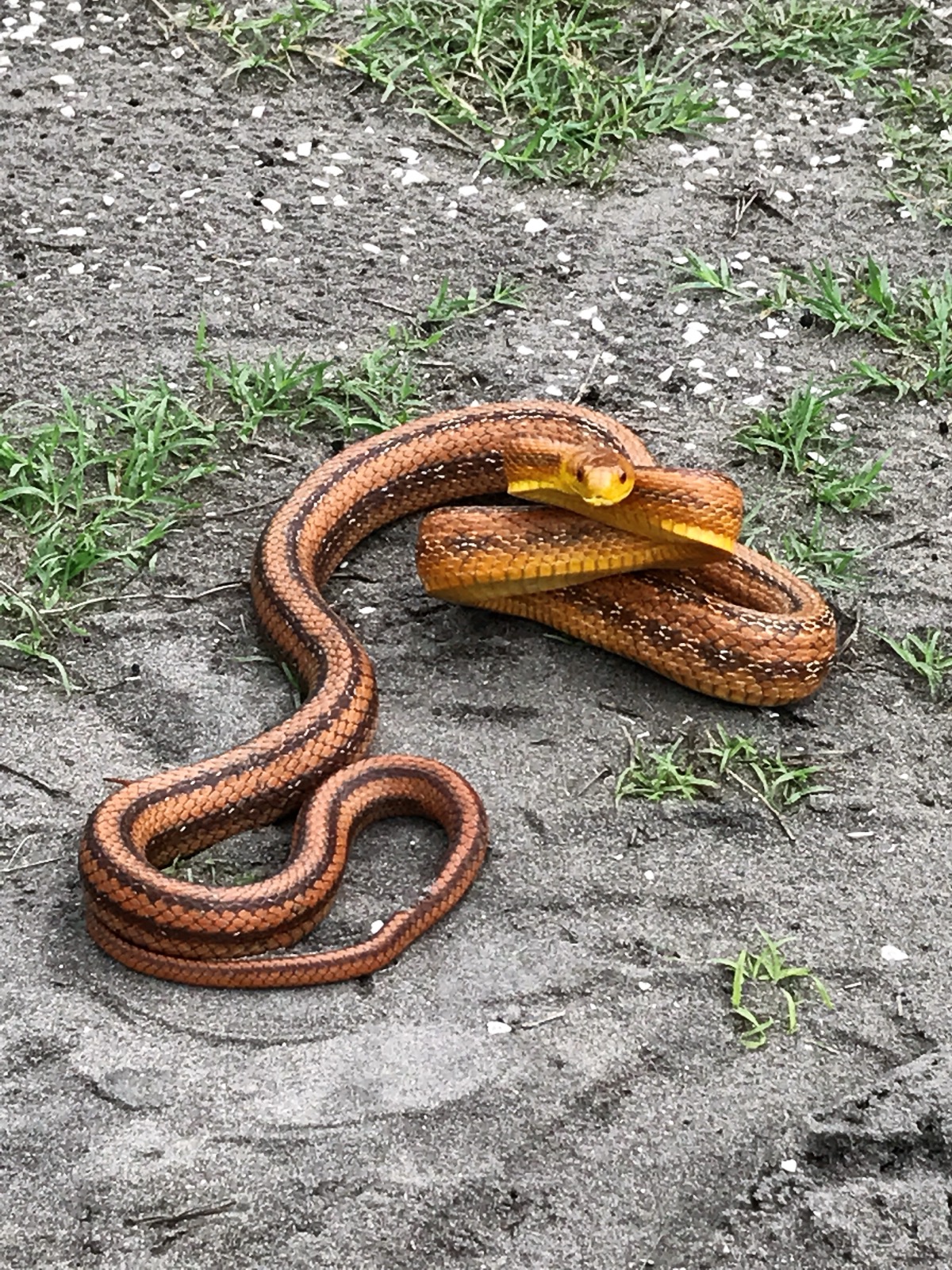
Snake in chicken coop what to do is an urgent search because the sighting combines animal welfare, eggs, and close-quarter handling risk. Coop snakes are often there for one of three reasons: eggs, rodents attracted by feed, or the protected microclimate around bedding, walls, and nest boxes. That means the first job is protecting the flock without turning the coop into a bite-risk zone.
Start by moving people, children, and pets out of the tight work area. If you can isolate the chickens from the snake without crowding the animal, do that first. Do not reach blindly into nest boxes, behind feed bins, or under boards where the snake can be touched before it is seen clearly.
Many coop sightings involve rat snakes and other strong climbers that are good at finding eggs and rodent-rich structures. That does not mean every coop snake is harmless, which is why guesswork based on one quick glance is a bad trade. Pattern across the body, overall build, and scene context matter much more than one panicked look at the head.
A good photo from a safe distance is more useful than trying to pin the snake for certainty. Show as much of the body as possible and include nearby context like nest boxes, walls, or bedding. That gives SerpentID a better chance to separate a common egg-raiding rat snake from a dangerous lookalike without requiring closer contact.
After the encounter, treat the coop like a systems problem. Secure feed, reduce rodents, collect eggs promptly, repair hardware cloth gaps, and remove cluttered hiding spots around the run and foundation. SerpentID can guide the identification, but the long-term win is making the coop less rewarding to visit.