


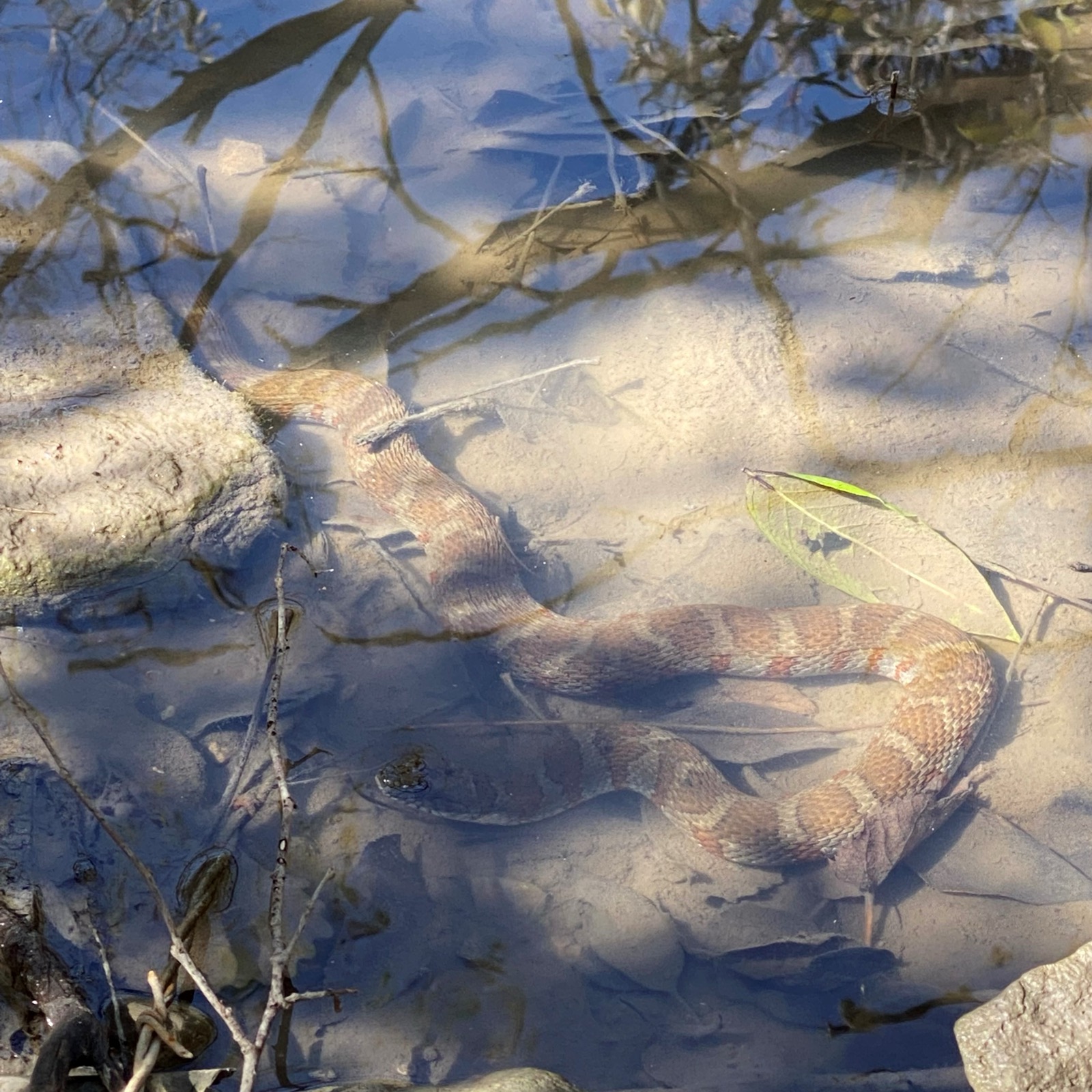
Snake in boat trailer what to do is a practical towing search because the animal may be close to the tongue, winch post, bunks, wheel wells, wiring, safety chains, or damp gear stored below the hull. Pause hookup, keep people and pets away from the trailer, and do not reach through the frame to grab straps or cords.
Do not kick the tire, pull the trailer forward, lift a tarp, test lights by reaching near the frame, or send a dog to sniff under the boat. Trailer hardware creates narrow shadows where the snake can be partly visible but still hard to track, especially near wheels and crossmembers.
Boat trailers attract snakes indirectly through shade, retained moisture, frogs, insects, rodents, fish scent, and quiet storage beside docks, garages, fences, or tall grass. A trailer parked after a lake trip can remain damp and sheltered long enough to invite temporary cover.
If the snake remains visible, take one photo from outside striking distance and include the wheel, frame, bunks, nearby cover, and visible body pattern. Do not crouch between the trailer and a wall or move straps for a clearer shot. A context photo helps SerpentID without forcing close access to the frame.
SerpentID can help compare visible markings, but boat-trailer encounters should stay conservative because towing prep involves hands near hidden gaps and moving equipment. If the app suggests a venomous possibility, the snake is near a wheel or hitch, or the trailer must move soon, contact local wildlife help. Afterward, store trailers on clear ground, remove damp gear, check frame gaps before hitching, and keep grass trimmed around parked equipment.