


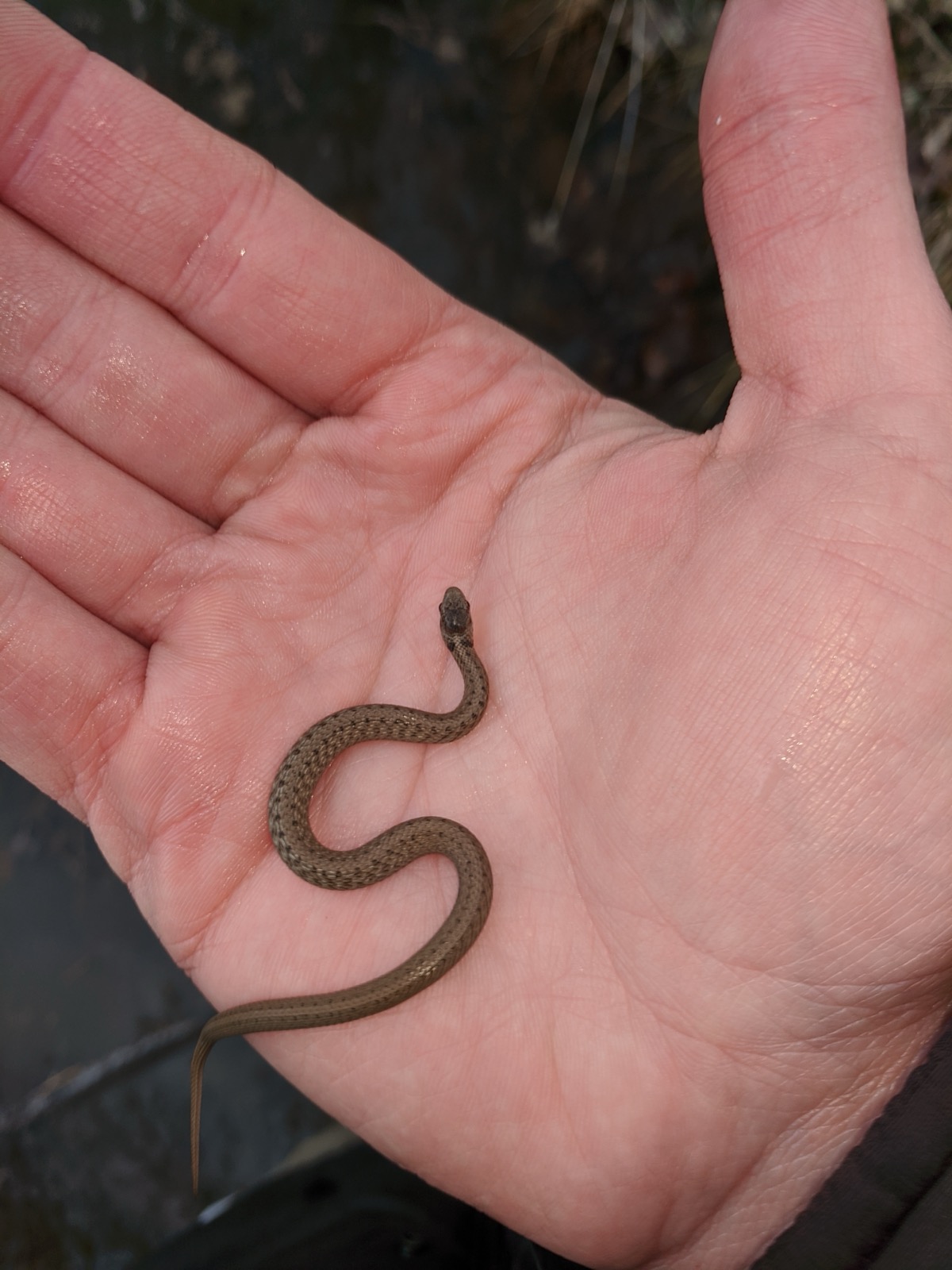
Snake in bicycle helmet what to do is a careful garage or shed search because a small species like a brown snake or ring-necked snake may be tucked inside the padded shell, behind the chin strap loop, along the rear retention dial, or inside a vent slot exactly where the head goes on the next ride. Stop the routine, keep kids and pets back from the helmet rack, and do not buckle the strap or hand the helmet to a child until the inside is visibly clear.
Do not shake the helmet hard against a wall, flip it over fast onto a workbench, blow into the vents, or stick a finger through a slot to feel around. Helmet liners create stacked dark cavities where a small snake's head and body can be hidden under foam pads, and a quick movement can send the animal toward exposed fingers, an open shoe, or a child reaching for handlebars.
Bicycle helmets attract snakes indirectly through shade, retained warmth on dark plastic, insects around the chin strap webbing, spider activity inside the vents, and protected gaps along the foam liner. Helmets left hanging in garages, on porch hooks, in shed corners, or inside open bike trailers near garden beds can become quiet shelter during hot afternoons.
If the snake remains visible, take one photo from outside striking distance and include the inside of the shell, the strap, the rack or hook, and visible body pattern. Do not tilt the helmet toward your face or peel back a foam pad for a clearer angle. A wider scene gives SerpentID enough markings to compare while keeping hands well off the shell.
SerpentID can help compare visible markings, but helmet encounters should stay conservative because the next normal action is sliding the helmet onto a head. If the app suggests a venomous possibility, the snake slips deeper into the liner, or kids are waiting to ride, contact local wildlife help and pause the trip. Afterward, store helmets indoors in a sealed bin when possible, hang them away from brush and foundation gaps, shake them out before each ride, and inspect the inside with a flashlight before buckling the strap.