


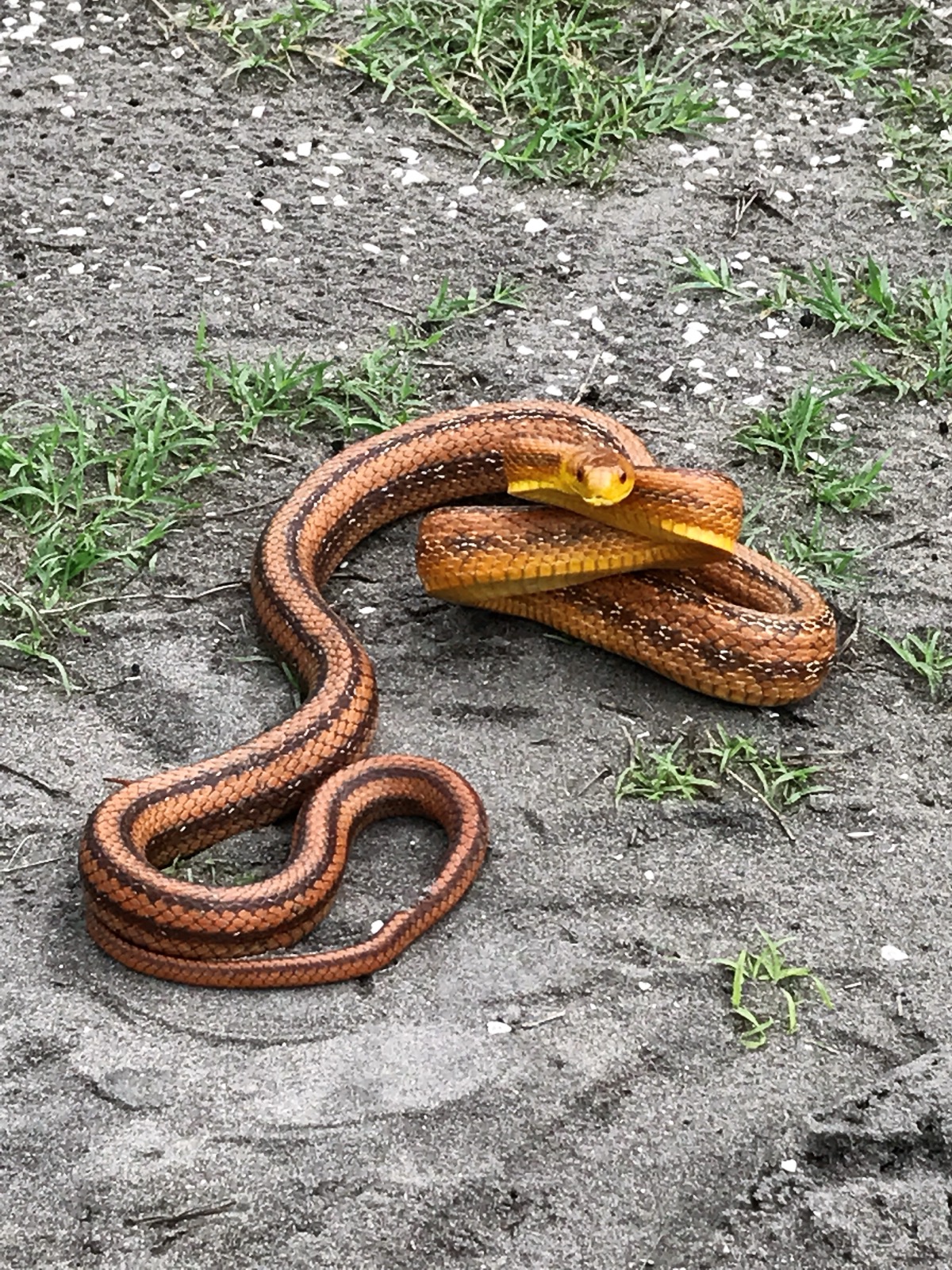
Snake in barn what to do is a strong search because barns combine exactly the conditions snakes and their prey use: feed, rodents, shade, stable clutter, and low-visibility storage edges. The unsafe move is continuing chores as usual and turning a hidden snake into a hand-level or boot-level surprise while lifting bags, straightening tack, or stepping into dim corners.
Do not reach behind hay bales, grab under saddle pads, or drag feed tubs and tarps to flush the animal out. Clear people and animals from the immediate aisle first, then identify where the snake was last seen and what blind cover is closest: wall ledges, pallet stacks, tack trunks, boards, buckets, or the warm edge behind stored equipment.
Barns attract snakes indirectly through prey and shelter density. Grain spills, rodent runs, stacked lumber, open rafters, and nesting birds can make the whole structure useful habitat, not just the exact stall or feed room where the snake appeared. One sighting should prompt a wider safety check of the surrounding storage pattern rather than a narrow chase at ground level.
If the snake remains visible, take one clear photo from outside the work zone and stop moving objects. Do not try to pin it with a rake or block its route with your feet. In barns, narrow aisles and stacked equipment remove your margin fast, and the animal can disappear into a much tighter hiding spot if pressured.
SerpentID can help narrow likely matches from a safe photo, but uncertainty should still lead to cautious barn handling decisions. If the app suggests a venomous possibility or the snake disappears into a stall, feed area, or workspace that must stay active, use local wildlife help. Afterward, reduce spilled feed, tidy floor-level clutter, and inspect hidden corners before each chore cycle.