


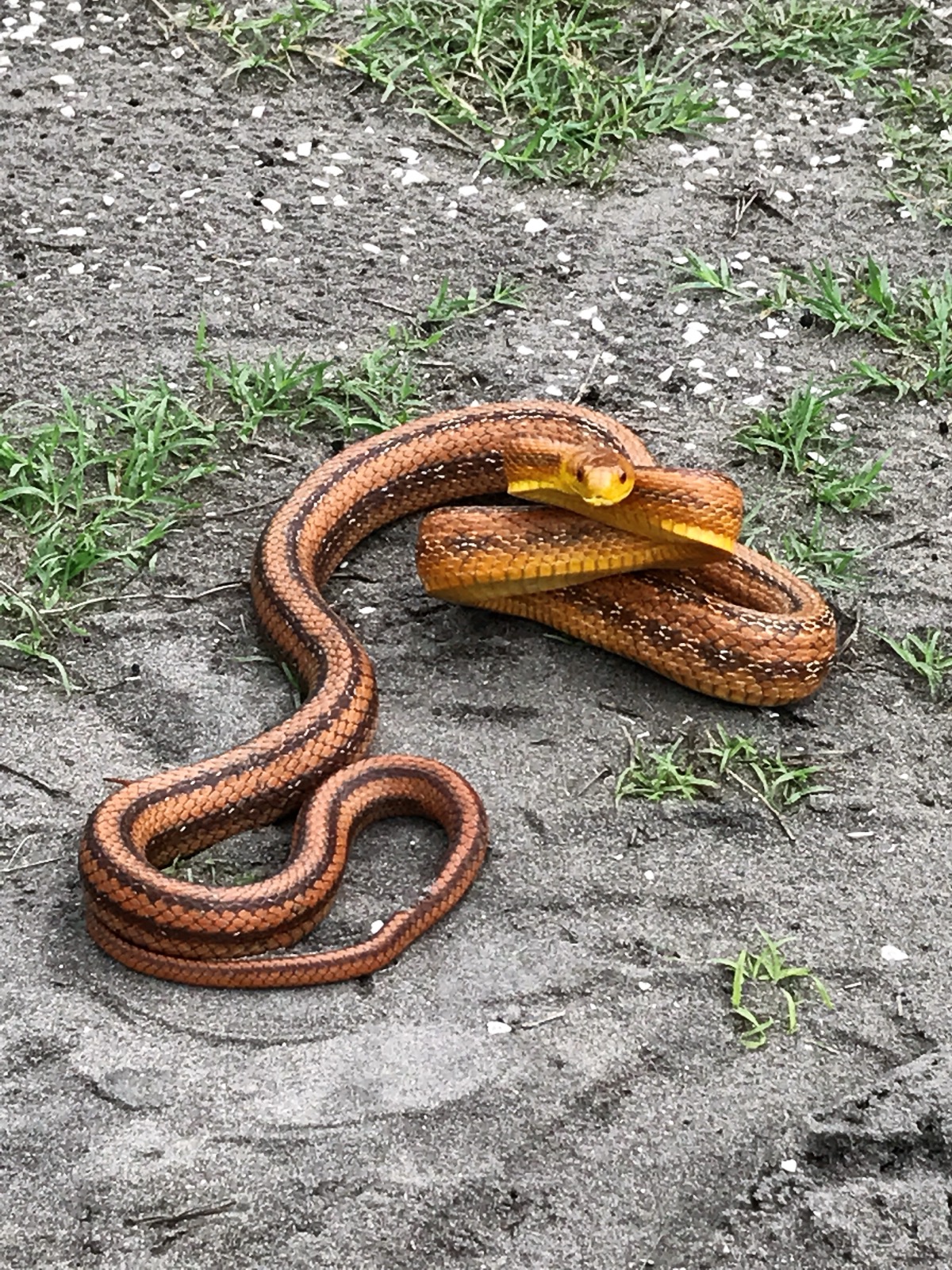
Snake in attic what to do is a high-stress search because the animal feels hidden, elevated, and harder to monitor than a yard or garage sighting. People often imagine the snake moving through insulation, dropping into wall voids, or appearing in a bedroom next. In practice, the attic usually offers what the snake wanted already: warmth, protected travel routes, and prey access if rodents are active up there.
The first mistake is turning the attic into a chase. Do not climb up with a broom, flashlight, and gloves just to get visual confirmation. Tight footing, stored boxes, low beams, poor lighting, and surprise close-range contact make attic handling riskier than the original sighting.
Many attic encounters involve rat snakes and other climbing species because rooflines, vents, overhanging limbs, and gaps near soffits create easy access. That still does not mean every attic snake is harmless, which is why a species guess based on one fast look is a bad trade. Safe distance and controlled observation matter more than forcing certainty.
If you can photograph the animal from a hatch or stable access point without moving closer, take one clear shot that shows as much of the body pattern as possible. Context helps too: rafters, insulation, ducting, or roof decking can explain why the snake ended up there and improve later exclusion work.
SnakeSnap can help narrow whether the snake resembles a common attic visitor or something medically significant, but the response stays conservative when confidence is low. If the app surfaces a venomous option, contact local wildlife help. After that, close the real problem by trimming roof access, sealing gaps, and addressing rodent activity.