


Snake in AC condenser unit what to do is a careful side-yard search because the animal may be threaded between the aluminum coil fins, coiled around the contactor and capacitor inside the access panel, draped along the copper lineset where it leaves the cabinet, or stretched along the top fan grille exactly where hands grab to rinse the coil or reset the disconnect before a hot afternoon. Pause the hose spray, keep children and pets off the concrete pad, and do not pull the disconnect, unscrew the side panel, or lift the top grille until the cabinet is visibly clear from a step back on the lawn.
Do not blast the fins with a pressure washer to flush the snake out, jam a screwdriver through the grille to poke around the fan blade, kick the cabinet to make noise, or reach into the access panel to feel for the contactor blind. A condenser unit hides body direction inside the dark cabinet between the fan motor, the coil wrap, and the bundled low-voltage wiring where a long kingsnake or rat snake's color blends with shadow, and a quick reach can put fingers directly on a coiled body next to a live 240-volt terminal.
AC condenser units attract snakes indirectly through retained warmth on the contactor coil and refrigerant lines, condensate moisture pooling on the pad, insects gathering around the night work light on the side of the house, mice nesting in the insulation around the lineset penetration, and protected gaps along the top grille edge and any unsealed wiring conduit. Units set in tall grass, units shaded by overgrown shrubs, units on cracked or settled pads, and units with bent fin guards sit on a quiet route between yard cover and a roomy shaded mechanical shelter.
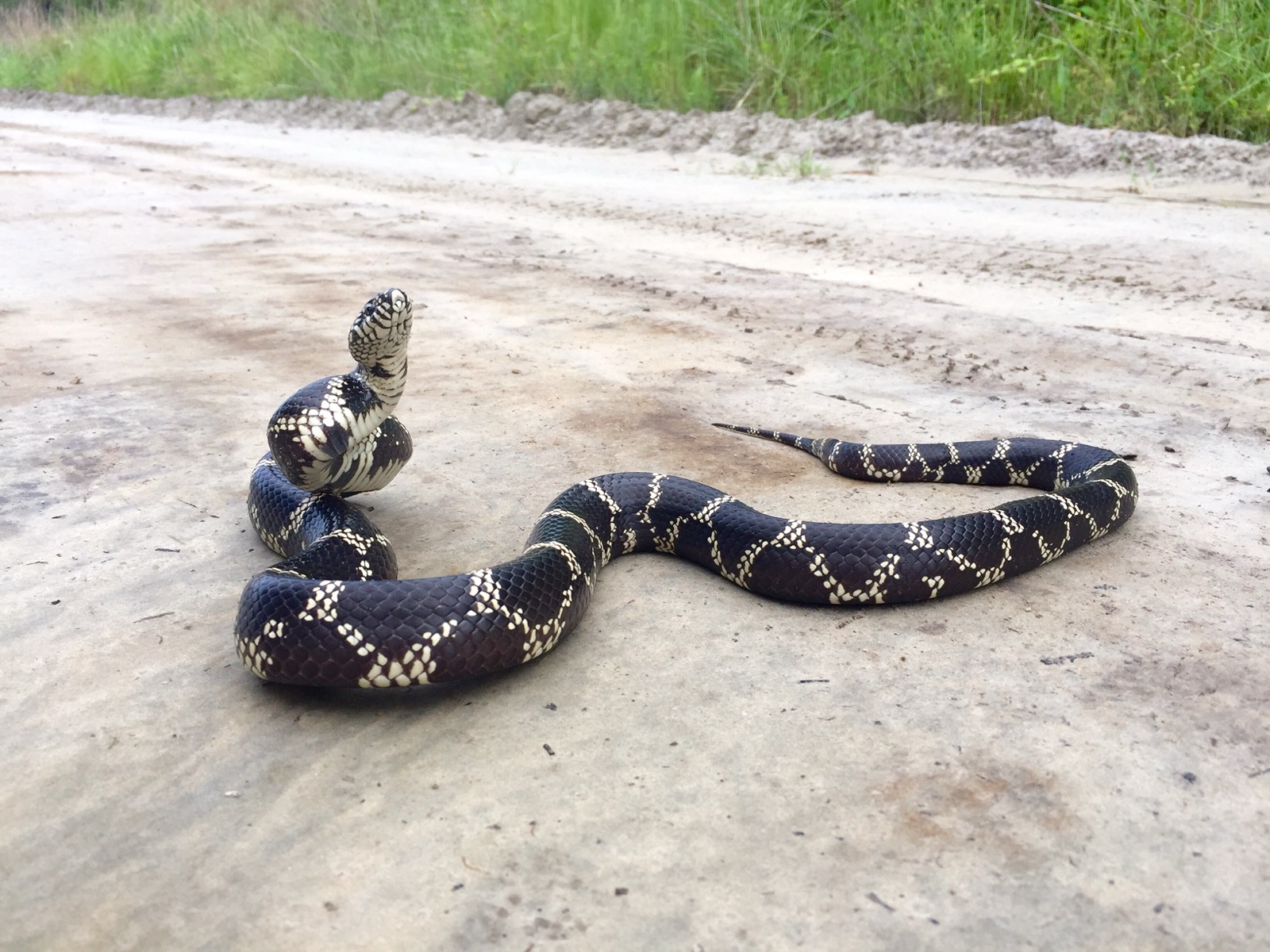
If the snake remains visible, take one photo from outside striking distance and include the top grille, the visible body pattern against the fins or the lineset, and the surrounding pad. Do not lean over the top of the cabinet for a top-down shot or kneel against the unit for a closer angle. A wider scene gives SerpentID enough markings to compare while keeping your boots on the lawn and your hands well away from the cabinet and the service disconnect.
SerpentID can help compare visible markings, but condenser-unit encounters should stay conservative because the next normal action is opening an electrical access panel at chest height to a cabinet that may energize on a thermostat call. If the app suggests a venomous possibility, the snake slips deeper into the coil, or you cannot tell whether the body continues into the line chase into the wall, contact local wildlife help and a licensed HVAC technician before any service. Afterward, trim shrubs back at least two feet from every side of the unit, mow tightly around the pad, seal the lineset penetration with appropriate weatherproof foam, address mouse activity near the cabinet, and check the unit with a flashlight from a step back before any seasonal coil cleaning.