


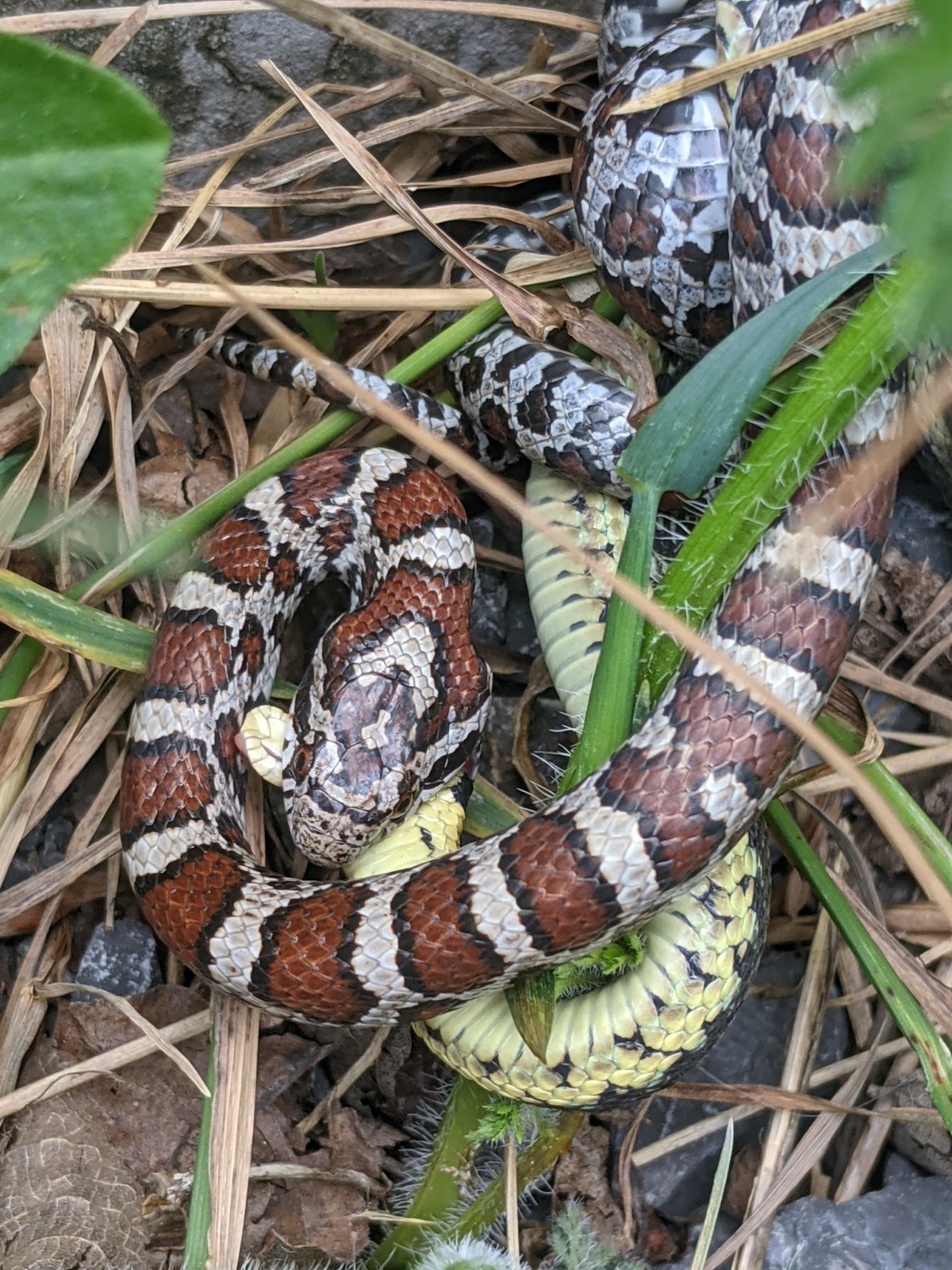
When encountering a snake in the wild or even in your yard, one of the first things that catches the eye is its pattern. From bold stripes to intricate blotches and distinct bands, snake patterns serve many purposes, including camouflage, warning coloration, and even species recognition among snakes themselves. For us, these patterns are invaluable clues in the complex puzzle of identification. However, it is vital to understand that while patterns are incredibly helpful, they are rarely the sole indicator needed for a definitive identification. Combining pattern analysis with observations of head shape, scale texture, size, and behavior provides a much more reliable assessment.
Striped patterns are among the easiest to recognize, often running lengthwise down the snake's body. Species like garter snakes and ribbon snakes are classic examples, typically displaying one or more prominent stripes along their backs or sides. These stripes can be continuous, broken, or even fade into a solid color towards the tail. Some non-venomous racers, particularly juveniles, might also exhibit faint stripes. While generally indicative of harmless species in many regions, it is important to remember that pattern alone is not a guarantee of safety. Always observe from a distance and avoid making assumptions based on a single characteristic.
Banded patterns, characterized by rings or saddles that encircle or cross the body, are another common type. These bands can be uniform in width and color, or they can alternate, creating striking contrasts. The highly venomous coral snakes, found in parts of the United States and India, are famously known for their vibrant red, yellow (or white), and black bands, often giving rise to the cautionary rhyme "red on yellow, kill a fellow." However, this rhyme has geographical limitations and several harmless species, such as milk snakes and some kingsnakes, perfectly mimic these banded patterns, making careful observation of the specific color order and other features absolutely critical. Similarly, some venomous species like copperheads and certain rattlesnakes may have dark bands or hourglass-shaped markings that extend across their bodies.
Blotched or spotted patterns are perhaps the most varied, ranging from irregular splotches to distinct diamond or oval shapes. Many North American rat snakes display blotches that can appear quite dark against a lighter background, often changing in prominence with age. Venomous pit vipers like copperheads are known for their distinctive hourglass-shaped blotches, while rattlesnakes typically feature diamond or hexagonal patterns along their backs. These blotches often provide excellent camouflage, allowing the snake to blend seamlessly into leaf litter or rocky terrain, making them particularly difficult to spot until you are very close.
Some snakes, however, may appear to have little to no discernible pattern, presenting as a solid color like black, brown, or green. Black racers, for instance, are often uniformly dark as adults, though juveniles may exhibit blotches. Even in seemingly solid-colored snakes, subtle patterns or variations in scale texture might become visible upon closer, safe inspection. The perception of pattern can also be influenced by lighting conditions, the snake's recent activity (such as shedding), and even its emotional state, which can cause some species to darken or lighten their coloration.
It is crucial to acknowledge that snake patterns are not always consistent, even within the same species. Geographic variation can lead to different color phases or pattern intensities across a snake's range. Furthermore, many non-venomous snakes have evolved to mimic the patterns of dangerous venomous species, a phenomenon known as Batesian mimicry. This makes identification based solely on pattern incredibly challenging and underscores the need for a holistic approach. Never assume a snake is harmless just because its pattern doesn't perfectly match a known venomous species from a guide, especially when dealing with juvenile snakes whose patterns can differ significantly from adults.
Ultimately, understanding snake patterns is a powerful tool for identification, but it is just one piece of the puzzle. When you encounter a snake, prioritize your safety by maintaining a respectful distance. Observe its overall appearance, including its patterns, body shape, head structure, and any behaviors it exhibits. If you are unsure of a snake's identity, which is often the case, the safest and most responsible action is to take a clear photograph from a safe distance. The SerpentID app can then compare these markings against likely local species, helping you determine if it is venomous and if you need to contact local wildlife services for assistance.