


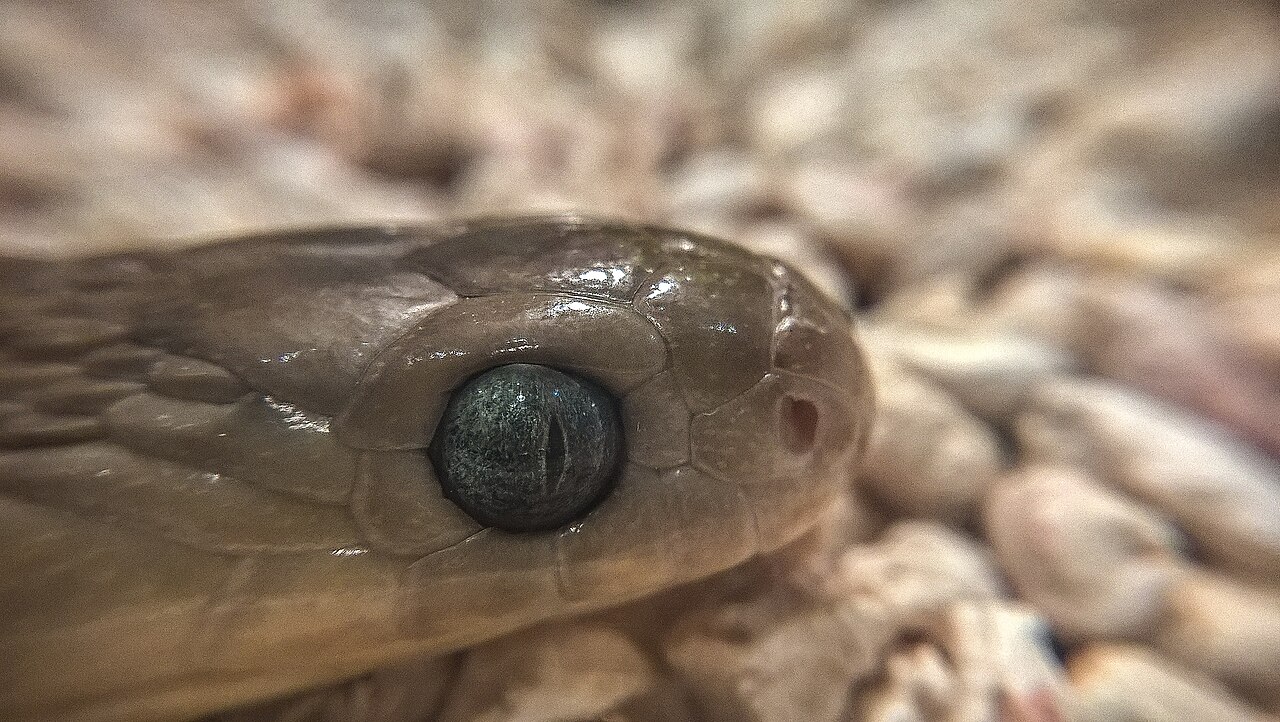
Snakes, with their unblinking gaze, often give the impression of having an intense, unwavering stare. This distinctive look comes from the clear, protective scale called a brille or spectacle, which covers each eye, effectively serving as a permanent contact lens. While it's a common misconception that all snakes have poor eyesight or are nearly blind, their visual capabilities are far more varied and sophisticated than many realize. However, even for species with excellent vision, sight is rarely the only, or even the primary, way they perceive their complex world.
The quality of a snake's eyesight largely depends on its lifestyle and habitat. Diurnal (day-active) species, particularly those that hunt above ground or in trees, tend to have relatively good vision, capable of detecting movement and judging distances effectively. Their eyes often feature round pupils, adapted for bright light. Conversely, fossorial (burrowing) snakes, which spend most of their lives underground, may have significantly reduced eyes, sometimes appearing as little more than dark spots, as strong vision is less critical in their subterranean world. This diversity highlights that there isn't a single "snake vision" but rather a spectrum of adaptations.
Even for snakes with relatively keen eyesight, their visual world can be limiting. Dense foliage, low light conditions at dawn or dusk, or complete darkness at night can render vision less effective for hunting or navigating. Furthermore, many of a snake's prey items, such as rodents or amphibians, are masters of camouflage or operate under the cover of darkness. To overcome these visual limitations and thrive in diverse environments, snakes have evolved an impressive array of additional senses that complement, and often supersede, their sight.
Perhaps the most iconic non-visual sense in snakes is their remarkable chemoreception, often misunderstood as simply "smelling" with their tongue. When a snake flicks its forked tongue, it is collecting microscopic chemical particles from the air and ground. These particles are then delivered to a specialized sensory organ in the roof of its mouth, known as the Jacobson's organ or vomeronasal organ. This allows snakes to create a detailed "chemical map" of their surroundings, tracking prey trails, identifying mates, and detecting predators with incredible precision, even in complete darkness or when prey is hidden from view.
Another extraordinary sensory adaptation, crucial for many nocturnal predators, is thermoreception. Pit vipers, boas, and pythons possess specialized infrared-sensing organs, often called "heat pits," located on their faces. These pits contain membranes that are highly sensitive to minute changes in temperature, allowing the snake to "see" the heat signatures of warm-blooded prey, even in absolute darkness. This provides a distinct thermal image, enabling them to accurately strike at mice, birds, or other prey that would be invisible to their eyes alone, effectively giving them a sixth sense that bypasses visual limitations.
Beyond chemical and thermal detection, snakes also possess a profound sensitivity to vibrations. Lacking external ears, they primarily "hear" through ground vibrations, which are transmitted through their jawbone to their inner ear. This allows them to detect approaching footsteps or the movements of burrowing prey from a distance. Taken together, these highly developed senses—vision, chemoreception, thermoreception, and mechanoreception—combine to form a rich, multi-dimensional perception of their environment, making snakes incredibly adept at survival and hunting in virtually any condition.
Understanding how snakes perceive their world, with their blend of visual acuity and other specialized senses, underscores the importance of giving them space. Their ability to detect minute changes in their environment, even without direct visual contact, means they are often aware of your presence long before you are aware of theirs. If you encounter a snake, observe it from a safe distance without attempting to approach or interact. For safe and accurate identification, take a clear photo from afar and use the SerpentID app to compare markings against likely local species. If the snake is venomous or you are uncertain, contact your local wildlife services for assistance.