


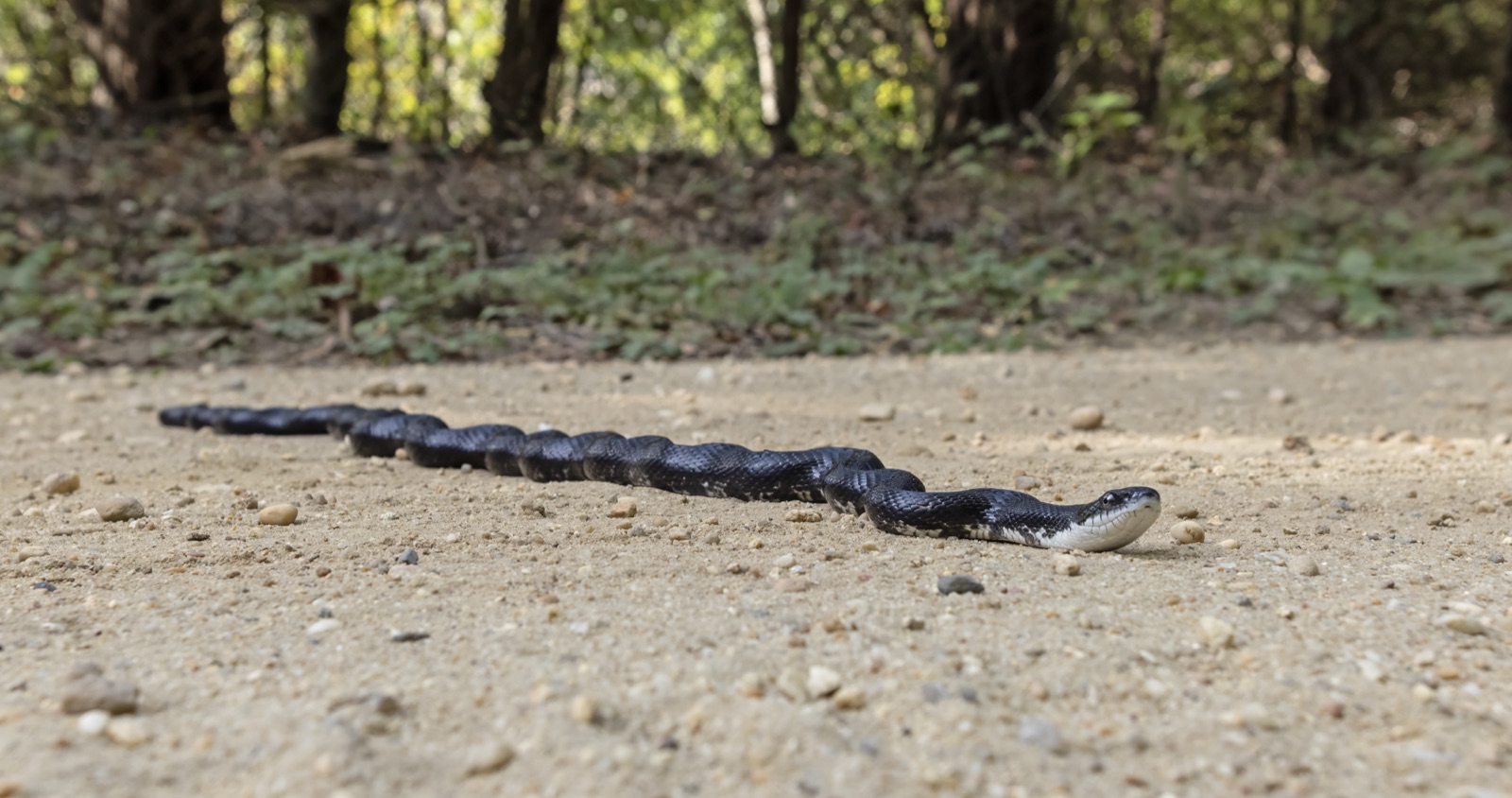
A pet door is one of the easiest ways for a snake to get inside a house. It sits at ground level, it is often surrounded by shrubs, mulch, or a shaded step, and many flaps swing open with very little pressure. A snake exploring along a wall in search of rodents, shelter, or a cool spot can push through a loose flap without any special effort. Homeowners in the United States, Australia, and India all report this, and while most snakes that come in this way are harmless species following a scent trail, some are not, so the first few minutes matter more than anything else.
The most important step is to separate your pets from the snake. Dogs and cats are curious, and a pet that noses or paws at a snake is far more likely to be bitten than a person who simply steps back. Call your animals away calmly, shut them in another room or outside away from the pet door, and keep children with them. Then close the interior doors to the room where the snake is, if you can do so without walking past it. A rolled towel along the bottom of a closed door helps keep the snake contained in one space, which makes it much easier for a professional to find later.
Once people and pets are out of reach, stay back and keep track of where the snake goes. Do not try to pick it up, pin it, sweep it toward the door with a broom, or trap it under a bucket. Most bites happen when people try to handle, move, or kill a snake, and even a harmless species will bite in self-defense when cornered. Watching from a safe distance, at least a couple of body lengths away and ideally from a doorway, is enough. Note whether it slides under furniture, behind an appliance, or into a closet, because snakes indoors tend to tuck into tight, dark spaces and stay there.
Next, call for help. In the US that usually means a licensed wildlife removal service, animal control, or a state wildlife agency hotline. In Australia, licensed snake catchers operate in most towns and are the standard call for a snake indoors. In India, local forest department helplines and trained rescuers handle these calls, which is especially important where cobras, kraits, and Russell's vipers are common around homes. If a person is bitten, seek professional medical help immediately. If a pet is bitten, take it to a veterinarian immediately, even if it seems fine, because signs of envenomation can be delayed.
After the snake is gone, think about why the pet door worked for it. Food bowls left on the floor attract mice and rats, and rodents attract snakes. Store kibble and birdseed in sealed containers and pick up bowls overnight. Lock the pet door at night and during the warmest parts of the season, when snakes are most active, or switch to a microchip or collar-activated door that only opens for your animal. Check that the flap seals tightly at the bottom and sides, and trim back plants, woodpiles, and clutter near the entrance so the area offers less cover. Repellent sprays and powders are not a reliable substitute for these habitat changes.
It also helps to know what kind of snake visited, because that tells you how cautious you need to be next time and whether nearby habitat is supporting venomous species. From a safe distance, take a clear photo of the snake's body and head, without getting closer to improve the shot. SerpentID can compare the markings, shape, and coloring in your photo against the snakes most likely to occur in your area and help you understand what you are dealing with. If the result points to a venomous species, leave it alone and contact your local wildlife service or a licensed snake catcher rather than trying to move it yourself.