


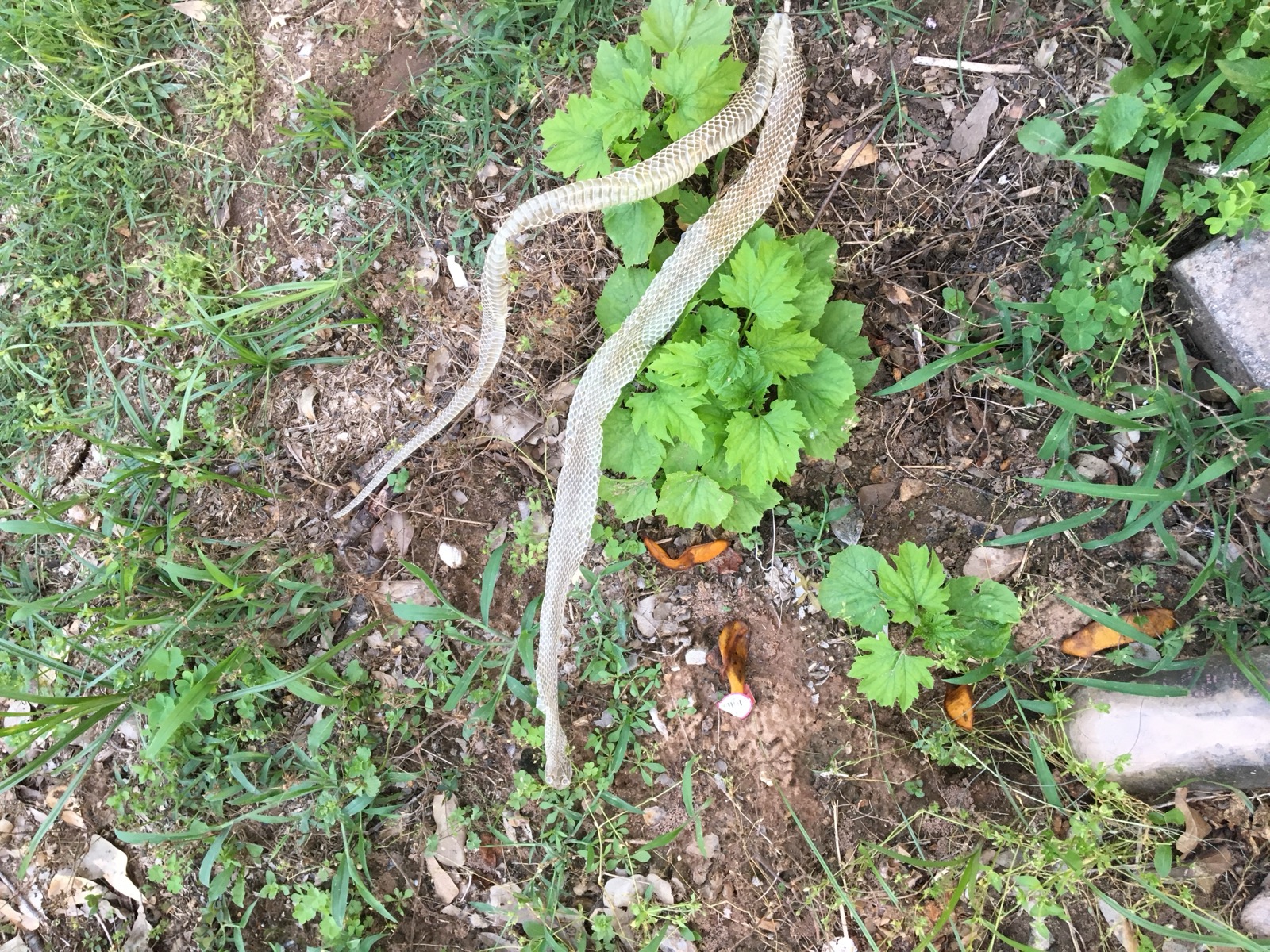
A shed snake skin in the yard usually means one simple thing: a snake used that area recently enough to molt there or nearby. It does not tell you the snake is still present, and it does not prove the species was dangerous. That is where many homeowners jump too fast from evidence to worst-case conclusion.
Start by checking the setting, not by grabbing the skin. Was it found near a wood pile, irrigation box, rock border, crawl-space vent, or dense ground cover? Those details are more useful than the skin alone because they reveal the type of shelter or travel corridor the snake may be using.
Skin length can also mislead. Shed skins often stretch, tear, and twist, which makes the original snake seem larger than it really was. Trying to estimate danger from length alone is unreliable, especially if the tail section is missing or the skin dried out in the sun.
If you can photograph the skin safely, SerpentID and your own follow-up search history can still be useful for narrowing local possibilities. Pair the evidence with recent sightings, regional species, and habitat clues instead of expecting the skin to deliver a clean species ID by itself.
The practical next step is housekeeping: reduce rodent activity, trim dense cover near walkways, and seal obvious gaps after checking them safely. If you keep finding fresh sheds or see a live snake in the same area, that is the point to involve a local wildlife professional.