


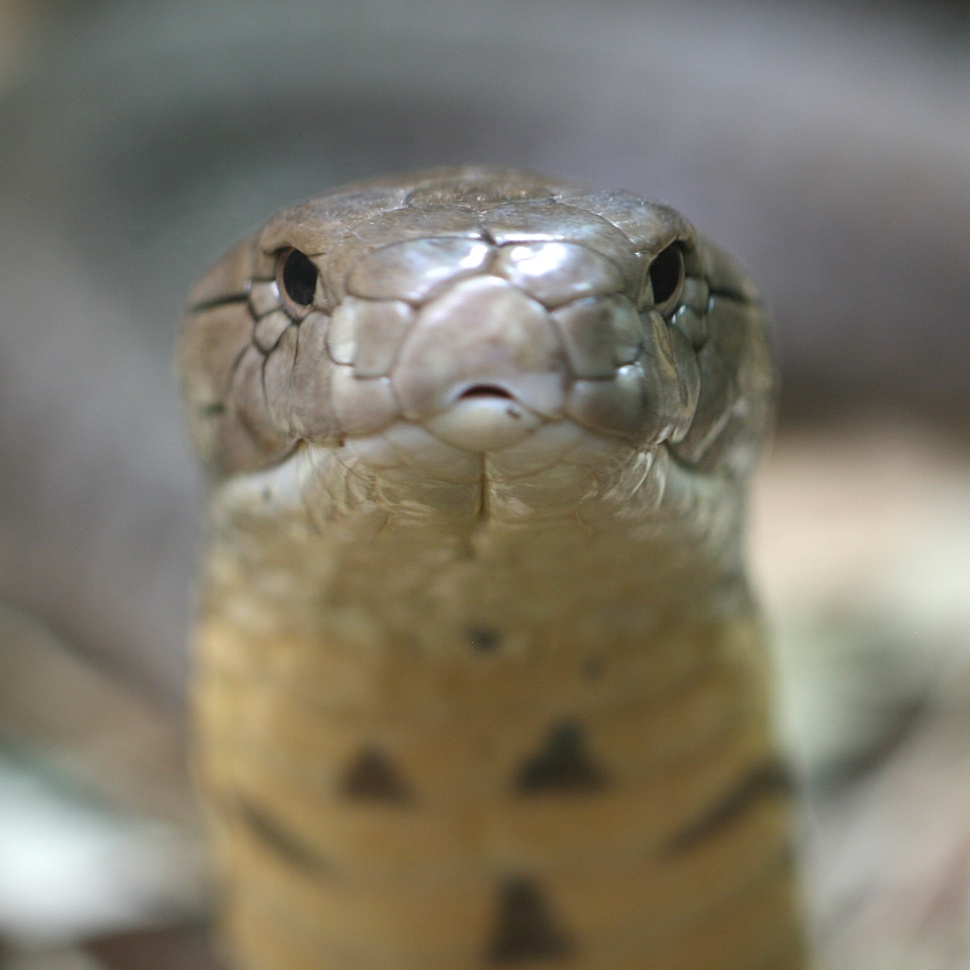
The red-bellied black snake, Pseudechis porphyriacus, is one of the most familiar snakes in eastern Australia. It turns up along creek banks, around farm dams, in swampy paddocks, and on the edges of suburbs from Queensland down through New South Wales and Victoria. Because it lives where people walk dogs, garden, fish, and swim, it is also one of the snakes Australians most often ask about. The short answer is that it is genuinely venomous and every bite should be treated as a medical emergency, but it is a timid animal that would much rather slip into the water or under cover than confront a person. Its reputation as a relatively low-fatality species comes from that shy temperament and from modern hospital care, not from the venom being harmless.
Identification is usually straightforward when you get a clear view. The back and top of the head are a deep, glossy black that can look almost polished in sunlight. The lower sides are the giveaway: a band of bright red, crimson, pink, or orange that runs along the flanks, with the belly itself often a paler pink or cream fading toward the tail. The snout is sometimes a lighter brown. Adults commonly reach around 1.2 to 1.5 metres, with larger individuals approaching 2 metres. The scales are smooth rather than keeled, which gives the body its sleek, shiny look. Keep in mind that the red coloring sits low on the body, so a snake lying flat in grass can appear completely black from above.
That is where confusion begins. Several other Australian snakes are dark or black, including the blue-bellied or spotted black snake, dark forms of the tiger snake, and some dark individuals of other species, plus the harmless keelback in the north, which has rough, keeled scales. Many of these are dangerous in their own right, and tiger snakes in particular have highly potent venom. Color alone is also unreliable because lighting, shedding, mud, and water can all mute or exaggerate the red flanks. The safe assumption with any dark snake near water in eastern Australia is that it may be venomous until someone qualified confirms otherwise, and that the identification is not worth getting closer for.
Red-bellied black snake venom contains components that can damage muscle tissue and interfere with blood clotting, and bites often cause significant pain, swelling, nausea, vomiting, and headache. Some patients experience more serious effects that require hospital monitoring and treatment. Recorded deaths are extremely rare, but that statistic depends on people seeking care quickly, and the experience of a bite can still be severe and long-lasting. If anyone is bitten by this or any snake, call 000 and seek professional medical help immediately. Do not try to catch or kill the snake to bring it in; hospitals in Australia identify the envenoming from the patient, and a photo taken from a safe distance is more useful than a risky capture.
Behavior is the main reason encounters usually end peacefully. These snakes are active mostly by day, hunting frogs along water margins and also taking fish, lizards, small mammals, and other snakes. When disturbed, their first choice is to flee, often into water, where they swim well and can stay submerged for some time. If cornered, a red-bellied black snake may flatten its neck and front body into a wide, cobra-like display and hiss loudly, sometimes making bluff strikes with a closed mouth. That flattening is a warning, not an invitation, and it means you are too close. Females give birth to live young enclosed in thin membranes rather than laying eggs, so small snakes near creeks in late summer may be newborns that are already venomous.
A few myths are worth correcting. Many rural Australians believe red-bellied black snakes keep brown snakes away, but while they do occasionally eat other snakes, there is no reliable evidence that having one nearby protects a property, and encouraging any venomous snake to stay is not a sound safety plan. Another common belief is that they are harmless because deaths are rare; as above, that is a misunderstanding of how serious bites can be. It is also worth knowing that red-bellied black snakes are sensitive to cane toad toxins and have declined in some areas where toads spread, which is a reminder that these snakes play a real role in controlling frog and rodent populations around waterways. They are protected wildlife across Australia, and harming them can carry legal penalties.
If you spot a dark snake with a flash of red along its sides by your dam, garden pond, or walking track, stop, back away slowly, and give it room to leave on its own. Keep children and pets clear, and never try to handle, trap, or kill it. When it is safe, take a photo from a comfortable distance and let SerpentID compare the color, scale texture, and body shape against the species most likely in your area, which helps separate a red-bellied black snake from tiger snakes, spotted black snakes, and other look-alikes. If the snake is venomous and in a place it cannot stay, such as inside a house or shed, contact a licensed snake catcher or your local wildlife service to remove it safely.