


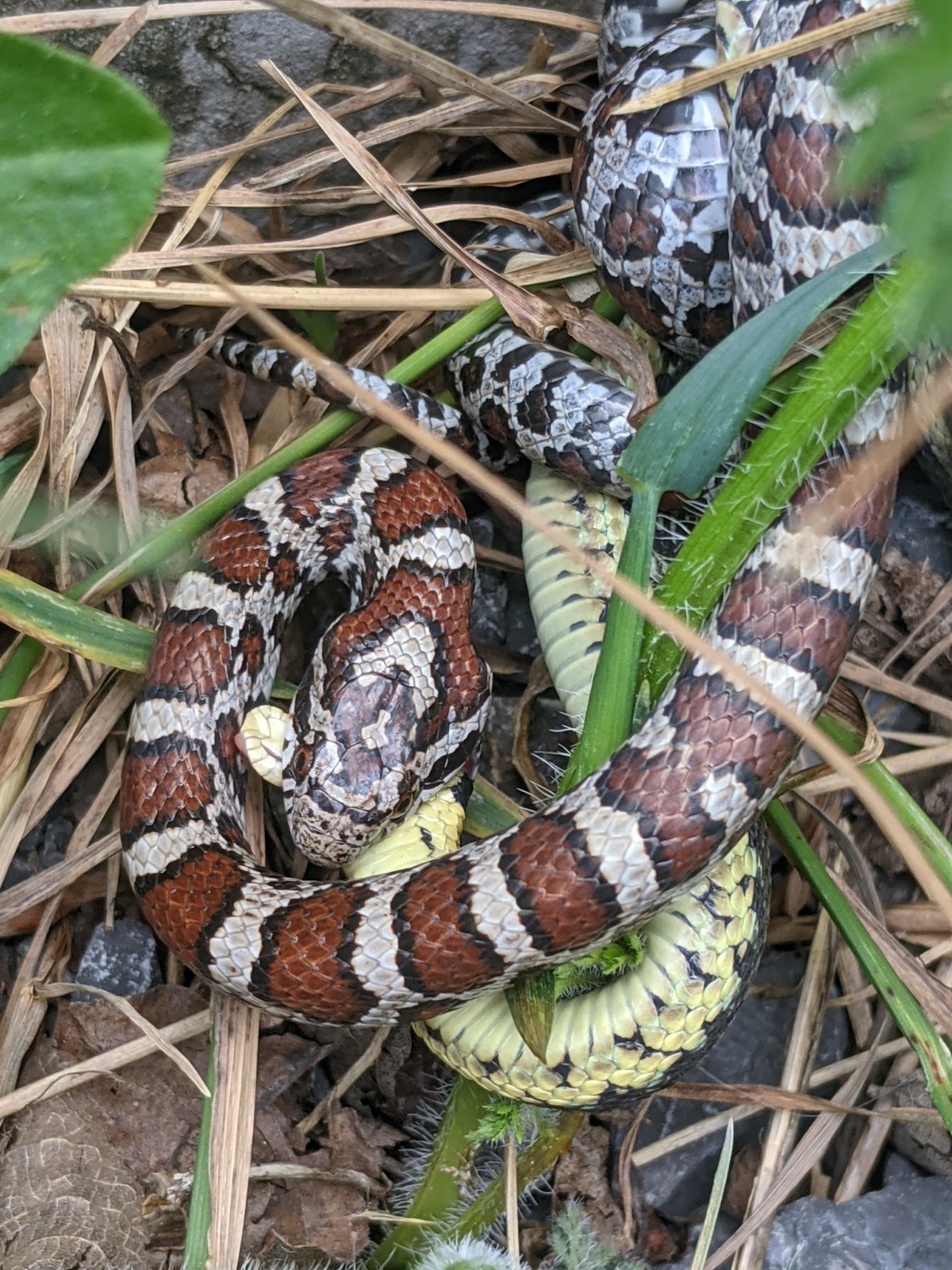
Milk snake vs copperhead is one of the easiest search paths to understand because it usually starts with the same scene: a patterned snake near a home, garden border, wood pile, or trail edge, and someone trying to decide whether the encounter just became dangerous. The problem is that both snakes can read as reddish-brown from a rushed glance.
The first correction is to stop thinking in terms of generic color. Copperheads usually show darker crossbands that narrow across the spine and widen down the sides, creating the classic hourglass feel across the body. Milk snakes more often read as blotches outlined in darker edges rather than those tight waist-like bands.
Body build also matters more than people expect. Copperheads usually look thicker through the middle, with a more compact heavy-bodied impression. Milk snakes often look smoother and a bit more elongated, especially when the full body is visible instead of one close crop of the head.
People often make the identification harder by over-trusting one partial cue. A single reddish patch, a slightly wide head angle, or a low-light photo is not enough to settle the comparison. If the photo only shows the front third of the animal, treat the result as uncertain and keep your distance.
SerpentID is useful here because it can surface milk snake as a real alternative when fear pushes the brain toward copperhead first. If the app leans copperhead or cannot separate the two well, the field decision stays the same: no handling, no closer photos, and no pets or children near the snake.