


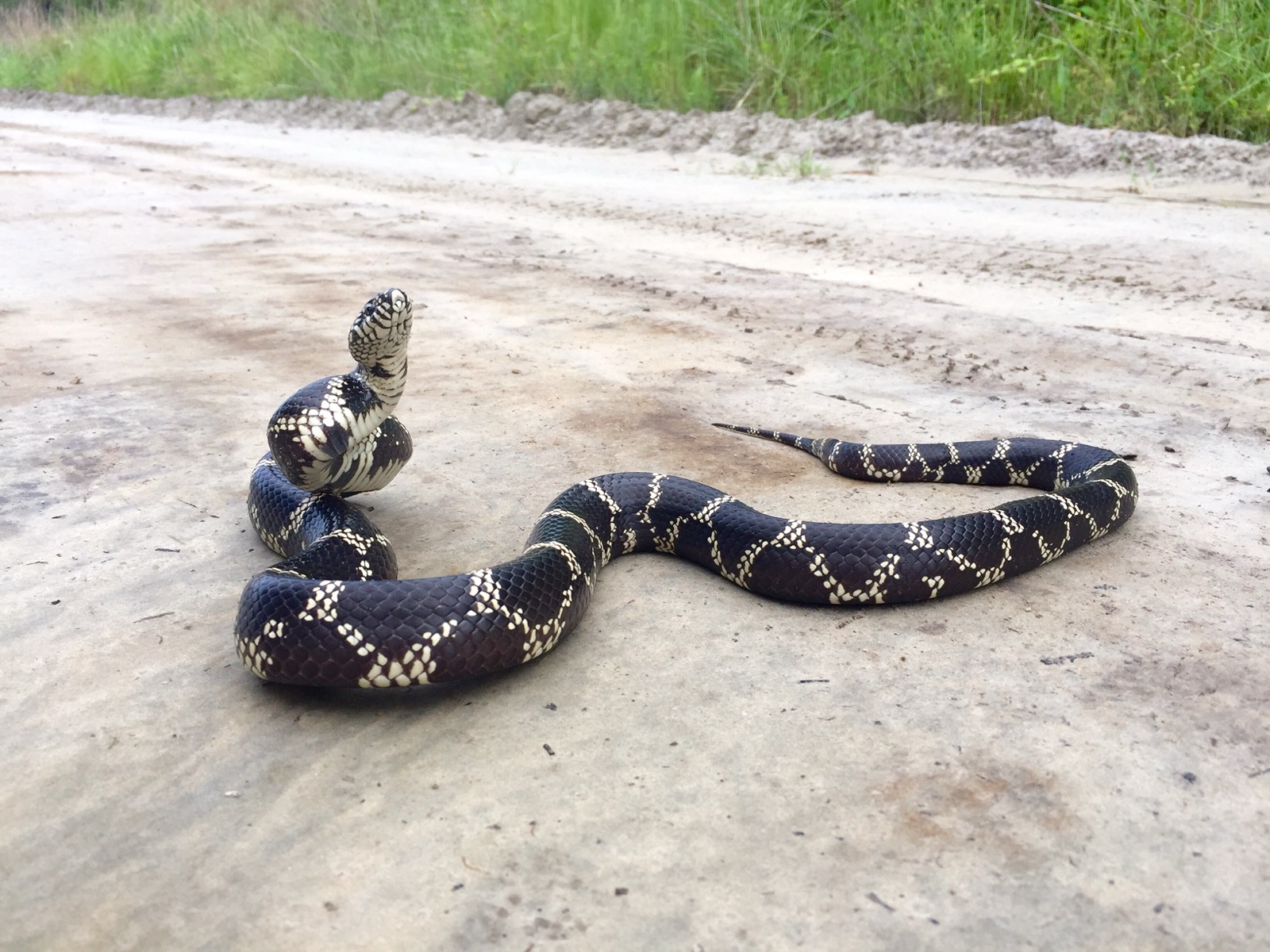
Kingsnake vs copperhead is a valuable comparison because both snakes can look bold, patterned, and high-contrast when they are partly hidden in mulch, pine straw, or shadow. That overlap pushes people toward copperhead faster than the actual body pattern supports.
The cleanest separator is pattern logic. Copperheads usually show darker crossbands that pinch over the spine and widen down the sides, creating the classic hourglass structure. Kingsnakes more often show linked chain-like bands, speckling, or cleaner ringed sections that read as a repeated network rather than heavy waist-shaped bands.
Body build also helps. Kingsnakes often look smoother and more evenly cylindrical from neck through tail. Copperheads usually read heavier through the middle with a denser ambush-viper impression. That full-body silhouette is often easier to trust than a cropped head photo taken under stress.
Scene context adds signal. Kingsnakes move through a wide range of yards, edge habitat, outbuildings, and sunny transition zones. Copperheads can use those spaces too, but the encounter more often feels tied to concealment like timber edges, brush piles, leaf litter, and shaded cover rather than broad active movement across open ground.
SnakeSnap works best here when the photo captures mid-body pattern instead of a zoomed head. If the app returns kingsnake with good confidence, that can reduce panic. If copperhead still appears in the likely matches or confidence stays low, the field decision should remain conservative: give the snake room and do not force a closer check.