


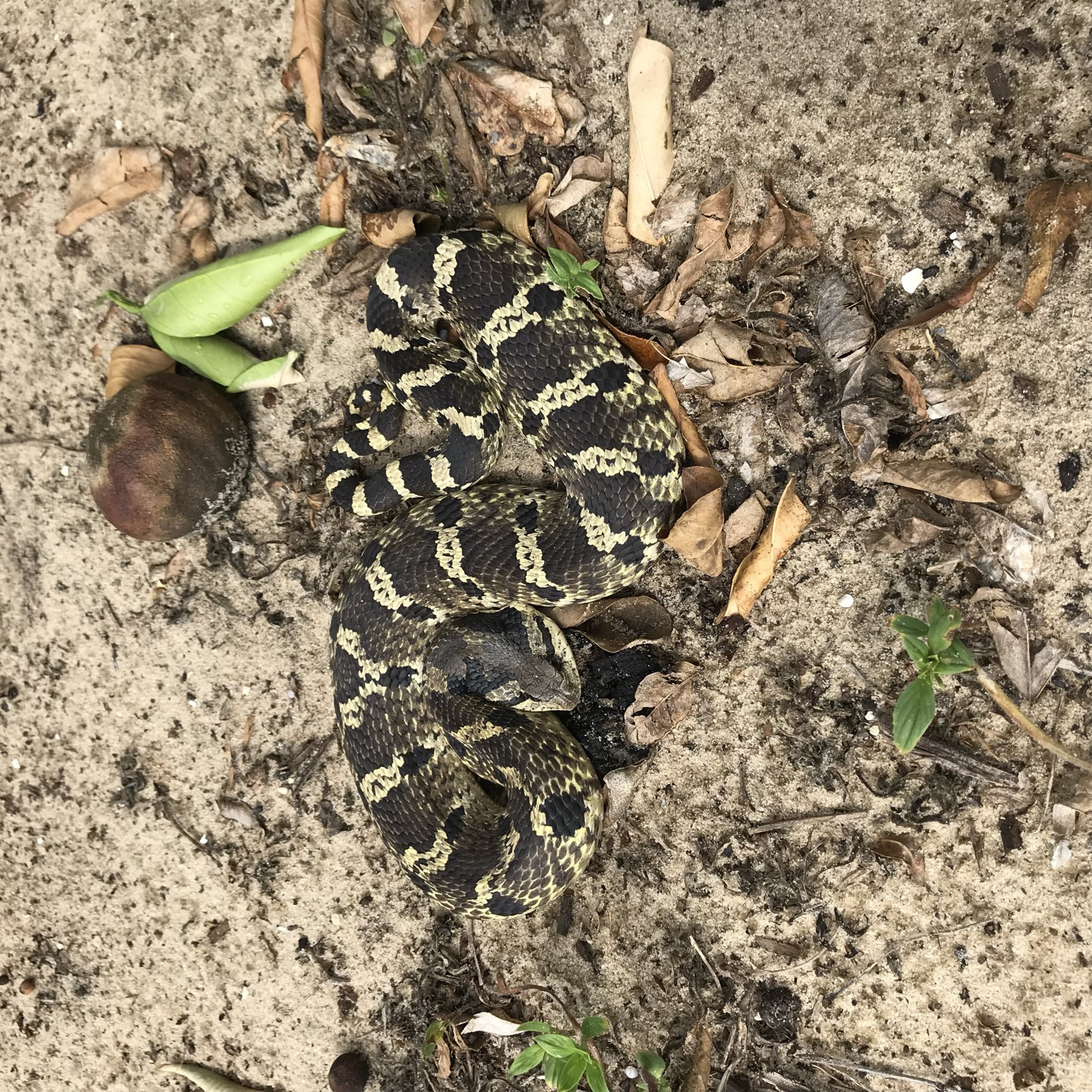
How to tell if a snake is dead or playing dead becomes a search query after a very specific kind of encounter: the snake rolls, gapes, twists, or goes limp-looking and suddenly stops moving. People assume the scene is resolved, then want to know whether it is safe to move closer, clean up, or let a child walk through the area.
The first rule is that you do not confirm by touching. Some snakes, especially hognose snakes, are famous for dramatic death-feigning behavior. They can roll onto the back, hang the mouth open, look limp, and still recover the second the pressure is gone. Treat that performance as a behavior clue, not as permission to handle wildlife.
Context helps more than people expect. If the snake just finished hissing, flattening, striking short, or acting theatrical, playing dead becomes a realistic possibility. If the body is visibly injured by traffic or predation, that points in a different direction. But from a safety standpoint, both scenes deserve distance.
Watch from a safe position rather than trying to provoke a response. A snake that slowly reorients, tightens the body, or corrects posture when left alone was never a safe object to pick up in the first place. A truly dead snake can also still present risk if the species is venomous and contact is careless.
SerpentID can still help if you capture one clear photo without crowding the animal, because species context changes how plausible death-feigning is. But whether the app says hognose, unknown, or something higher-risk, the correct move stays the same: no touching, no testing, and no reaching in.