


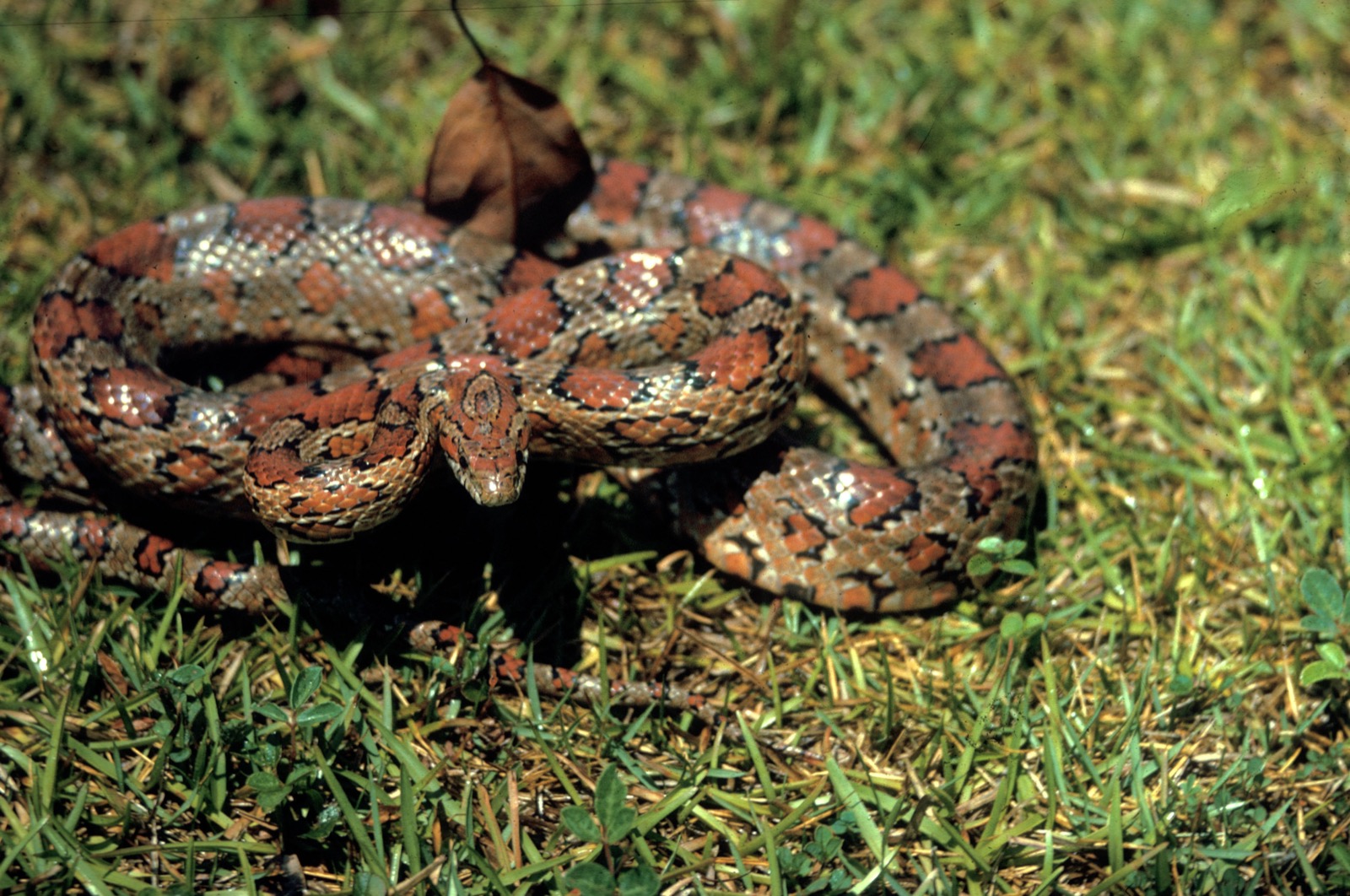
Many people are fascinated by snakes and, upon seeing one, often wonder about its age. It's natural to try and use familiar cues, much like we might estimate the age of a dog or a cat by its size or perceived maturity. However, when it comes to snakes, these common assumptions are almost always misleading. Accurately determining a snake's age in the wild is a complex task, even for seasoned herpetologists, and relies on much more than a quick visual assessment.
One of the most pervasive myths is that a snake's size directly correlates with its age. While larger snakes tend to be older, this is not a reliable rule. A snake's growth is heavily dependent on factors like the availability of food, ambient temperatures, and its species. A young snake living in an area with abundant prey and warm conditions might grow much faster and become significantly larger than an older snake of the same species living in a harsher environment with scarce food. Therefore, a large snake isn't necessarily ancient, and a small snake isn't always a juvenile.
For rattlesnakes, a specific myth persists: that you can tell their age by counting the segments of their rattle. The truth is, a new rattle segment is added each time a rattlesnake sheds its skin. However, snakes do not shed at a fixed annual rate. Younger snakes, growing rapidly, may shed several times a year, while older snakes might shed only once or twice, or even less frequently if food is scarce. Furthermore, rattles are fragile and can break off, meaning a snake might have lost earlier segments, making any count inaccurate. A rattle count can only tell you how many times a snake has shed since its last rattle segment broke off, not its actual age.
Some people also look for changes in a snake's color or pattern to guess its age. While it is true that some snake species undergo subtle changes in coloration or pattern as they mature from juveniles to adults, these shifts are generally indicators of developmental stages rather than precise age markers. The exact timing and extent of these changes can vary significantly between individuals and are often influenced by genetics and environment. This means that two snakes of the same species and age might display different degrees of color change, making it an unreliable tool for age estimation.
The primary drivers of snake growth and development are environmental conditions and food intake. Snakes are ectothermic, meaning their body temperature, and thus their metabolic rate, is regulated by external sources. In warmer climates or during warmer seasons, snakes are more active, feed more frequently, and grow faster. Conversely, in colder periods, their metabolism slows, and growth can halt entirely. In captivity, with controlled temperatures and consistent food, snakes often grow faster and reach larger sizes than their wild counterparts, further demonstrating that size is not a straightforward age indicator.
Even professional herpetologists face challenges in accurately aging wild snakes. The most reliable methods, such as mark-recapture studies, involve catching, marking, and then recapturing the same snake over many years, which is labor-intensive and rarely yields precise age data for a large population. Other techniques, like examining growth rings in certain scales or bones, are invasive and still provide only estimates, often requiring the snake to be deceased. For a casual observer, distinguishing between a two-year-old and a five-year-old snake based solely on appearance is practically impossible.
Given the difficulty in accurately determining a snake's age from a distance, it's far more practical and important to focus on safe observation and identification. If you encounter a snake, resist the urge to approach it for a closer look or to try and guess its age. Instead, take a clear photograph from a safe distance, allowing SerpentID to analyze its markings and patterns to compare against local species. If you suspect the snake might be venomous, or if it's in a location where it poses a risk, contact your local wildlife services for assistance.