


Few household moments are more unsettling than seeing a snake indoors, looking away for a second, and finding it gone. The good news is that a snake that has vanished is almost always hiding, not hunting you. Snakes are secretive animals that feel exposed in open rooms, so their instinct is to find the nearest tight, dark, sheltered space and stay still. That behavior works in your favor if you stay calm, because a hiding snake tends to remain in one area for hours or even days rather than roaming the house. The goal is not to grab it, but to narrow down where it is and let a professional handle the rest.
The first step is containment, not searching. If you know roughly which room the snake was in, get people and pets out and close the door behind you. Roll a towel and press it into the gap under the door, since many snakes can pass through openings far smaller than people expect. Keep cats and dogs in another part of the house, both for their safety and because a curious pet can push a snake deeper into walls or furniture. If the snake was last seen in a hallway or open-plan area, close as many interior doors as you can to shrink the space it can move through.
Once the area is sealed, think like a snake looking for cover. Common hiding spots include the warm space behind and beneath refrigerators, dishwashers, washing machines, and dryers; the underside of couches and beds, including the hollow fabric lining beneath box springs and recliners; the back corners of closets, piles of shoes, laundry, and cardboard boxes; behind bookcases and entertainment centers; and gaps around plumbing under sinks. Use a strong flashlight and look from a standing or crouching position at a comfortable distance. Never reach your hand into a space you cannot fully see, never lift cushions or boxes by sliding your fingers underneath, and avoid lying flat on the floor with your face near a dark gap.
Some simple tricks can reveal a snake's movement without you getting close. Wildlife agencies often suggest sprinkling a thin line of flour or baby powder along the base of walls, across doorways, or near suspected hiding spots, then checking later for the telltale curving track a snake leaves behind. Leaving the room quiet and dim for a while can also encourage a snake to come out on its own, especially at dusk when many species become more active. Avoid glue traps: they cause severe, often fatal injuries to snakes and other animals, are restricted in some places, and create a dangerous situation for anyone who then has to free a stuck, distressed snake. Likewise, skip mothballs and sprays, which are not effective repellents and can harm people and pets.
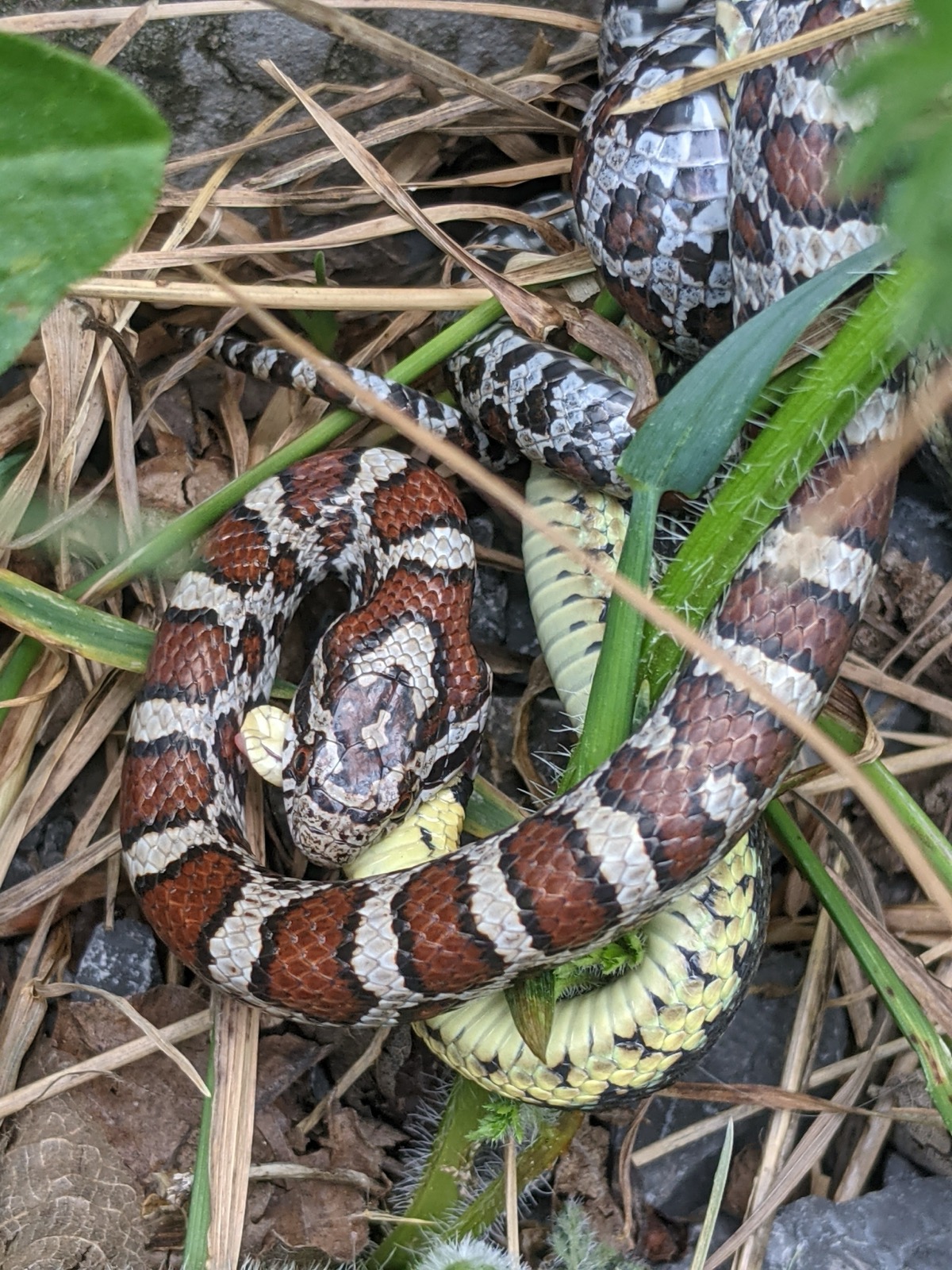
It also helps to remember what kind of snake is most likely in your house. In the United States, indoor snakes are very often small harmless species such as brown snakes, ring-necked snakes, rat snakes, or milk snakes that followed rodents, warmth, or moisture inside. In Australia, however, an indoor snake could be a brown snake or other dangerous elapid, and in India, cobras, kraits, and Russell's vipers do sometimes enter homes, particularly during the monsoon. Because you often cannot tell at a glance, treat every unidentified snake as potentially venomous and keep your distance. If anyone is bitten, seek professional medical help immediately, whatever the snake looked like.
When you do spot the snake, or if a reasonable visual search turns up nothing, it is time to call for help. In the US, contact animal control, a local wildlife removal service, or your state wildlife agency for referrals. In Australia, call a licensed snake catcher or your state wildlife hotline. In India, reach out to the forest department or a registered local snake rescue group. Tell them which room the snake is in, where you last saw it, and any details about its size and color. Afterward, look for the entry point, such as gaps under exterior doors, torn screens, unsealed pipe openings, or vents, and seal it so the visit is not repeated.
If you catch sight of the snake before help arrives, a photo can make that call far more useful. From a safe distance, ideally several feet away and without moving anything to get a better angle, take a clear picture of the snake's head, body pattern, and color. SerpentID can compare those markings against the species most likely in your area, which helps you and the responder know whether you are dealing with a harmless visitor or a venomous one. If the result suggests a venomous species, or if you are unsure, keep the room closed, stay out, and let your local wildlife service or a licensed snake catcher take it from there.