


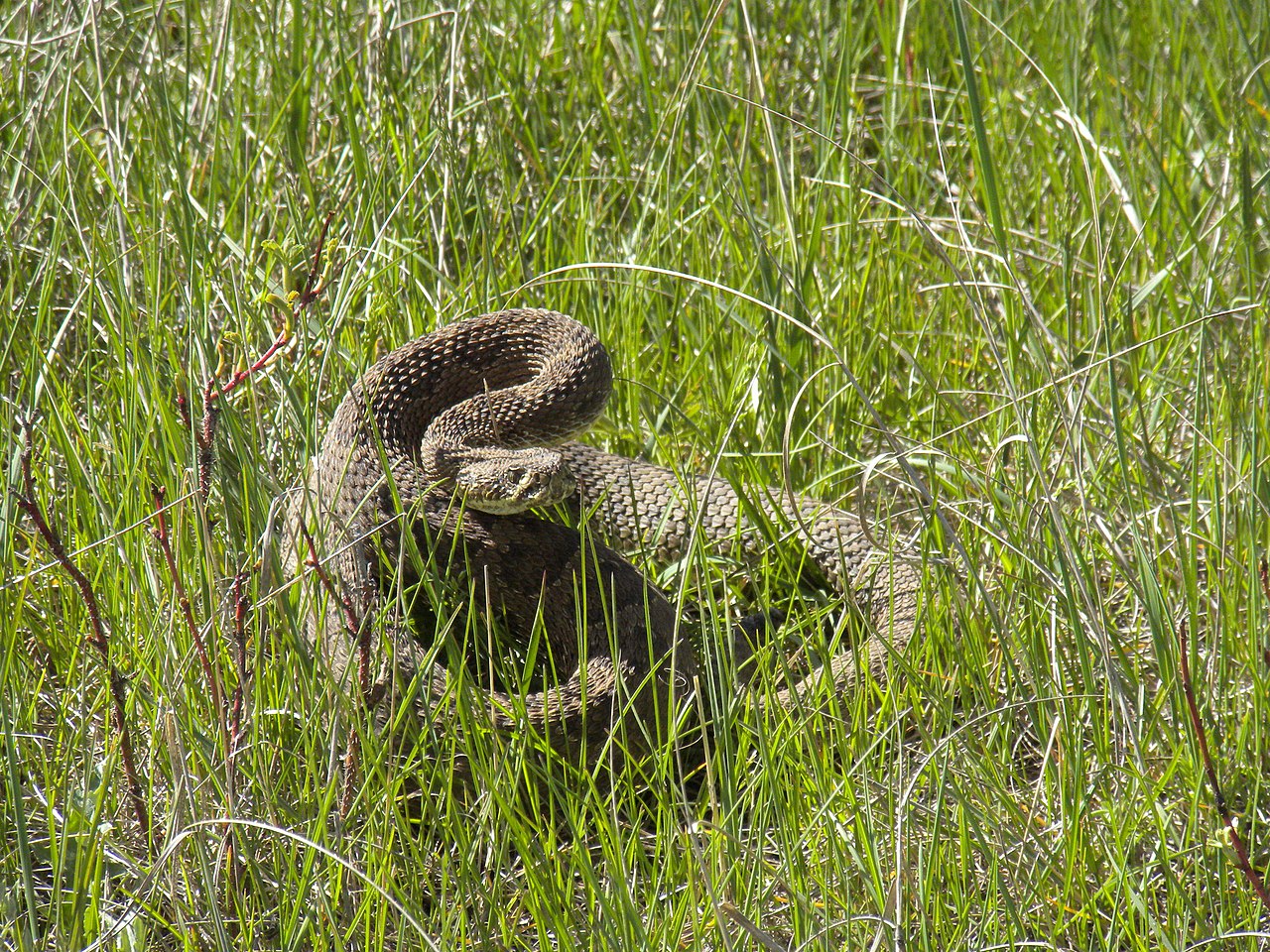
One of the most common fears associated with snakes is the suddenness and speed of their strike. Many people wonder if they can react quickly enough to avoid a bite, or if a snake's strike is truly as fast as lightning. The truth is, a snake's strike is indeed a remarkably rapid and powerful defensive action, often occurring too quickly for a human to consciously react and move out of the way. Understanding the mechanics and speed of a strike is fundamental to appreciating why maintaining a safe distance is the most effective safety measure.
A snake's strike is not a chase, but rather a sudden, explosive lunge. It's an act of self-defense, powered by incredibly strong and fast-twitch muscles that can launch the snake forward from a coiled or semi-coiled position. The snake's body acts like a spring, storing potential energy that is released almost instantaneously. This allows them to project their head and fangs towards a perceived threat with astonishing acceleration, making the entire event a blur to the unprepared eye.
Scientific studies have shown that the entire striking motion, from initiation to contact, can be completed in as little as 0.1 to 0.5 seconds, depending on the species and conditions. To put this into perspective, the average human reaction time to a visual stimulus is around 0.2 to 0.25 seconds, and even faster for auditory or tactile cues. However, this is for a simple reaction. Reacting to a snake strike involves complex decision-making and motor execution, which takes significantly longer than the strike itself. By the time a person registers the threat and begins to move, the strike has often already occurred.
Several factors influence a snake's strike speed. Warmer temperatures generally mean faster strikes, as a snake's metabolism and muscle function are temperature-dependent. A snake that is well-rested and in a ready, coiled position will strike much faster than one that is cold, tired, or stretched out. The perceived level of threat also plays a role; a snake feeling severely endangered may strike with maximum force and speed, while a less threatened snake might deliver a warning strike or even a 'dry bite' without venom.
It is important to distinguish a snake's strike speed from its general movement speed. While a strike is a burst of intense, short-range acceleration, snakes are not typically fast movers over long distances. Their striking range is also limited, usually extending about one-third to one-half of their body length. The danger lies not in their ability to pursue, but in the immediacy and unreactable speed of that short, defensive lunge within their immediate vicinity.
Crucially, snakes only strike when they feel threatened, surprised, or cornered. They are not inherently aggressive towards humans and do not 'attack' without provocation. Most bites occur when people accidentally step on a snake, try to handle or kill one, or approach too closely. A snake's primary goal is to avoid confrontation, and a strike is a last resort when it perceives no other escape route.
Given the incredible speed of a snake's defensive strike and the limitations of human reaction time, the best defense is always prevention. When in snake habitats, remain vigilant, wear appropriate footwear, and never reach into areas you cannot see. If you encounter a snake, the safest approach is to give it ample space and allow it to move away on its own. If you need to identify a snake you've encountered from a safe distance, take a clear photo without approaching, and let the SerpentID app help you compare its markings against local species. If it's identified as venomous, contact local wildlife services for assistance, and if a bite occurs, seek professional medical help immediately.