


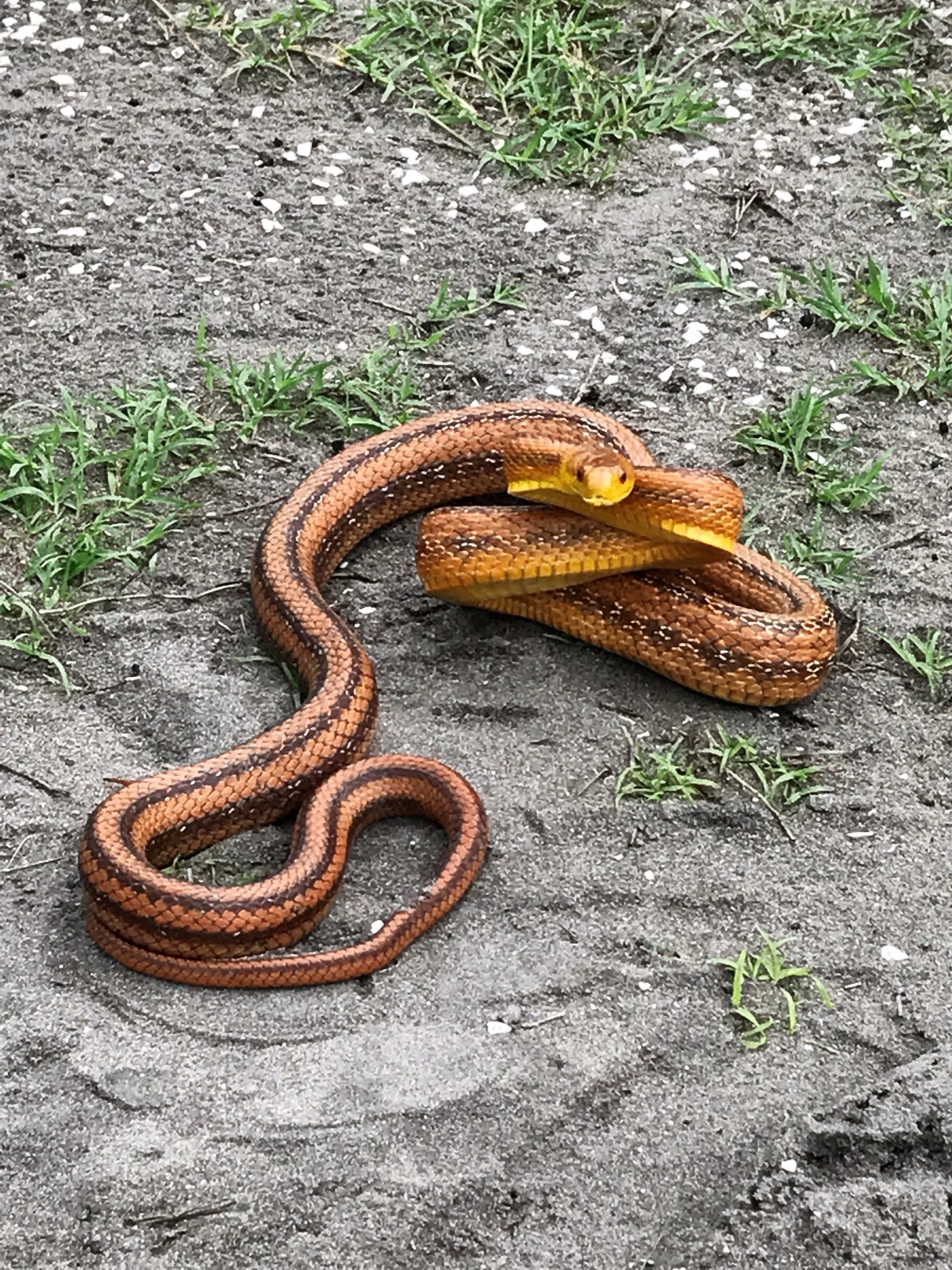
Ask how many kinds of snakes exist and you will get a number that keeps creeping upward. The Reptile Database, the reference most herpetologists use to track named species, lists more than 4,000 snake species, and the total rises a little every year. That makes snakes one of the larger groups of living reptiles, rivaled mainly by lizards. The figure is not fixed because the science is still active: researchers keep finding species in poorly surveyed regions, and genetic studies regularly show that what looked like one widespread snake is actually several closely related species that simply look alike.
Those thousands of species are organized into families, and a handful of families account for most of them. The largest by far is Colubridae, a sprawling group that includes many familiar North American snakes such as rat snakes, kingsnakes, racers, and corn snakes, along with many species across Asia, Africa, and Europe. Most colubrids are harmless to people. The family Elapidae contains cobras, kraits, mambas, coral snakes, sea snakes, and Australia's taipans and brown snakes. Viperidae contains the vipers and pit vipers, including rattlesnakes, copperheads, cottonmouths, and India's Russell's viper and saw-scaled vipers. Pythons and boas form their own families, and there are also several families of small, secretive burrowing snakes, such as blind snakes, that many people never notice at all.
A common worry is that most of these snakes must be dangerous. They are not. Estimates vary with how venom is defined, but roughly 600 species are generally considered venomous, and only around 200 or so are regarded as medically significant, meaning their bites can seriously harm a person. In other words, the large majority of snake species pose little or no medical threat to humans. That does not mean any snake should be handled or approached, since even harmless species bite in self-defense and identification by eye is easy to get wrong, but it does put the fear in perspective.
Snakes live on every continent except Antarctica, yet they are unevenly spread. Diversity is highest in warm tropical and subtropical regions, while cold climates hold few species. Some places have no native land snakes at all, including Ireland, Iceland, and New Zealand. The popular story that Saint Patrick drove the snakes out of Ireland is folklore; the more likely explanation is that the island's post-glacial climate and isolation by sea meant snakes never recolonized it.
For readers in our main regions, the local numbers vary a lot. The United States is home to well over a hundred snake species, most of them harmless, with venomous species concentrated among the rattlesnakes, copperheads, cottonmouths, and coral snakes. India has a far richer snake fauna, with more than 300 species, and the country carries a heavy snakebite burden largely driven by a few common species such as the spectacled cobra, common krait, Russell's viper, and saw-scaled viper. Australia has roughly 200 or more land and sea snakes, and it is unusual in that a large share of its land snakes are elapids, the venomous front-fanged family, which is why Australian snake safety advice treats unknown snakes with particular caution.
The sheer number of species is exactly why quick rules of thumb fail. Head shape, pupil shape, color, and size all vary across thousands of species, and harmless snakes frequently resemble dangerous ones, sometimes as a defensive strategy. A brown snake in Georgia, a brown snake in Queensland, and a brown snake in Kerala could belong to completely different families with completely different risks. Good identification depends on knowing which species actually occur in your area and then comparing specific markings, rather than relying on a single trait.
That is where a careful, distance-first approach helps. If you come across a snake, stay well back, keep children and pets away, and take a clear photo from a safe distance without trying to move the snake or get a better angle up close. SerpentID can then compare its pattern, coloration, and body shape against the species likely to be found in your region, narrowing thousands of possibilities down to a few. If the result suggests a venomous species, or you are unsure, contact local wildlife services or a licensed snake relocator rather than dealing with it yourself, and if anyone is bitten, seek professional medical help immediately.