


How long do snakes live is one of the most common questions homeowners and first-time keepers ask after spotting a snake in the yard or shopping for a pet. The honest answer is that snake lifespan varies enormously between species and between wild and captive animals. A small garter snake in a suburban yard may only see four or five years because of cars, hawks, lawn equipment, and house cats, while the same species in a thermostatically controlled enclosure with steady food can comfortably pass ten. Pythons, boas, and kingsnakes routinely cross the twenty-year mark under good care, and individual ball pythons in private collections have been recorded past forty.
Wild snake life expectancy is shaped less by biology and more by hazards. Most snakes that hatch never reach their first winter because nests, eggs, and neonates are taken by raccoons, opossums, fire ants, crows, herons, and other snakes. Survivors that clear the first year then face roads, mowers, dogs, predator birds, and disease pressure. Field studies on rat snakes, racers, and copperheads suggest wild adults that make it to maturity typically live another six to fifteen years depending on habitat quality, while large vipers like timber rattlesnakes can occasionally pass twenty in protected areas.
Captive snake lifespan is dramatically longer for almost every species because the main wild risks are removed. Corn snakes commonly live fifteen to twenty-five years, ball pythons twenty to thirty with documented outliers past forty, boa constrictors twenty to thirty, kingsnakes and milk snakes fifteen to twenty-five, and small species like rosy boas and sand boas fifteen to twenty. Even hobbyist garter snakes can reach ten to twelve when fed appropriately, kept at species-correct temperatures, and protected from respiratory infections. Husbandry quality, not species ceiling, is what usually decides whether a captive snake reaches the upper end of its range.
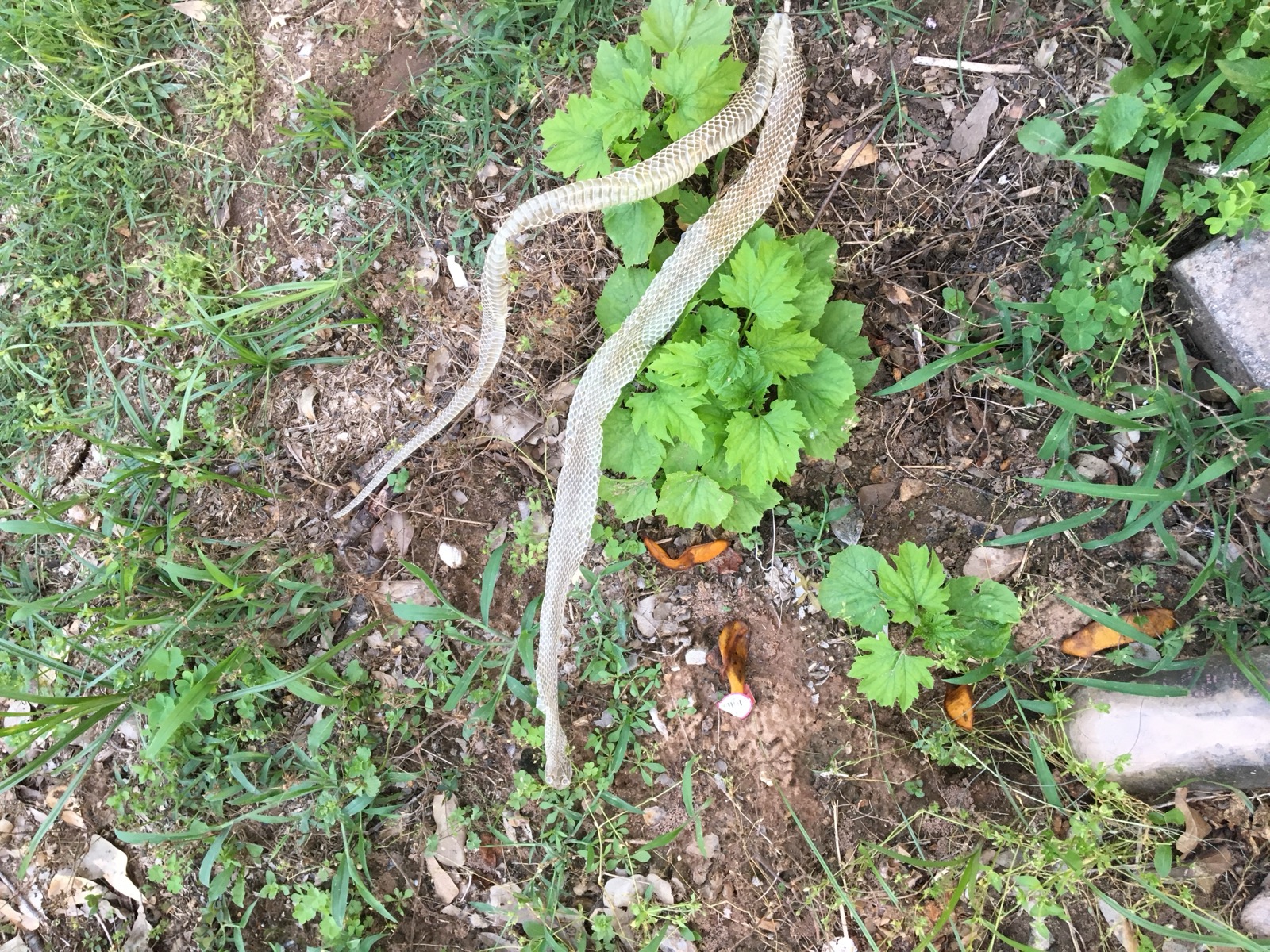
Estimating how old a wild snake is from a single photo is unreliable, but a few signals help. Body length relative to known adult size suggests rough age class. Color shifts are species-specific: juvenile racers are blotched and look nothing like the solid-black adults, juvenile rat snakes show high-contrast saddles that fade with age, and copperhead juveniles have a bright yellow tail tip used as a caudal lure. Shed snake skins do not record years like tree rings, but condition, length, and pattern still tell you the animal is at least past hatchling size. SerpentID's species result combined with a length estimate gives a more useful age window than any guess from the photo alone.
If you keep finding the same snake on your property year after year, that animal is likely an established adult using the same shelters and basking spots. Repeated sightings are not evidence of a population explosion, just of one long-lived resident. The practical takeaway for homeowners is that snake lifespans are long enough that habitat management, not removal of one individual, decides whether the yard stays appealing to snakes. Tidy wood piles, sealed foundation gaps, and rodent control reduce the resources that keep snakes around for the next decade or two of their lives.