


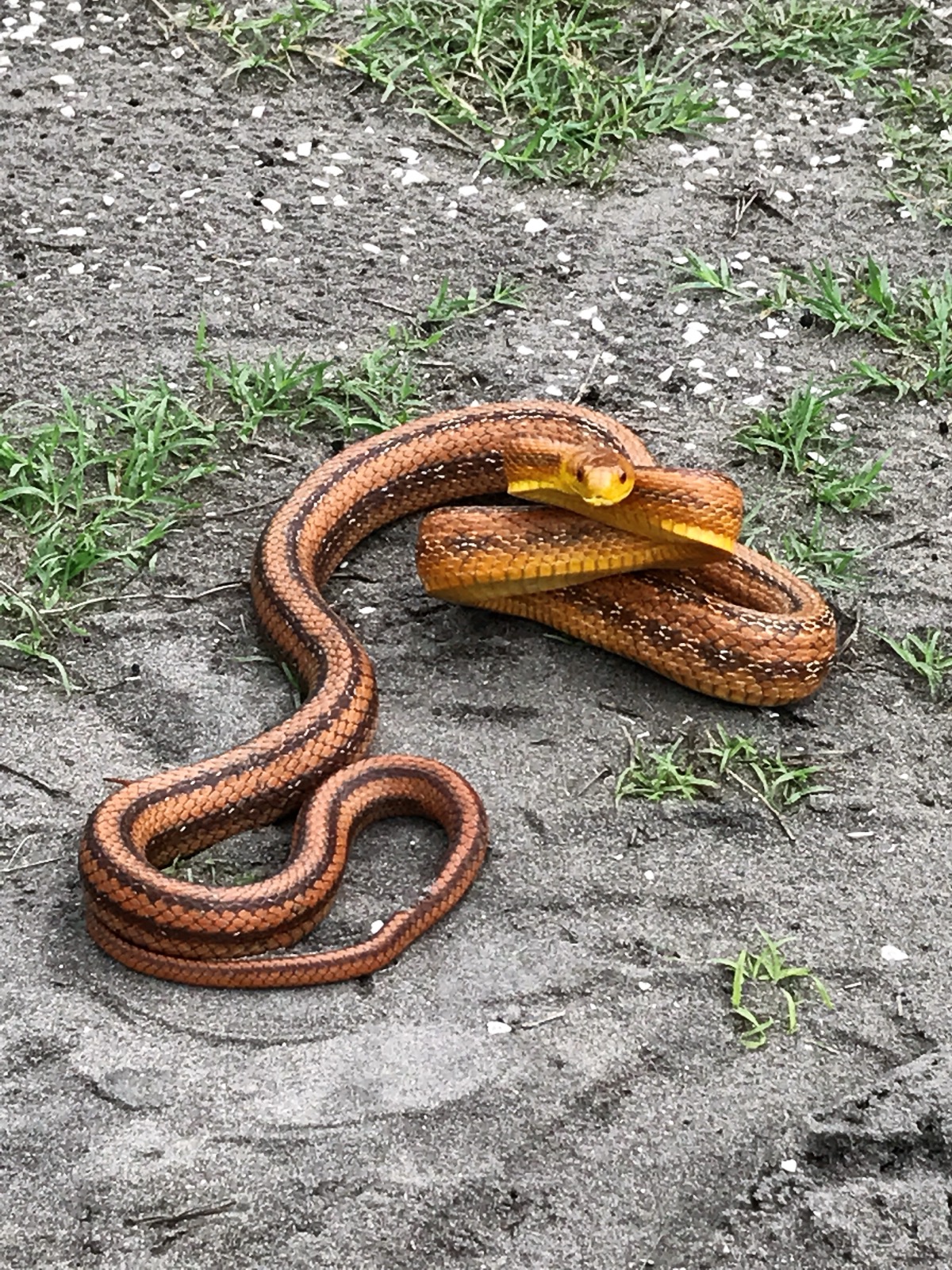
The image of a snake coiling, stretching, or navigating tight spaces often leaves people marveling at their seemingly impossible flexibility. Indeed, the ability to bend and twist their bodies into astonishing configurations is a hallmark of snake biology, fundamental to nearly every aspect of their existence. This remarkable suppleness is not a matter of lacking bones, as some might mistakenly believe, but rather a testament to a highly specialized skeletal structure that has evolved over millions of years to support a legless lifestyle.
At the core of a snake's flexibility is its vertebral column. While humans have around 33 vertebrae, a snake can possess anywhere from 200 to over 400 individual vertebrae, extending almost the entire length of its body, from just behind the head to the tip of the tail. Each of these vertebrae is connected to the next by multiple flexible joints, allowing for a wide range of motion. Furthermore, nearly every vertebra, except those in the tail, has a pair of ribs attached. These ribs are not fused to a sternum (breastbone) as in many other animals, but instead articulate freely with the vertebrae and are connected to the large, overlapping belly scales by powerful muscles. This intricate arrangement of bones, joints, and muscles provides both strength and an unparalleled capacity for movement.
This incredible flexibility enables snakes to execute their diverse forms of locomotion. Whether it's the familiar serpentine movement, where the body forms S-shaped curves to push against surfaces; the rectilinear movement, where belly scales are lifted and pulled forward in a straight line; or the more specialized sidewinding across loose sand, every method relies on the snake's ability to precisely control the bending and stiffening of different sections of its body. Climbing trees, squeezing through narrow crevices, and even swimming through water are all made possible by this adaptable, articulated spinal column.
Beyond movement, flexibility is crucial for a snake's survival in other ways. For constricting snakes, the ability to wrap multiple powerful coils around prey, tightening their grip with each exhale, is a direct application of their body's pliancy and strength. When striking, a snake can launch its head forward from a tight coil with astonishing speed and accuracy, leveraging its flexible body as a spring. In defense, many snakes can flatten their bodies to appear larger, coil into intimidating postures, or rapidly retreat into cover, all actions that highlight their mastery over their own malleable form.
The evolution of such extreme flexibility represents a highly successful adaptation to a life without limbs. By transforming their entire body into a primary tool for movement, hunting, and defense, snakes have managed to colonize an astonishing array of habitats across the globe. This unique anatomical design has allowed them to exploit niches unavailable to other vertebrates, from burrowing underground to gliding through the air, all thanks to the intricate dance of bone, muscle, and joint.
It is important to remember that while snakes are flexible, they are far from 'boneless.' Their skeleton is robust and essential for supporting their muscles and protecting their internal organs. The impression of bonelessness often comes from the smooth, fluid way they move and the lack of prominent limbs. However, their flexibility is a product of a finely tuned, complex skeletal system, not an absence of it, allowing them to bend and twist without breaking or losing structural integrity.
Encountering a snake in the wild, whether it's moving gracefully or coiled in a defensive posture, is a reminder of their unique biological design. If you observe a snake, appreciate its incredible flexibility from a respectful distance. Should you need to identify a snake you've encountered, take a clear photograph from a safe distance, and let the SerpentID app help you compare its markings and features against local species. This allows for safe identification without risking an interaction with these fascinating, flexible creatures.