


How fast can a snake move is a question that splits into two very different answers, and confusing them is what gets people hurt. Snakes are slow travelers and extremely fast strikers. On the ground, even fast species like racers and coachwhips top out around 4 to 8 miles per hour in short bursts — slower than a jogging human, and most snakes crawl far slower than that. The fastest land snake, the black mamba, is often cited near 7 mph. You cannot be outrun by a snake; the idea that one will chase you down across a field is a myth.
The strike is where the real speed lives, and it is genuinely fast. A rattlesnake strike accelerates the head at forces that would black out a fighter pilot, completing the lunge in roughly 50 to 90 milliseconds — faster than a human can react. High-speed studies have found that even non-venomous snakes like rat snakes strike about as quickly as vipers, so a blistering strike is not unique to venomous species. What matters for safety is not how fast the strike is — you will never dodge it — but how far it can reach.
Strike range is the single most useful number, and it is shorter than most people fear. A snake striking from a coil can reach roughly one third to one half of its body length, with about half the body length being a sensible worst-case planning figure. A four-foot snake, then, has a danger zone of roughly two feet in front of it. Step beyond that and a strike physically cannot reach you. This is why distance, not speed, is the thing you control: you cannot beat the strike, but you can stand outside its range entirely.
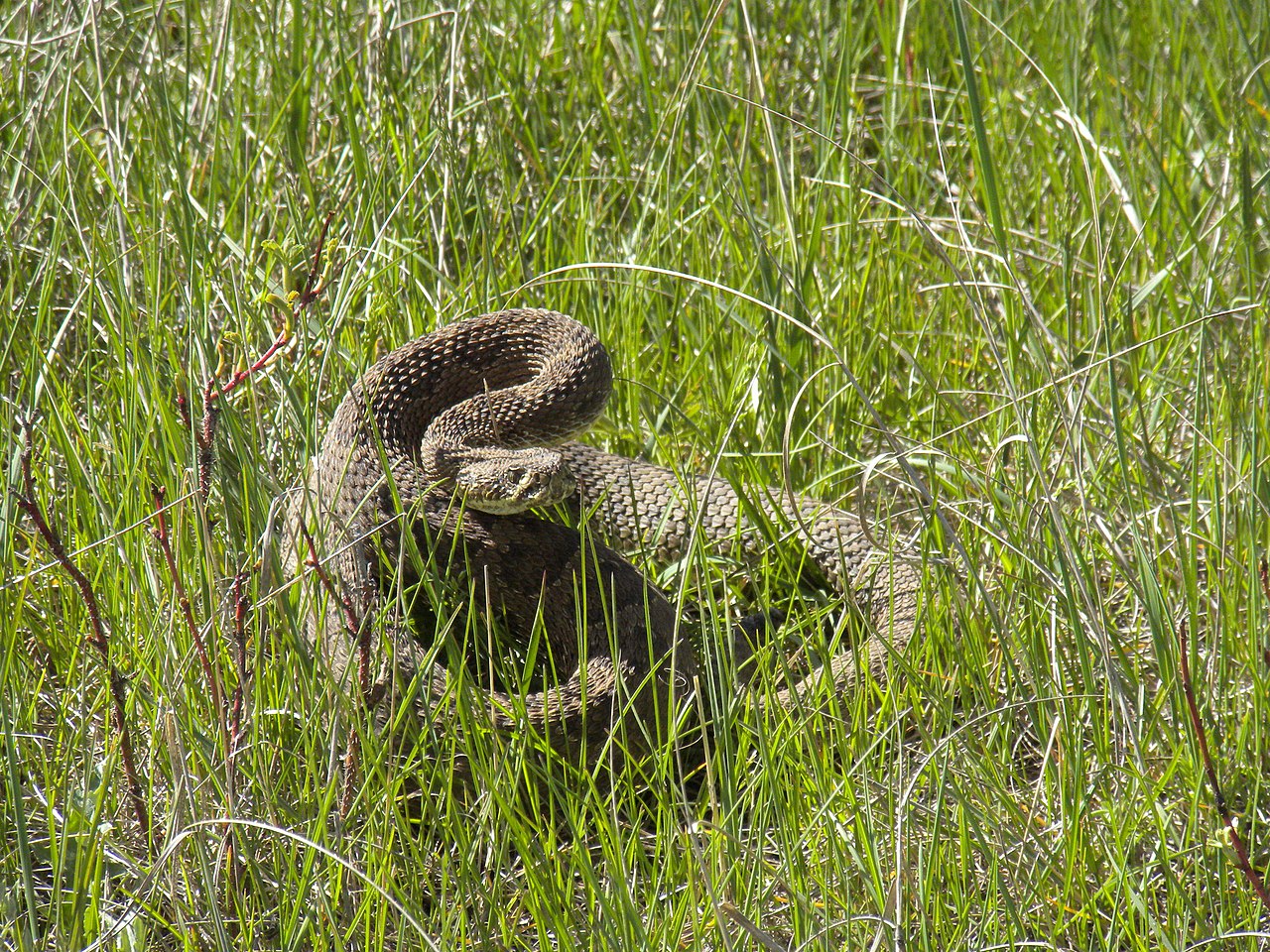
Because half a body length is the realistic limit, the standard field guidance is to keep at least the snake's full body length between you and it, and more if you are unsure of the length or the species. A snake does not need to be coiled to strike, but it strikes much shorter and weaker from a stretched-out position, so a snake moving away across open ground is far less of a threat than one drawn back into a tight S-coil. Reading that posture matters more than reading the species in the first instant.
Several behaviors people misread as speed are really about range and surprise. A snake that 'lunged' rarely traveled any distance — it struck from where it already was, within its reach, at a hand or foot that had crossed the line. A snake that 'came at' someone was almost always fleeing toward cover that happened to be behind the person. And a snake that struck 'without warning' was usually giving warnings — tongue flicks, body tension, a raised head, a rattle — that went unnoticed until the last moment. The strike is fast, but the build-up usually is not.
The practical rules follow directly from the numbers. Keep a full body length of distance and you are outside strike range. Never reach toward, step over, or pin a snake — that deliberately puts a hand or foot inside the danger zone. Watch where you place hands and feet around rocks, logs, and ledges where a coiled snake could be hiding at short range. And back away rather than freeze if a snake is close, since adding even a foot or two of distance moves you out of reach. You do not need to be faster than the strike; you need to not be within it.
When you want to judge a snake's length and posture without closing the distance, let the camera do it. SerpentID lets you photograph a snake from well outside any possible strike range and compare it against common local species, so you can estimate its size, see whether it is coiled to strike or moving off, and decide how wide a margin to give it — all from a safe distance. Speed is the snake's advantage; distance and identification are yours.