


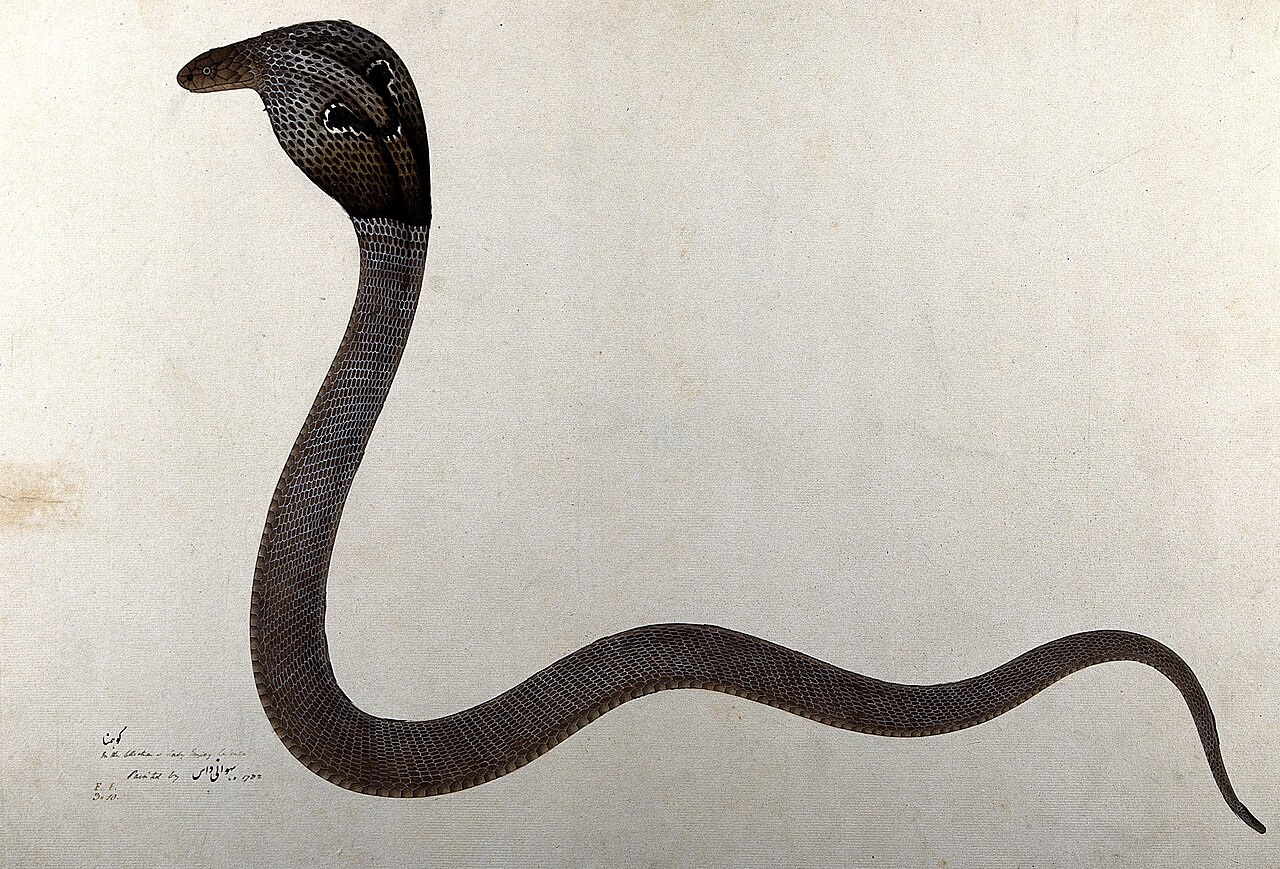
The image is familiar from street markets, films, and postcards. A charmer sits cross-legged and plays a gourd flute called a pungi or been. A cobra rises from a basket, spreads its hood, and seems to sway in time with the tune. Many people still assume the snake is responding to the music, or even that it has been hypnotized. Herpetologists have a much simpler explanation, and it has nothing to do with melody.
Snakes have no external ears or eardrums. Their inner ear is connected to the jawbone. That lets them pick up ground-borne vibration and low-frequency sound, mostly in the range of a few hundred hertz. Airborne sounds at higher pitches register poorly or not at all. The reedy notes of a pungi sit largely outside a cobra's useful hearing, so the snake is not following the tune. It may feel the charmer tapping the basket or ground, and that tapping is often what prompts it to rise in the first place.
What the cobra is really following is movement. A cobra that feels threatened lifts the front third of its body, spreads its hood, and faces the source of danger. That is its standard defensive display. The charmer keeps the flute moving in front of the snake, swinging it side to side. The cobra watches this bulky, moving object as a potential attacker and turns to keep it in view. Its swaying is a tracking motion, not a dance. Charmers often move their own bodies too, which adds to the effect. The snake is stressed and on guard, not entranced.
The performance also relies on distance and timing. A cobra strikes forward and downward from its raised posture. Experienced charmers sit just beyond that reach and learn to read the snake's body language. Even so, the safety in many performances does not come from skill alone. Animal welfare investigators and wildlife officials have documented the following practices among charmers: • Pulling the snake's fangs, which regrow and are pulled again. • Cutting out or damaging the venom glands. • Sewing the snake's mouth partly shut. Charmed snakes are often kept in cramped baskets without proper food or water. Many sicken or die from infection, dehydration, or starvation. Snakes collected for the Nag Panchami festival are sometimes forced to drink milk, which is not part of their natural diet and can harm them.
Because of this, snake charming is banned in India. The Wildlife (Protection) Act of 1972 protects cobras and other native snakes, which makes capturing, keeping, and exhibiting them illegal. Enforcement has tightened over the past few decades. Conservation groups and some state programs have worked with traditional snake-charming communities to move them toward other livelihoods, including snake rescue work, education, and legal venom collection. The practice survives in some places, including parts of South Asia and North Africa, but it is widely recognized as harmful to the animals. It also gives the public a distorted picture of how wild cobras behave.
The real lesson for anyone who meets a cobra or another hooded snake is the opposite of what the street show suggests. A raised hood is a warning, not an invitation. The snake is telling you it feels cornered and would rather not bite. Waving objects, making noise, or playing music will not calm it. Any movement close to it, including someone trying to copy a charmer, only makes it more defensive. Back away slowly, give the snake a clear escape route, and keep children and pets well back. Never attempt to handle, provoke, or kill a cobra. If anyone is bitten, seek professional medical help immediately.
If you see a snake rear up or spread a hood near your home, garden, or trail, the safest step is to identify it from where you stand. Many harmless snakes, including rat snakes and some water snakes, flatten their necks or rise when alarmed, and they are easy to mistake for cobras in a stressful moment. Photograph the snake from a safe distance and let SerpentID compare its markings against the species likely in your area. If the result points to a venomous species, contact local wildlife services or a licensed snake rescuer. They can move the animal safely and legally.