


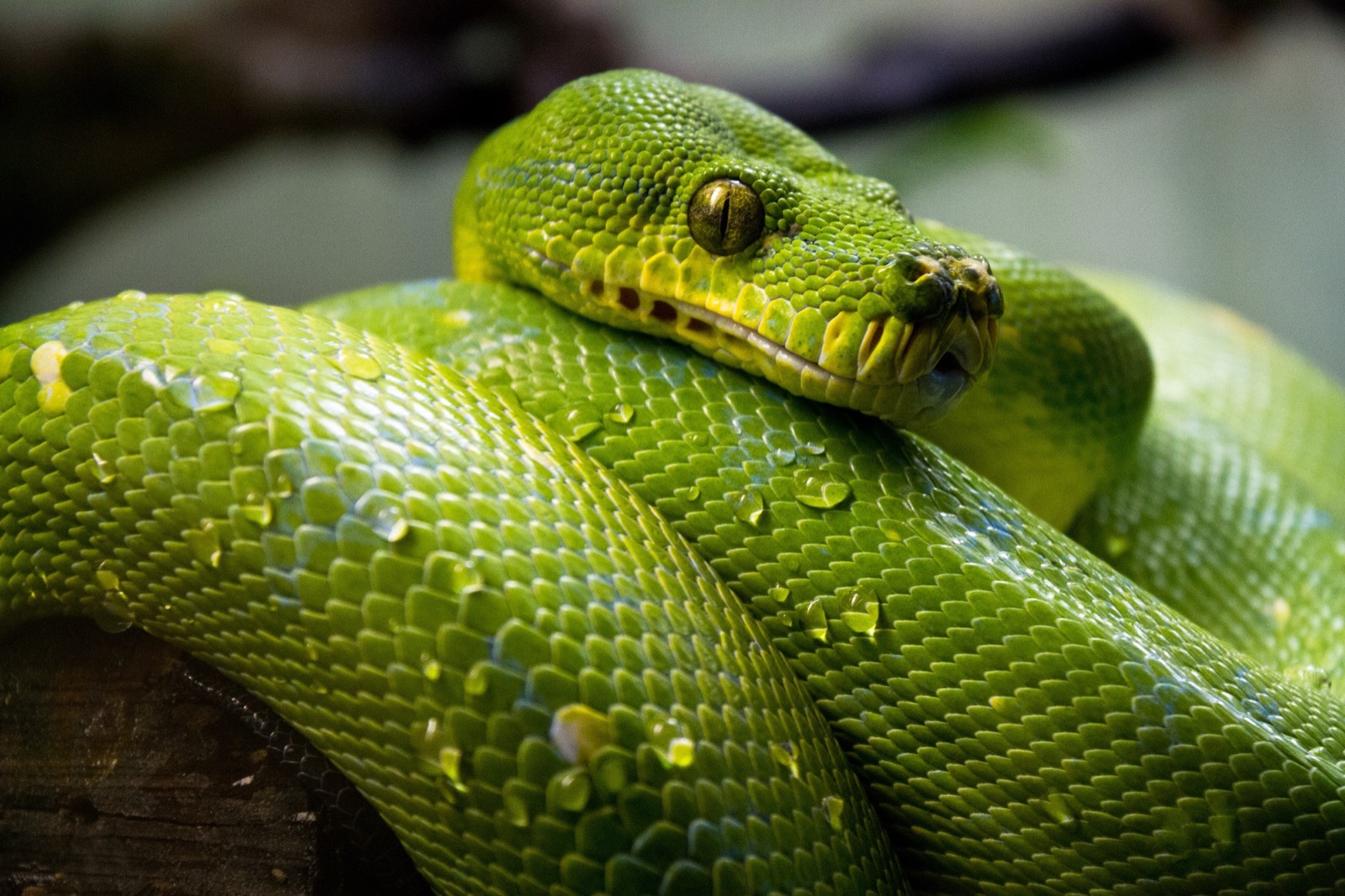
While many snake species can climb to some extent, a select group has evolved to be truly arboreal, spending their entire lives in the branches of trees and shrubs. These dedicated tree dwellers face a unique set of challenges and opportunities that ground-dwelling snakes do not. From navigating swaying branches to hunting prey high above the forest floor, arboreal snakes exhibit remarkable adaptations that allow them to thrive in this elevated world, making them fascinating subjects for observation and study.
The physical characteristics of arboreal snakes are perfectly suited for their aerial existence. Many possess a slender, elongated body, which helps distribute their weight and provides balance across branches. A key adaptation is often a highly prehensile tail, capable of gripping branches like a fifth limb, providing stability and an anchor point. Their ventral scales, the broad scales on their belly, are frequently keeled or ridged, offering superior traction on rough bark and smooth leaves, preventing slips and falls.
Moving through a complex, three-dimensional environment like a tree canopy requires specialized locomotion techniques. Arboreal snakes often employ a concertina movement, where they bunch their body into S-shaped loops to push off and extend forward, particularly useful for climbing vertical trunks. They also excel at bridging, extending their body rigidly across gaps between branches, sometimes supporting their entire weight in mid-air. Their incredible muscle control allows for precise, deliberate movements, essential for maintaining balance and avoiding precarious situations.
Hunting strategies are also tailored to life in the trees. Many arboreal snakes are ambush predators, blending seamlessly with their leafy surroundings thanks to excellent camouflage, often bright green or brown patterns. They lie in wait for unsuspecting prey, which typically includes birds, bird eggs, tree-dwelling rodents, and lizards. Their keen eyesight, sometimes enhanced with heat-sensing pits, allows them to detect prey from a distance, and their swift, accurate strikes are critical for catching agile animals in the open air.
Surviving in the canopy also means adapting to the elements and avoiding a different set of predators. Arboreal snakes utilize the dense foliage for both cover from aerial predators like raptors and as a means of thermoregulation. They might bask on sun-drenched leaves to warm up or retreat into shaded, cooler parts of the canopy to prevent overheating. Their ability to remain perfectly still and blend in is a primary defense mechanism against detection by both predators and potential threats.
Reproduction in arboreal species often reflects their elevated lifestyle. Some species lay their eggs in tree hollows, under bark, or within dense epiphytes, providing a safe, elevated nursery. Others give birth to live young, which are born with the same climbing instincts and adaptations as their parents. The young snakes quickly learn to navigate the canopy, often feeding on smaller arboreal invertebrates or amphibians until they grow large enough to tackle larger prey.
Encountering a snake in a tree or bush can be startling, but it's important to remember that most snakes, even arboreal ones, are primarily defensive. If you spot a snake in a tree, observe it from a safe distance without attempting to approach or interact with it. A clear photograph taken from afar can be invaluable for identification using an app like SerpentID. If you suspect the snake is venomous, or if it poses an immediate threat to people or pets, contact your local wildlife services for safe and professional removal, rather than attempting to handle the situation yourself.