


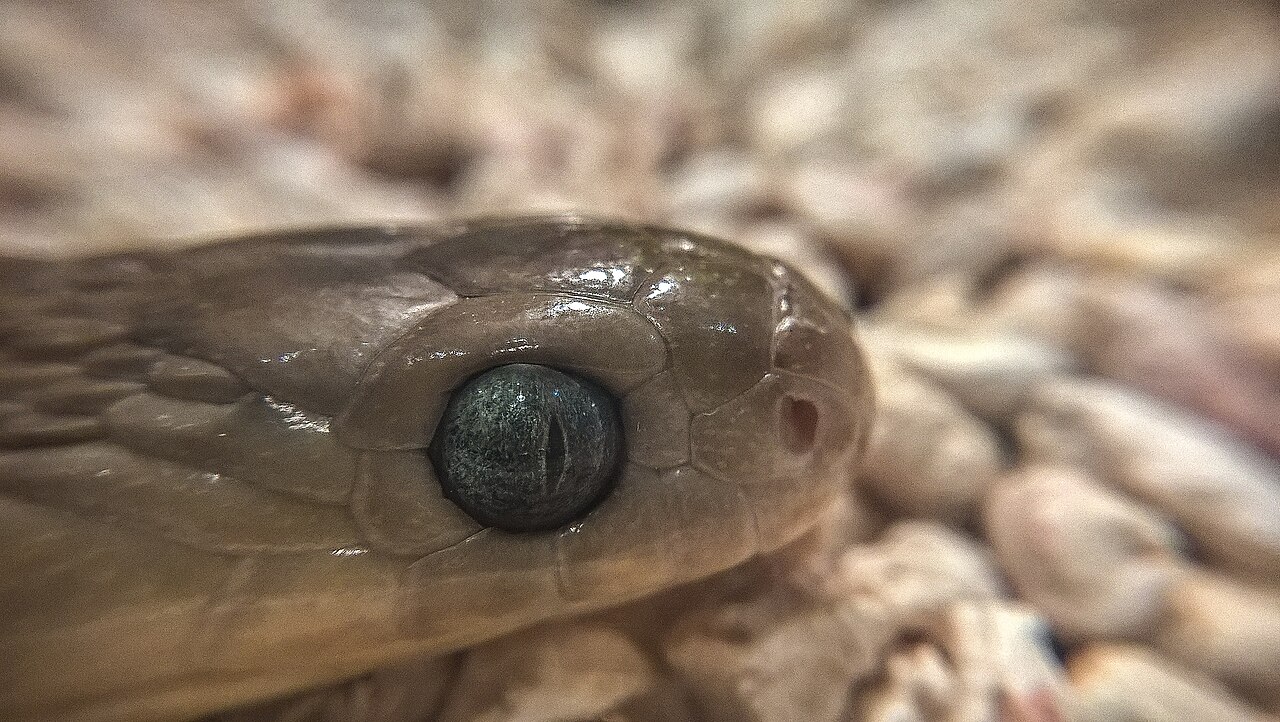
Snakes navigate their world in ways that are often surprising to us, relying on a complex interplay of senses that extend far beyond what we typically associate with "seeing." While they possess eyes, their vision capabilities vary greatly among species, and for many, eyesight is just one piece of a sophisticated sensory puzzle. To truly understand how a snake perceives its surroundings, we must look beyond its unblinking gaze and consider the remarkable adaptations that allow it to detect prey, avoid predators, and find its way through diverse habitats.
Unlike humans and many other animals, snakes do not have eyelids. Instead, their eyes are protected by a transparent scale called a "spectacle" or "brille," which sheds along with the rest of their skin. This unique feature gives them their characteristic unblinking stare. Snake vision ranges from relatively poor, primarily detecting movement, to quite sharp, especially in arboreal (tree-dwelling) species. Many diurnal (day-active) snakes have round pupils and may perceive some colors, while nocturnal (night-active) species often have vertical pupils, optimizing for low-light conditions. However, even with good vision, it's often not the primary sense for detailed environmental mapping.
Perhaps the most iconic aspect of a snake's sensory world is its constantly flicking, forked tongue. This isn't for tasting in the human sense, but rather a highly specialized form of "smelling" or "chemoreception." As the tongue darts out, it collects microscopic particles from the air, ground, or water. These particles are then brought back into the mouth and inserted into a pair of sensory organs located on the roof of the mouth, called the Jacobson's organ or vomeronasal organ. This allows the snake to build a detailed chemical map of its environment, identifying prey trails, potential mates, and the presence of predators, essentially "tasting" its surroundings in stereo.
Another extraordinary sense, particularly prominent in pit vipers (such as rattlesnakes, copperheads, and cottonmouths) and some boas and pythons, is thermoreception, or the ability to detect heat. These snakes possess specialized "pit organs" located between their eyes and nostrils. These pits are incredibly sensitive to infrared radiation, allowing the snake to detect minute temperature differences in its environment. This "heat vision" enables them to create a thermal image of warm-blooded prey, like rodents and birds, even in complete darkness or when the prey is perfectly camouflaged. It's an invaluable tool for precise ambush predation.
While snakes lack external ear openings and eardrums, they are far from deaf. They primarily sense sound through vibrations, which are transmitted from the ground through their jawbones to their inner ear. This means they are highly attuned to ground-borne vibrations, such as footsteps of approaching animals or the thumping of prey. Some studies suggest they can also pick up low-frequency airborne sounds and vibrations through their bodies, though their sensitivity to these is generally less than to ground vibrations. This unique auditory system helps them detect threats and opportunities, offering another layer of awareness.
Ultimately, a snake's perception of the world is a rich tapestry woven from these distinct senses. Imagine a rattlesnake hunting at night: it might first detect the heat signature of a mouse with its pit organs, then use its flicking tongue to confirm the scent trail, and finally strike with pinpoint accuracy guided by the thermal image. For a non-pit viper, vision might detect movement, while the tongue provides crucial chemical details. This integrated approach allows snakes to thrive in diverse ecological niches, making them incredibly efficient and adaptable inhabitants of nearly every continent.
Understanding how snakes perceive their environment can demystify their behavior and help us coexist safely. If you encounter a snake, remember that it's using its unique senses to navigate its world. Keep a respectful distance, and if you need to identify it, capture a clear photo from afar. The SerpentID app can then help you compare its markings against local species, providing valuable information on whether it's venomous, so you can contact local wildlife services if necessary, or simply allow it to move on safely.