


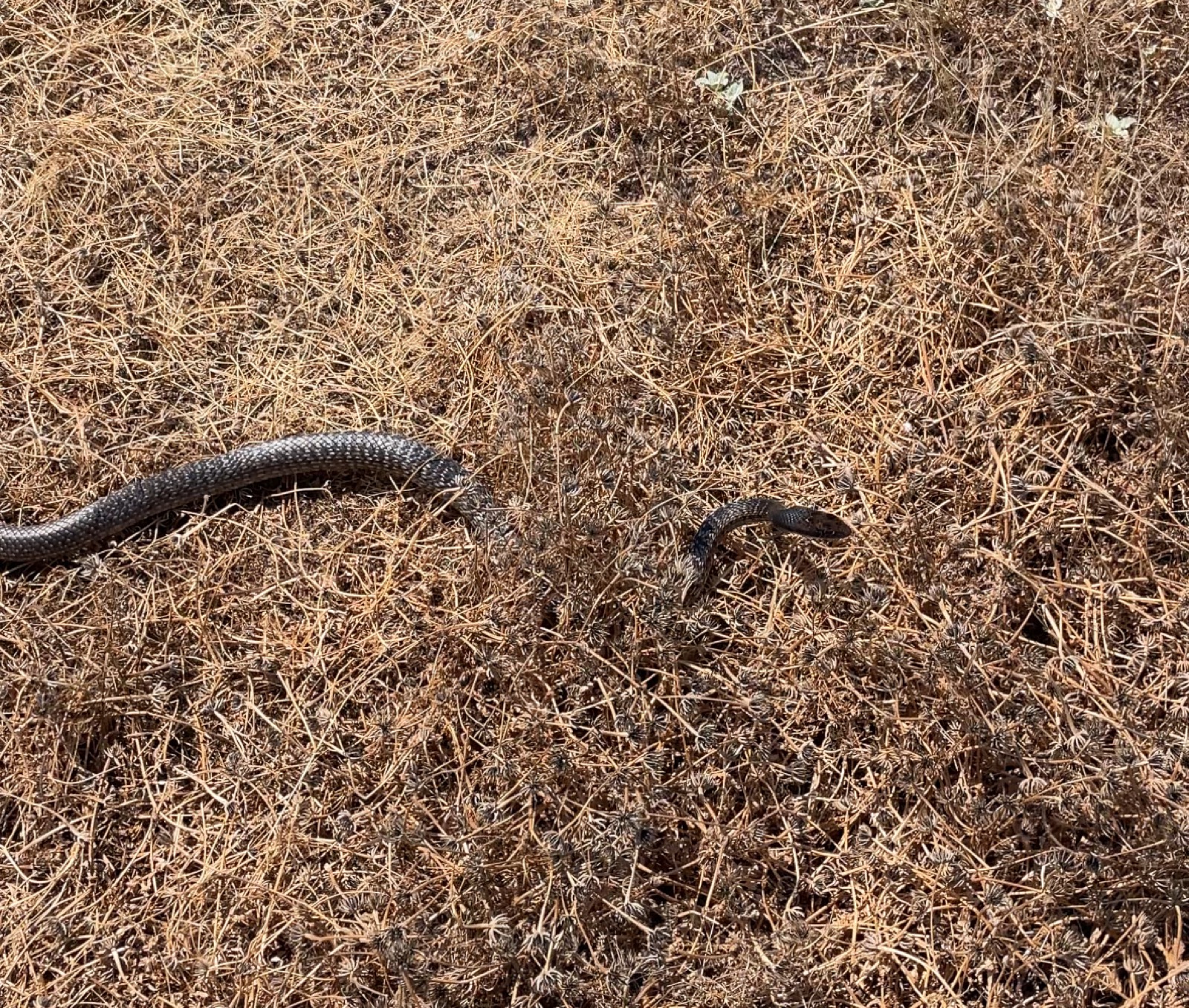
When a snake encounters a human, its reaction is almost always driven by self-preservation, not aggression. For a snake, a human represents a massive, unpredictable potential predator. Their primary instinct is to avoid confrontation, and their responses are typically a spectrum of defensive behaviors ranging from complete stillness to a full-blown defensive strike. Understanding these natural reactions can help us interact with snakes safely and respectfully, recognizing that their actions are almost always a response to perceived danger.
The initial reaction of many snakes upon detecting a human is to remain perfectly still. This behavior, known as freezing, is a highly effective form of camouflage. Many snake species are patterned to blend seamlessly with their environment, whether it's leaf litter, rocks, or grassy areas. By not moving, they hope to avoid detection entirely. This is why many human-snake encounters occur when a person accidentally steps on or very near a snake they never saw; the snake was attempting to remain hidden.
If remaining still doesn't work, or if the snake feels it has been spotted, its next most common reaction is flight. Snakes are masters of evasion and will typically try to escape to cover, such as dense vegetation, a rock crevice, or a burrow. Their swift, silent movement allows them to disappear quickly, often leaving the human wondering where the snake went. The speed and directness of their escape can sometimes be misinterpreted as a 'charge' or 'chase,' but in reality, the snake is simply heading for the nearest safe haven.
When escape is not an option, or if the snake feels directly threatened or cornered, it may resort to a defensive display. These displays are clear warnings meant to deter a perceived threat without having to engage in physical contact. Common defensive actions include hissing loudly, coiling the body, flattening the head or body to appear larger, or vibrating the tail (which can sound like a rattle if in dry leaves). These are all attempts to scare away the threat and signal, "Leave me alone!" before escalating to a bite.
A bite is almost always a snake's last resort. It expends valuable energy and, for venomous species, precious venom. Defensive bites occur when a snake feels its life is in imminent danger, usually from direct provocation, being stepped on, or being handled. It's crucial to understand that these are not predatory attacks; snakes do not view humans as prey. A defensive bite is a desperate act of self-defense from an animal that feels trapped and intensely vulnerable.
The notion that snakes 'attack' or 'chase' humans is a persistent myth, largely fueled by misunderstanding their defensive behaviors. Snakes are not inherently aggressive towards humans; they are simply trying to survive. Their fear of us, often justified, dictates their actions. A snake that appears to be moving towards a person is usually trying to find an escape route that happens to be in that direction, or it's retreating into cover that lies past the person.
Understanding these reactions is key to safely coexisting with snakes. If you encounter a snake, the best approach is to give it ample space and allow it to move away on its own. Never attempt to provoke, capture, or harm a snake. If you need to identify a snake from a safe distance, take a clear photograph and use the SerpentID app, which can help you compare markings against local species. If you suspect a snake is venomous or injured, contact your local wildlife services for expert assistance.