


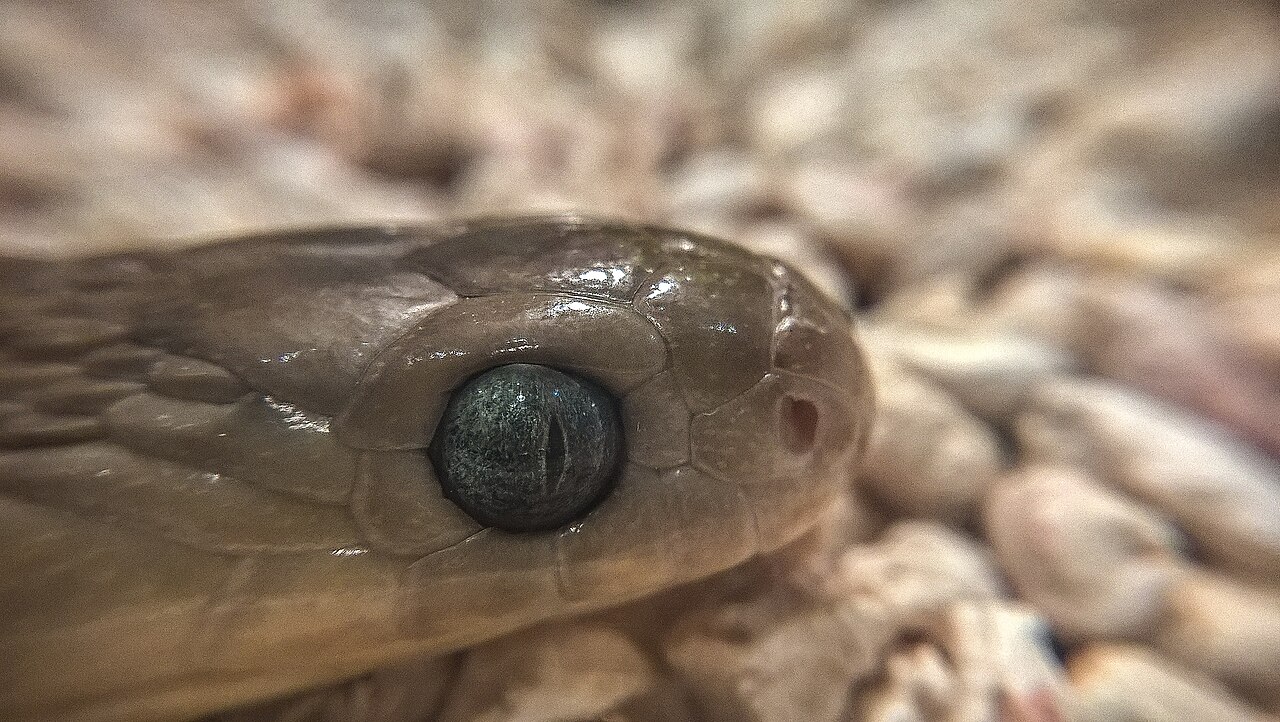
Many people observe that snakes never seem to blink, and indeed, they don't possess movable eyelids like mammals or birds. This unique characteristic often leads to questions about how snakes protect their eyes from dust, injury, or dryness. The answer lies in a fascinating anatomical adaptation: a specialized transparent scale known as a "brille" or "spectacle." This clear scale acts as a permanent, built-in protective cover, ensuring their eyes are shielded at all times without the need for blinking.
The spectacle is essentially a modified scale, part of the snake's outermost skin layer. Unlike the scales covering the rest of the body, which are opaque, the spectacle is completely transparent, allowing light to pass through to the eye beneath. It's fused directly over the eye, forming a clear, protective shield that functions much like a permanent contact lens or a pair of integrated goggles. This adaptation means that a snake's eye is never truly exposed to the environment, providing continuous protection from physical harm and environmental irritants.
Because the spectacle is part of the snake's skin, it is shed along with the rest of the epidermis during the process of ecdysis, or molting. Before a shed, a thin layer of fluid begins to accumulate between the old spectacle and the new one forming underneath. This fluid often causes the snake's eyes to appear cloudy or milky-blue, a tell-tale sign that a shed is imminent. During this period, a snake's vision is temporarily impaired, making them more cautious and reclusive until the old skin, including the cloudy spectacle, is successfully sloughed off, revealing a fresh, clear new one.
This evolutionary adaptation offers significant advantages for snakes. For a creature that often navigates through dense vegetation, burrows in soil, or ambushes prey, constant eye protection is invaluable. The spectacle eliminates the vulnerability of exposed eyes and the need for momentary vision loss that blinking would entail, allowing for uninterrupted visual vigilance. This feature contributes directly to their survival by protecting a vital sensory organ crucial for hunting, avoiding predators, and navigating their environment.
The structure and resilience of the spectacle can vary slightly among different snake species, reflecting their diverse habitats and lifestyles. For instance, burrowing snakes might have spectacles that are more robust or slightly smaller, offering enhanced protection against abrasive soil particles. Conversely, arboreal species might have spectacles optimized for clearer vision in varying light conditions. Regardless of these subtle differences, the spectacle remains a testament to the efficient and elegant design of snake anatomy, perfectly tailored for their legless existence.
Understanding the snake's spectacle helps demystify why these reptiles never appear to blink and highlights another incredible aspect of their unique biology. Far from being unprotected, a snake's eyes are continuously guarded by this remarkable transparent scale, allowing them to perceive their surroundings effectively and safely in a wide range of environments. It is a prime example of how evolution sculpts specialized features to meet specific ecological demands.
While fascinating, it's crucial to remember that observing snakes should always be done from a safe distance. If you encounter a snake in your yard or out in nature and are curious about its identity, snap a clear photo from afar. The SerpentID app can then help you compare its markings against local species, including details like eye scales if visible. If the snake appears venomous or you are concerned for safety, contact local wildlife services for assistance, and never attempt to handle or approach it.