


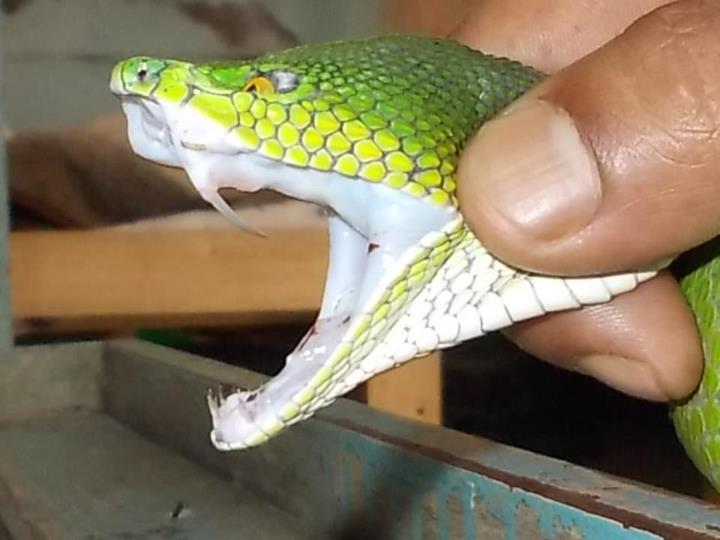
One of the most astonishing sights in the natural world is a snake consuming an animal that appears far too large to fit in its mouth. This remarkable ability often leads to the popular misconception that snakes "dislocate" their jaws to achieve such a wide gape. However, the truth is far more fascinating and involves an incredible feat of biological engineering, relying on extreme flexibility and unique skull adaptations rather than a painful or damaging dislocation.
Unlike mammals, whose lower jaws are fused at the chin and rigidly connected to the skull, a snake's lower jaw is divided into two separate halves. These halves are not fused but are loosely connected at the front by an extremely elastic ligament. Furthermore, the quadrate bone, which connects the lower jaw to the skull, is unusually long and hinged, allowing the jaw to swing downwards and forwards to an astonishing degree. This entire arrangement provides a vast range of motion, enabling the snake to open its mouth nearly 180 degrees or even wider.
When a snake is ready to swallow, it doesn't simply open its mouth and gulp. Instead, it employs a remarkable process often described as 'jaw walking.' The two halves of the lower jaw can move independently, alternately grasping the prey with backward-curving teeth and pulling it deeper into the throat. One side of the jaw will secure a grip while the other side extends forward, then the first side releases and re-grips further along the prey, slowly ratcheting the meal down its esophagus. This coordinated, independent movement allows the snake to essentially 'walk' its head over the prey.
Beyond the bony structure, the soft tissues of a snake's head and neck are also incredibly elastic. The skin around the mouth and throat is highly stretchable, accommodating the bulky form of its meal without tearing. This elasticity, combined with the flexible jaw apparatus, means a snake can engulf prey that is significantly wider than its own head, sometimes several times its diameter. This adaptation is crucial for their survival, allowing them to capitalize on infrequent feeding opportunities by consuming large, nutrient-rich meals.
The numerous, sharp, backward-pointing teeth lining a snake's mouth play a vital role in this process. While not designed for chewing, these teeth act like grappling hooks, providing a firm grip on the prey and helping to pull it inwards. They also prevent the prey from escaping or being pushed back out during the arduous swallowing process. Different snake species have varying tooth structures depending on their diet, from the solid teeth of constrictors to the specialized fangs of venomous snakes.
Once the prey is fully engulfed, the snake's powerful muscles continue to push it down the esophagus into the stomach. The digestion process can be lengthy and energy-intensive, sometimes taking days or even weeks for very large meals. During this time, the snake often becomes sluggish and vulnerable, seeking out a safe, warm spot to aid in the metabolic process. This entire feeding strategy—from the initial strike to the final digestion—is a testament to the snake's evolutionary adaptations for efficiency and survival.
Observing a snake's incredible feeding habits from a distance can be a fascinating experience. While their ability to open their mouths so wide is a marvel of nature, it is essential to remember that all wild snakes should be given space and respect. If you encounter a snake and are concerned about its presence or need help identifying it, maintain a safe distance and capture a clear photograph. The SerpentID app can then help you compare its markings against likely local species. If the snake is identified as venomous, or if you are unsure, contact your local wildlife services for safe and professional removal.