


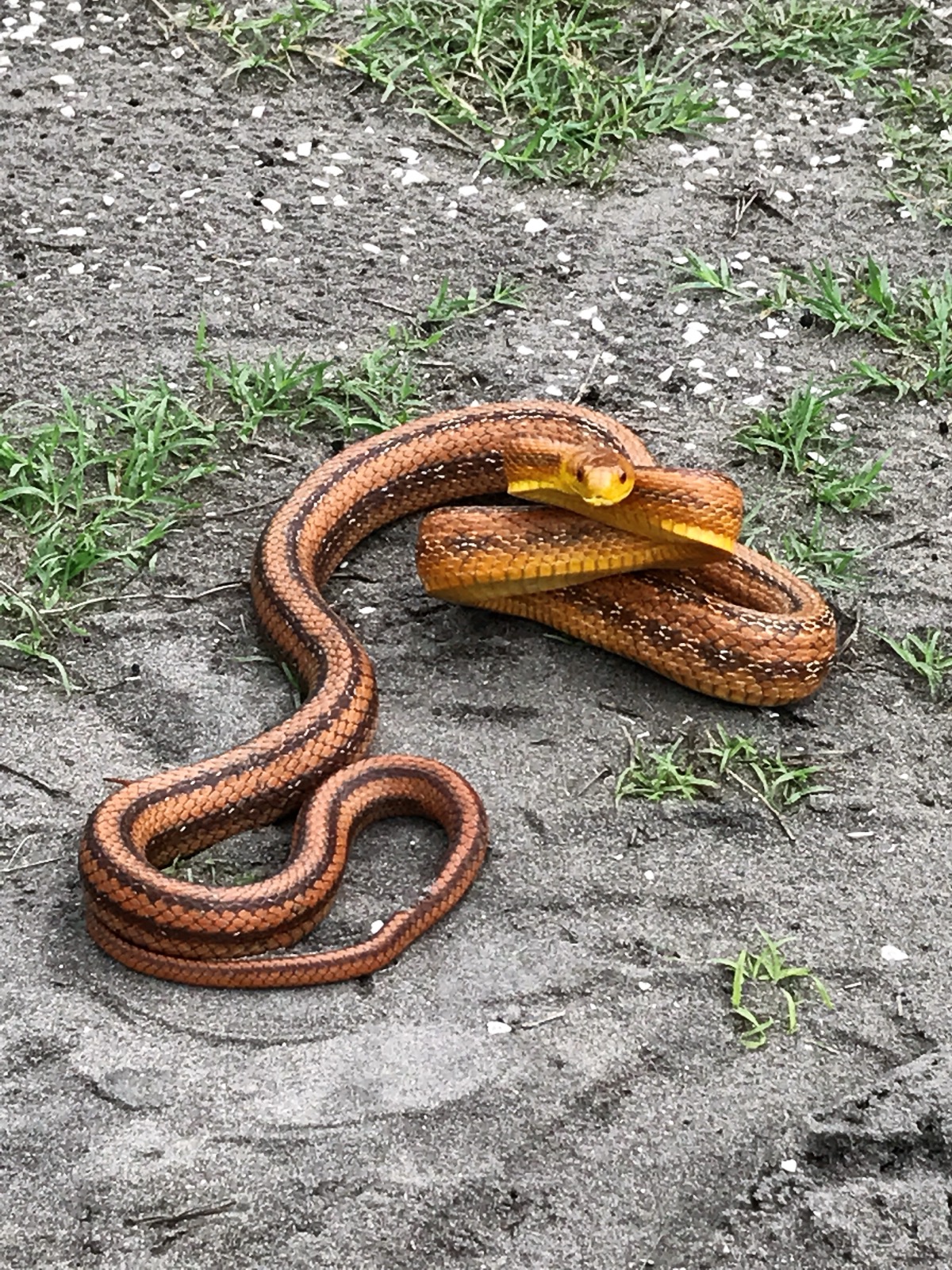
One of the most remarkable abilities of snakes is their incredible capacity to navigate and fit into extremely tight spaces. Whether it's slipping through a crack in a foundation, winding through a dense tangle of roots, or even disappearing into a small pipe, their legless bodies are uniquely adapted for such feats. This skill is not merely a curious trick; it is fundamental to their survival, allowing them to find shelter, hunt prey, and evade predators in a wide variety of environments, from arid deserts to lush rainforests and even urban settings.
The secret to a snake's ability to squeeze through small gaps lies in its extraordinary anatomy. Unlike most vertebrates, snakes possess an exceptionally long and flexible spine, composed of hundreds of individual vertebrae. Each vertebra is connected by flexible joints and surrounded by powerful muscles that can contract and relax independently, allowing for intricate and precise movements. This muscular control, combined with the absence of limbs, enables their bodies to contort into complex shapes, bending and twisting to match the contours of their surroundings with astounding efficiency.
Specialized scales also play a crucial role in this process. The ventral (belly) scales are typically broader and rougher than the dorsal scales, providing excellent traction. As a snake pushes its body through a narrow space, these scales grip surfaces, allowing the muscles to propel the snake forward. Even in seemingly smooth tunnels or crevices, the snake can generate enough friction by pressing parts of its body against the walls, using a movement often described as 'concertina' motion, where it bunches up one section of its body to anchor itself, then extends the rest.
Beyond their physical structure, snakes employ a sophisticated sensory system to navigate these complex pathways. Their constantly flicking, forked tongue gathers chemical cues from the air and ground, transmitting this information to the Jacobson's organ in the roof of their mouth. This 'smell-taste' allows them to detect the presence of prey, predators, or suitable den sites, even in complete darkness. Additionally, their sensitivity to ground vibrations and their vision, though varying by species, further aid in mapping out the topography of their immediate environment, guiding their movements through intricate networks.
This mastery of confined spaces provides significant ecological advantages. Many snake species are ambush predators, lying in wait within burrows, rock crevices, or dense vegetation to surprise unsuspecting prey. Conversely, smaller snakes utilize these same tight spots to escape from larger predators like birds of prey, mammals, or even other snakes. Furthermore, the ability to access secluded areas is vital for thermoregulation, allowing snakes, as ectotherms, to find cool, damp retreats during scorching heat or warm, insulated spots during colder periods.
For homeowners and those living in snake habitats, understanding this ability is key. Snakes are not trying to 'break into' your home with malicious intent; rather, they are simply seeking shelter, warmth, a cool spot, or following prey like rodents that have already found their way inside. A gap under a door, a small crack in a foundation, an open pipe, or a loose screen can be an inviting entry point for a snake, especially if the conditions inside are more favorable than outside.
Encountering a snake in a tight space can be startling, but it's important to remain calm. Always maintain a safe distance and never attempt to handle or corner a snake, especially if you are unsure of its species. If you find a snake in or around your property, observe it from afar and, if possible, take a clear photograph. Using the SerpentID app, you can compare its markings against local species, helping you understand whether it's a harmless visitor or a venomous species that requires professional intervention from local wildlife services.