


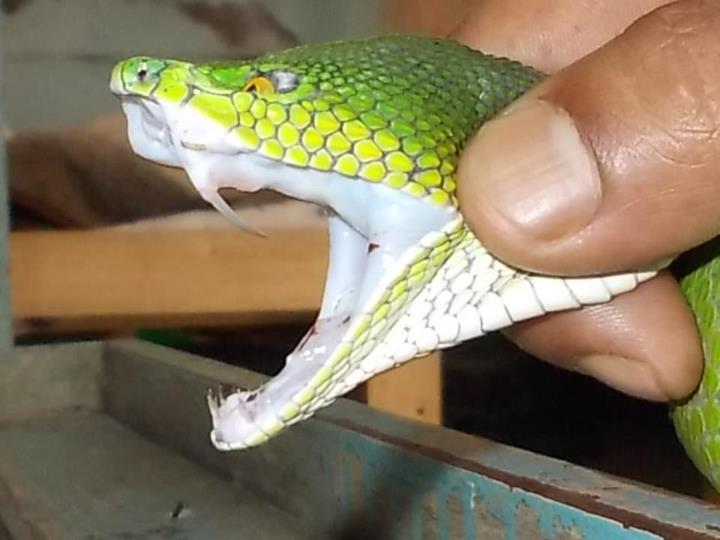
When we talk about venomous snakes, it's not simply the presence of venom that makes them dangerous, but the sophisticated system they possess for delivering it. Unlike poisonous animals, which are toxic when ingested or touched, venomous snakes actively inject their toxins. This process, honed over millions of years of evolution, involves specialized fangs and a powerful muscular mechanism designed for rapid and efficient venom delivery, primarily for immobilizing prey but also as a last resort for self-defense.
At the heart of a snake's venom delivery system are its venom glands, which are essentially modified salivary glands located behind the eyes. These glands produce the complex cocktail of proteins, enzymes, and other compounds that make up the venom. The venom travels from these glands through ducts that lead directly to the fangs. The composition of venom can vary significantly between species, leading to different effects on a victim, from neurotoxic agents that attack the nervous system to hemotoxic compounds that affect blood and tissues.
Snake fangs themselves are highly specialized teeth, differing in structure and placement depending on the snake family. Elapids, such as cobras and mambas, possess 'proteroglyphous' fangs: relatively short, fixed fangs located at the front of the mouth, which have a hollow channel for venom delivery. Vipers, like rattlesnakes and copperheads, are 'solenoglyphous,' featuring long, hollow fangs that are hinged and can fold back against the roof of the mouth when not in use. This allows them to carry much longer fangs than fixed-fang snakes. A third type, 'opisthoglyphous' snakes (rear-fanged colubrids), have grooved fangs located further back in the jaw, requiring a chewing motion to introduce venom.
The actual injection process is a marvel of biomechanics. When a venomous snake strikes, powerful muscles surrounding the venom glands contract. This compression forces the venom through the ducts and into the fangs. For hollow-fanged snakes, the venom is squirted directly into the target tissue, much like a hypodermic needle. In hinged-fang snakes, the fangs are rapidly erected as the mouth opens, puncturing the target just as the muscles squeeze the glands, ensuring swift and deep penetration.
The speed of this venom injection is astonishingly fast, often occurring in a fraction of a second. This rapid delivery is critical for quickly incapacitating prey, reducing the risk of injury to the snake. Furthermore, snakes have remarkable control over their venom. They can regulate the amount of venom injected, sometimes delivering a full dose, a partial dose, or even a 'dry bite' with no venom at all. This conservation of venom is important, as producing it requires significant energy, and a dry bite allows them to deter a threat without wasting their precious resource.
Understanding the sophisticated mechanism of venom injection helps to demystify snake bites and reinforces the importance of caution around these animals. The primary purpose of venom is for hunting, not for attacking humans. When a snake bites a person, it is almost always a defensive reaction, a last resort when it feels threatened or cornered. The intricate system of glands, muscles, and specialized fangs is a testament to the snake's evolutionary adaptations for survival in its environment.
If you encounter a snake, remember that its primary goal is to avoid conflict. Never attempt to approach, handle, or provoke any snake, regardless of its apparent type. If you need to identify a snake, always do so from a safe distance, ideally by taking a clear photograph without putting yourself or others at risk. The SerpentID app can help you compare markings against local species. If a bite occurs, seek professional medical help immediately and do not attempt any folk remedies or unproven first aid techniques.