


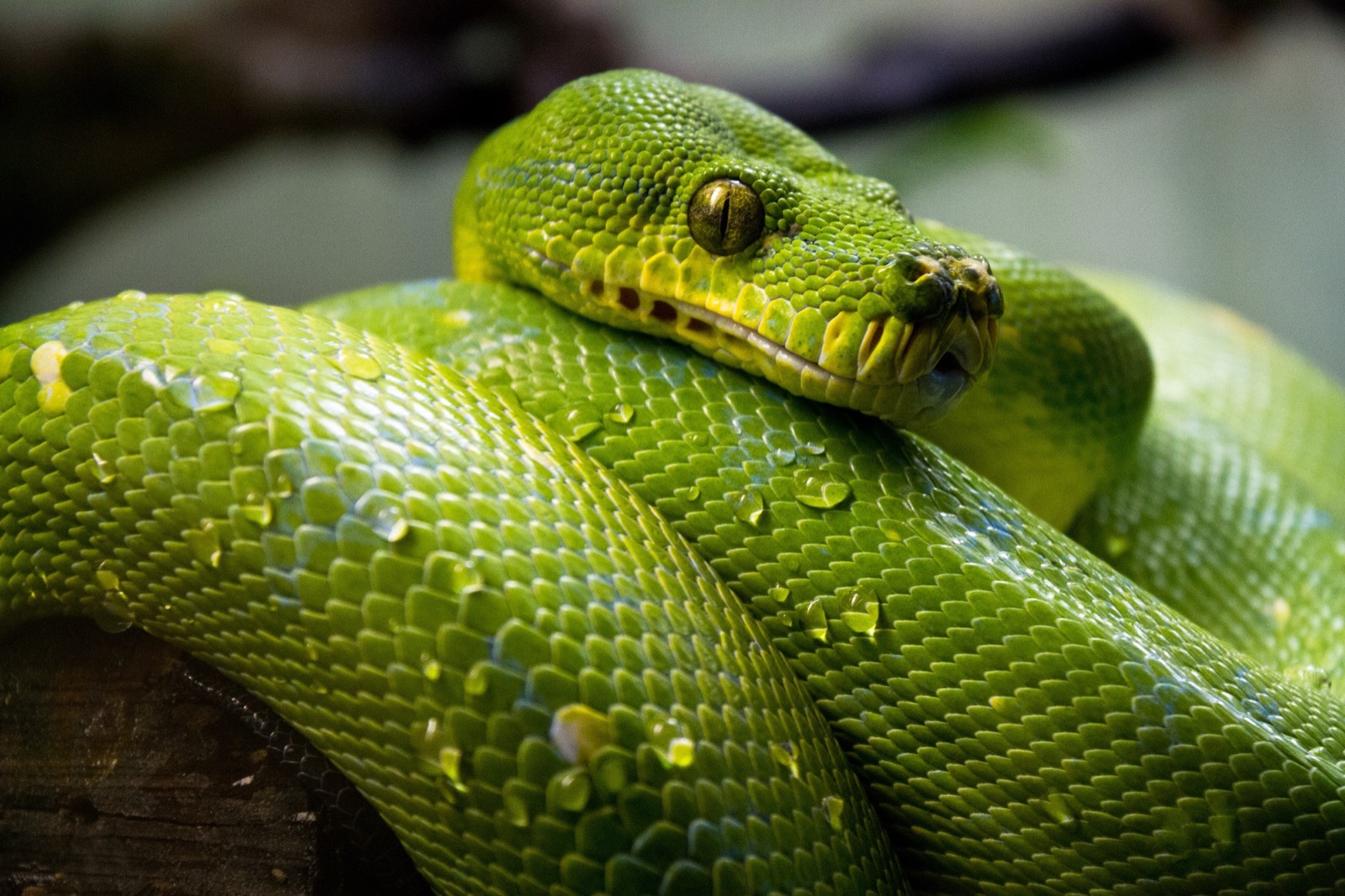
Snakes are masters of visual display, captivating us with their astonishing range of colors and intricate patterns. From the vibrant greens of tree-dwelling species to the subtle earth tones of ground dwellers, their coloration is far more than just aesthetic; it’s a vital aspect of their survival. These diverse appearances serve critical roles in their lives, primarily for camouflage to evade predators and ambush prey, but also as clear warning signals to potential threats or even to mimic more dangerous species, a complex visual language understood across the animal kingdom.
At the heart of a snake's color palette are specialized pigment cells called chromatophores, located within the layers of their skin. There are several types of these cells, each responsible for producing or reflecting specific colors. Melanophores, for instance, contain melanin and produce black and brown hues. Xanthophores generate yellow pigments, while erythrophores are responsible for reds and oranges. Leucophores or iridophores, on the other hand, contain reflective crystals that scatter light, creating white or iridescent effects. The combination and arrangement of these different chromatophore types determine the snake's base coloration.
The incredible diversity in snake coloration arises from the way these various pigment cells are layered and distributed within the skin. For example, a snake might appear green not because it has green pigment, but because yellow xanthophores in the upper skin layer are situated over blue-producing iridophores or melanophores. The human eye perceives this combination as green. Similarly, complex patterns like spots, bands, or blotches are formed by the precise genetic programming that dictates where and how different types of chromatophores develop and are expressed across the snake's body, creating the stunning visual tapestries we observe.
Beyond pigments, some of the most striking colors in snakes are not due to pigments at all, but rather to the physical structure of their scales. These "structural colors" are created when light interacts with microscopic structures, such as keratin layers or crystal-like formations within the scales, causing certain wavelengths of light to be reflected or scattered while others are absorbed. This phenomenon is responsible for the brilliant blues, iridescent sheens, and metallic greens seen in many species, particularly those with smooth, highly reflective scales. The subtle shimmer often observed on a snake's scales as it moves is a prime example of this structural iridescence, adding another dimension to their visual appeal.
The precise arrangement and function of chromatophores and structural elements are all controlled by a snake's genetics. Genetic variations can lead to a wide array of color morphs within a single species, including conditions like albinism (lack of melanin, often resulting in white or yellow snakes with red eyes) or melanism (excessive melanin, leading to unusually dark or all-black individuals). These genetic blueprints not only dictate the base colors but also the intricate patterns, ensuring species-specific markings that are often crucial for identification, although variations can sometimes make this challenging.
Ultimately, the complex interplay of pigments and structural colors serves the snake's ecological needs. Cryptic coloration, or camouflage, allows snakes to blend seamlessly into their environment, whether it's the mottled brown of a rattlesnake disappearing into dry leaves or the striped pattern of a garter snake mimicking blades of grass. Aposematic coloration, characterized by bright, contrasting colors like the red, yellow, and black bands of a coral snake, serves as a clear warning to predators of their venomous nature. Furthermore, some harmless snakes employ Batesian mimicry, evolving to resemble dangerous species to deter threats, further complicating visual identification for observers.
While the beauty and function of snake coloration are fascinating, relying solely on color or pattern for identification can be incredibly dangerous, especially given the existence of mimicry and genetic variations. Many harmless species can look strikingly similar to venomous ones, and vice versa. Therefore, if you encounter a snake, observe its colors and patterns from a safe, respectful distance without approaching or attempting to interact with it. For accurate identification, safely photograph the snake and use the SerpentID app. Our advanced image recognition can compare its markings against local species, helping you understand whether it's a harmless garden visitor or a venomous snake requiring a call to local wildlife services.