


Snakes are often perceived as solitary and silent creatures, leading many to wonder how they interact with each other and their environment. While they don't communicate with complex vocalizations or body language in the same way many mammals or birds do, snakes possess sophisticated methods to convey information. Their communication primarily relies on chemical signals, visual displays, and, in some cases, specific sounds, all tailored to their unique sensory world and survival needs.
The most crucial form of communication for snakes is chemical. They use their forked tongues to collect scent particles from the air and ground, which are then transferred to a specialized organ in the roof of their mouth called the vomeronasal organ, or Jacobson's organ. This allows them to "taste" their surroundings. Through pheromones – chemical substances released by one individual that affect the behavior of another – snakes can signal their reproductive readiness, mark territories, or even follow scent trails left by potential prey or mates. For example, a female snake might release a pheromone to attract males from a distance, initiating courtship.
Visual cues also play a significant role, particularly in closer interactions. Snakes use various body postures and movements to communicate warnings, submission, or courtship intentions. A snake coiling into an S-shape, raising its head, or spreading a hood (as cobras do) are clear visual warnings to potential threats to stay away. During courtship, males might engage in elaborate dances, head-bobbing, or chasing rituals to impress a female. These visual displays are usually short-range, effective when another snake or a predator is within sight.
Auditory communication, while less prevalent than chemical or visual signals, is also part of a snake's repertoire. We are most familiar with the defensive sounds like the hiss of many species or the rattle of a rattlesnake, which serve as clear warnings to predators or perceived threats. However, some snakes can produce other sounds, such as growls, snorts, or even short distress calls when startled or in pain. It is important to understand that these sounds are typically simple, reflexive responses to immediate situations rather than complex forms of dialogue.
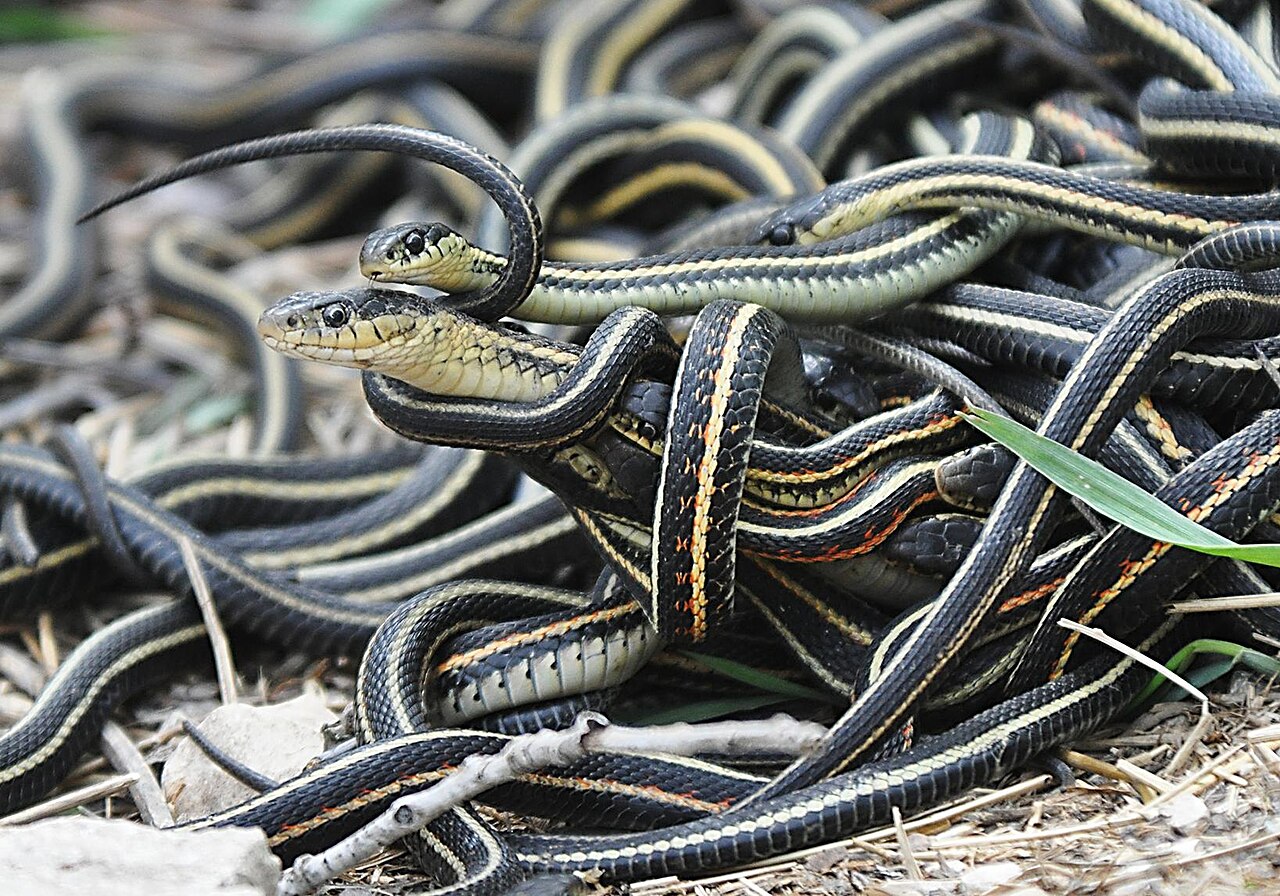
Tactile communication, or communication through touch, is also present, particularly during mating or male-to-male combat. During courtship, a male snake might gently rub or nudge a female to stimulate her. In competitive encounters, males of some species engage in wrestling matches, intertwining their bodies to establish dominance. Additionally, snakes are highly sensitive to vibrations in the ground, which can signal the approach of other animals, though this is more about environmental sensing than direct communication between snakes.
Ultimately, snake communication is highly functional, geared towards essential activities like finding mates, avoiding predators, and establishing territory. It is a subtle and often misunderstood aspect of their biology, far removed from the complex social interactions seen in many other animal groups. Their "conversations" are precise and efficient, ensuring survival without drawing unnecessary attention.
Understanding these unique forms of communication helps us appreciate the intricate world of snakes. If you encounter a snake and are unsure of its species or behavior, remember to observe from a safe distance. A quick, clear photograph can allow SerpentID to help identify the snake and provide information on whether it's venomous or harmless, enabling you to respond appropriately and safely.